 By admin
 Discovering a dark, vertical streak on your fingernail or toenail can be a source of immediate concern. This sudden **nail discoloration**, often stark against the natural nail bed, frequently leads to anxious online searches and alarming self-diagnoses. However, before letting worry take hold, it’s crucial to understand the diverse reasons behind such a **black line on your nail** and, more importantly, when it warrants professional medical evaluation. This comprehensive guide aims to equip you with the knowledge to distinguish between benign **nail changes** and those that require a doctor’s expertise.
Understanding a Dark Pigmented Line on the Nail
A persistent dark, vertical streak spanning the length of your nail is clinically termed **longitudinal melanonychia**. Essentially, this describes a colored band, ranging from the nail’s growth area (matrix) to its free edge, composed of melanin pigment. These **pigmented nail bands** are not all alike; they can vary significantly in their characteristics:
- Hue: From a light brown or tan to a deep, intense **black line on your nail**.
- Dimensions: Appearing as a fine, narrow streak or a broader, more prominent stripe.
- Definition: Featuring sharp, well-defined borders or having indistinct, blurred edges.
- Prevalence: Affecting a single digit or manifesting across several fingernails or toenails.
Crucially, it’s vital to recognize that the presence of a **dark line on your nail** doesn’t automatically imply a serious underlying health issue. This nuance is key to avoiding unnecessary alarm.
Common and Usually Benign Causes of Dark Nail Lines
To ease initial concerns, it’s important to understand that a significant number of **dark nail streaks** are entirely benign, stemming from routine or harmless origins.
1. Natural Pigmentation Variations
Individuals with naturally darker complexions frequently develop these **pigmented nail bands**. This phenomenon is a normal physiological variation, resulting from heightened melanin production within the **nail matrix** – the specialized tissue responsible for nail growth. Dermatological studies consistently indicate that stable, uniform dark lines present on multiple nails are typically not a cause for concern.
2. Minor Injury or Trauma
Even subtle, unremembered impacts or consistent pressure can induce **nail changes**, including the appearance of a dark line. Common sources of such **nail trauma** might include:
- Engaging in sports or strenuous physical activities.
- Aggressive or improper manicures.
- Chronic nail biting or cuticle picking.
- Wearing ill-fitting footwear that applies pressure to toenails.
Occasionally, a minor injury can cause a **subungual hemorrhage** – a small collection of blood beneath the nail – which can appear as a dark brown or **black line on your nail**.
3. Medication-Induced Pigmentation
Certain pharmaceutical agents have the known side effect of stimulating increased pigment production in the nails. These can include:
- Specific chemotherapy medications.
- Some classes of antibiotics.
- Antimalarial drugs.
Typically, these medication-related **nail discolorations** emerge gradually and may affect more than one nail, serving as a key diagnostic clue.
When a Dark Nail Line Warrants Medical Evaluation
This section addresses the critical indicators that differentiate a harmless **dark line on your nail** from a potentially more serious concern, prompting a visit to a **dermatologist** or healthcare provider. While many instances are benign, specific characteristics necessitate professional medical assessment. According to established dermatology guidelines, you should seek expert advice if the **nail streak** exhibits any of the following features:
- It emerges on a single nail only, rather than multiple digits.
- The line progressively widens or darkens over a period of weeks or months.
- Its borders are noticeably irregular, jagged, or poorly defined, lacking sharp edges.
- The pigment extends beyond the nail plate and into the adjacent skin, particularly the cuticle area (known as Hutchinson’s sign).
- The nail itself shows signs of splitting, thinning, or other structural distortions alongside the pigment.
Such patterns can occasionally signal more significant underlying conditions affecting the pigment-producing cells beneath the nail, including types of **subungual melanoma**. It is paramount to remember that only a qualified medical professional can accurately diagnose the precise cause of these **nail changes** and recommend appropriate action.
Quick Reference: Benign vs. Concerning Nail Pigmentation
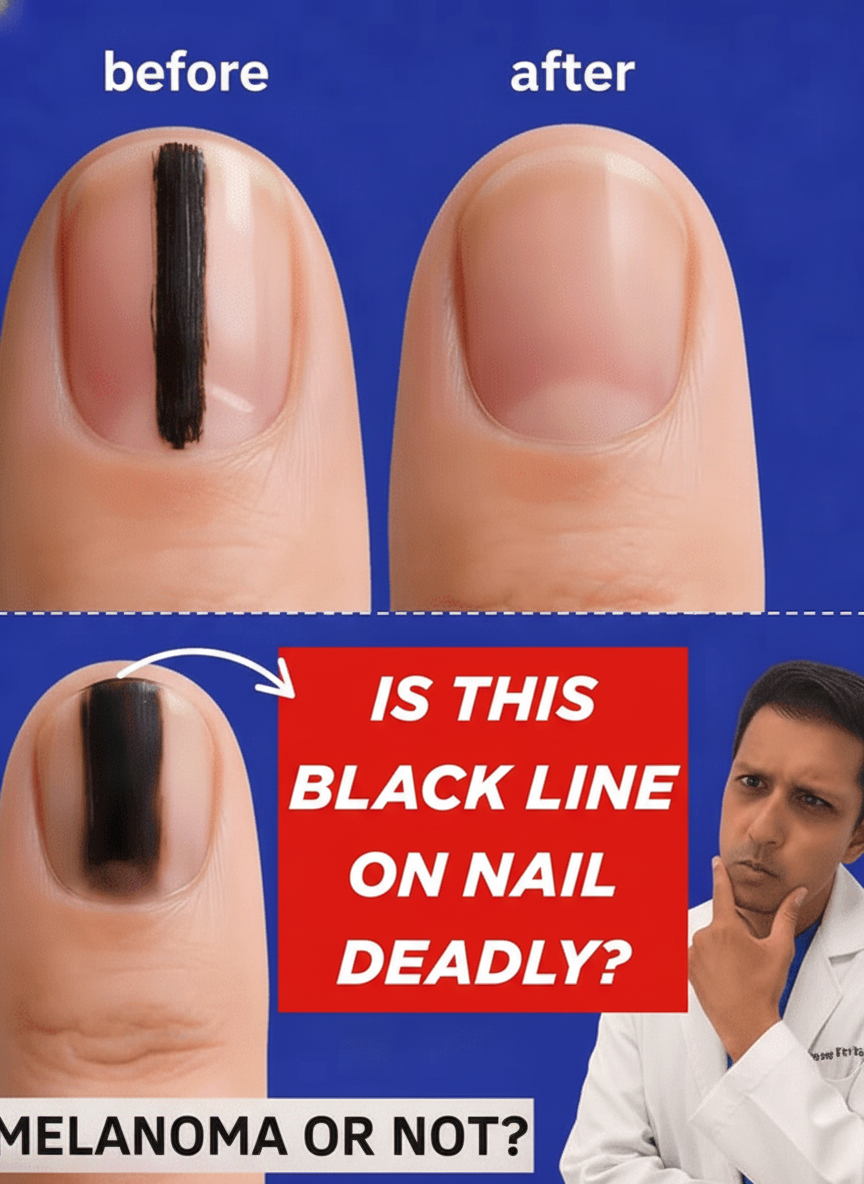
This comparative table offers a concise overview to help you differentiate between typical, harmless **nail discolorations** and those that might require a closer look by a medical expert.
| Feature | Often Benign (Less Concern) | May Need Evaluation (More Concern) |
|---|---|---|
| Number of Nails Affected | Present on multiple nails. | Appears on a single nail. |
| Appearance of Band | Thin, consistent, and uniform in width. | Wide, progressively widening, or varying in width. |
| Border Definition | Clear, straight, and well-defined edges. | Irregular, blurred, or uneven borders. |
| Evolution Over Time | Remains stable and unchanged for months or years. | Exhibits rapid changes in size, color, or shape. |
| Skin Involvement | Pigment is confined solely to the nail plate. | Pigment extends into the surrounding skin or cuticle. |
It’s crucial to understand that this table serves as an awareness tool, not a diagnostic instrument. Always consult a healthcare professional for an accurate diagnosis of any **nail changes**.
The Importance of Early Detection and Vigilance in Nail Health
It’s a common oversight: **nail changes**, particularly those that are painless, often go unnoticed or are dismissed. Unlike visible skin lesions, our nails tend to receive less scrutiny, which can unfortunately lead to delayed medical consultations when issues arise. However, there’s an encouraging aspect to this: many significant **nail pigment changes** are, in fact, identifiable early, often during routine self-examinations or regular medical check-ups. This underscores a vital message: proactive observation of your **nail health** is a far more effective strategy than succumbing to fear or complacency.
Dermatological Approaches to Evaluating Nail Lines
Clinical **dermatology** research highlights the importance of systematic evaluation methods for **longitudinal melanonychia**. These typically include:
- Dermoscopy: A non-invasive technique involving a magnified examination of the **nail pigment** to assess its characteristics in detail.
- Serial Monitoring: Tracking any changes in the line’s appearance (size, color, shape) over a designated period.
- Biopsy: This invasive procedure is generally reserved only for cases where specific warning signs are present, suggesting a higher risk.
Published dermatological reviews consistently indicate that narrow, stable **pigmented nail bands** that show no progression are overwhelmingly benign. Conversely, any progressive or concerning **nail changes** absolutely necessitate a thorough professional review. Ultimately, a combination of diligent self-observation and prompt medical consultation represents the most intelligent approach to **nail health** prevention.
Your Action Plan: Practical Steps for Observing Nail Lines
Should you discover a **dark line on your nail**, here are actionable steps you can take to monitor the situation before seeking professional advice:
Step 1: Document with a Clear Photograph
Utilize your smartphone to capture a high-resolution image of the affected nail. Ensure the photo is taken in excellent natural lighting. This visual record establishes an invaluable baseline for future comparisons.
Step 2: Assess and Note the Width
If feasible, make an approximate measurement of the band’s width. This initial measurement is crucial for determining if the line is widening over subsequent weeks.
Step 3: Examine All Nails
Systematically inspect all your fingernails and toenails. The presence of similar **pigmented nail bands** on multiple digits can be a reassuring sign.
Step 4: Monitor for Changes Over Time
For the next 4 to 8 weeks, observe the **nail line** diligently. Pay close attention to:
- Any increase in the line’s width.
- A noticeable darkening of its color.
- Alterations in its overall shape or border definition.