 By admin
 You likely interact with your hands countless times a day, but how often do you truly observe your fingernails? Perhaps you’ve spotted a peculiar white mark, a subtle shift in color, or an unexpected ridge. While these minor alterations are frequently dismissed as cosmetic issues or normal aging, they can, in fact, serve as significant indicators of deeper health concerns, ranging from nutritional deficiencies to circulatory problems. Many individuals tend to overlook these subtle cues until they become pronounced or problematic, potentially missing crucial early warnings from their bodies. The positive news is that a more attentive approach to observing your nails can facilitate timely discussions with medical professionals. This comprehensive guide will delve into some of the most frequently encountered nail changes, exploring what current research and expert medical opinions suggest about their potential health connections. We’ll also offer practical advice for maintaining optimal nail health. Be sure to read until the end for a valuable checklist designed to help you identify patterns before they escalate into more serious issues.
Why Your Nails Can Reflect Overall Health
Your fingernails, composed primarily of keratin—the identical protein found in your hair and skin—are more than just protective coverings. Due to their relatively slow growth cycle, they act as unique windows into your internal health, often displaying changes that reflect systemic conditions over several weeks or even months. Extensive research and clinical observations from dermatologists consistently highlight a strong correlation between nail characteristics and vital internal factors like nutritional status, oxygenation, blood circulation, and overall systemic well-being. For instance, inadequate nutrient absorption or specific vitamin and mineral deficiencies can profoundly impact nail growth patterns and coloration. Furthermore, various infections, chronic diseases, or even previous acute illnesses can leave discernible imprints on your nails. While it’s important to remember that not every alteration signifies a grave issue—many are benign or transient—any sudden or persistent transformation warrants closer examination. Let’s now explore some of the most frequently observed nail changes and their potential medical interpretations, according to health experts.
Common Nail Color Changes and Their Potential Meanings
White Spots on Nails (Leukonychia)
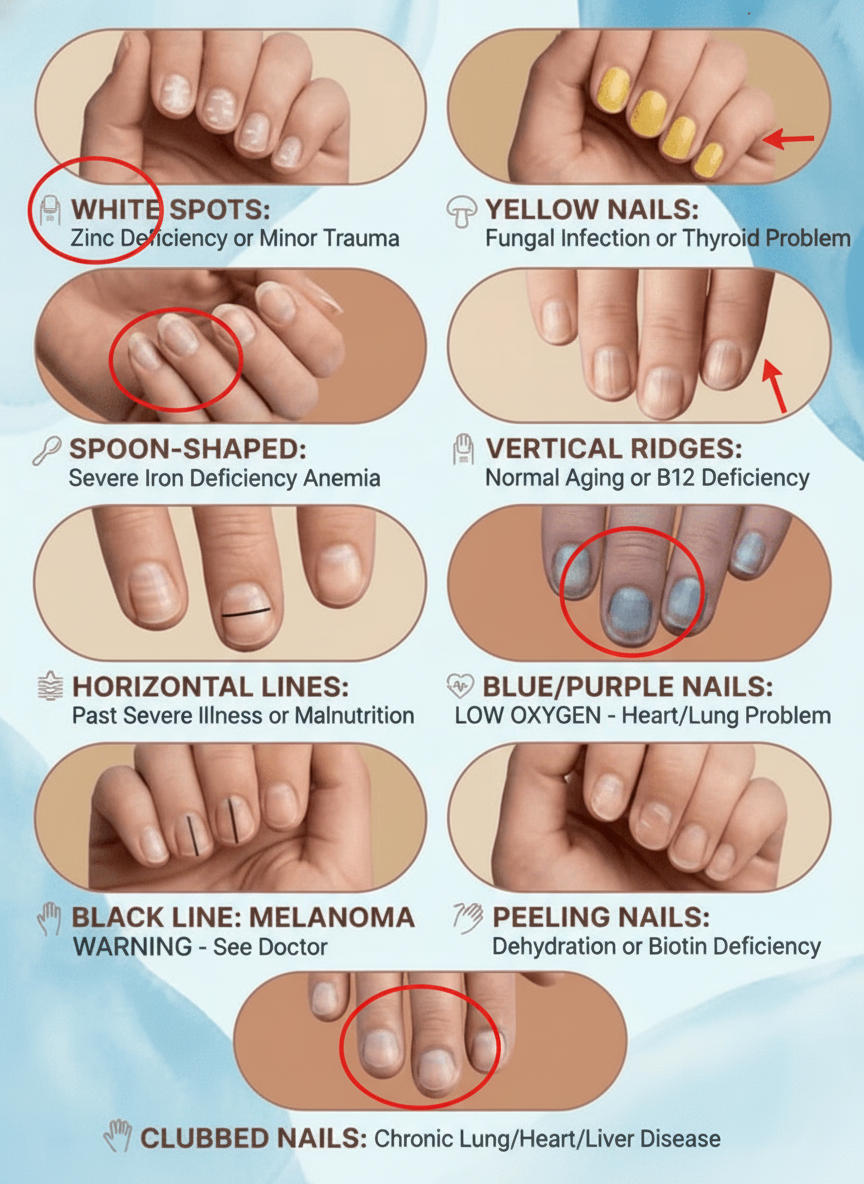
Small white dots or streaks, medically termed leukonychia, are a very common sight, particularly among younger individuals. Often, the primary culprit is minor trauma to the nail bed, such as a bump or impact, with the spot simply growing out as the nail advances. Some studies also suggest a connection between scattered white spots and zinc levels within the body. Should these spots become widespread, numerous, or recurrent, it could signal a need to review dietary intake or potential nutrient absorption challenges. In most instances, these marks resolve spontaneously, but monitoring their frequency or progression can be beneficial.
Yellow Nails
A yellowish discoloration of the nails is most frequently attributed to fungal infections, which can lead to thickening and eventual crumbling of the nail plate. Other contributing factors include smoking, regular application of nail polish without a protective base coat, and the natural aging process. In less common scenarios, persistently yellow nails, often accompanied by slowed growth, have been linked to underlying respiratory conditions or thyroid dysfunction, as highlighted by reputable health organizations like the Cleveland Clinic and WebMD. If your nails remain yellow despite diligent care, seeking a professional medical assessment is highly advisable.
Blue or Purple-Tinged Nails
Nails exhibiting a bluish or purplish tint can be a concerning sign, often indicating diminished oxygen levels in the bloodstream. This particular change may point towards issues with heart or lung function. While not an everyday occurrence, its appearance is distinct and warrants prompt attention.
Black or Dark Lines Under the Nail
The emergence of a new, dark vertical streak, known as melanonychia, can stem from innocuous origins such as a benign mole or a previous injury. Nevertheless, leading medical institutions like the Mayo Clinic and the American Academy of Dermatology (AAD) strongly emphasize that any dark line that changes in appearance, widens, or extends into the cuticle should be evaluated without delay. In rare but serious cases, such a streak can be an early indicator of subungual melanoma, a type of skin cancer. Timely examination often brings reassurance or facilitates earlier detection and treatment of potential problems.
Nail Shape and Texture Changes Worth Noting
Spoon-Shaped Nails (Koilonychia)
When fingernails develop a distinct upward curve at their edges, creating a scooped or concave appearance reminiscent of a spoon, this condition is medically termed koilonychia. In clinical practice and medical literature, this presentation is frequently associated with iron deficiency anemia. Affected nails may even be able to hold a small drop of water in their center. While iron deficiency is a primary cause, other factors, including certain liver conditions, can also contribute. If your nails feel unusually thin and are prone to easy bending, it serves as a strong indication to consult your doctor for relevant blood tests.
Vertical Ridges
Fine, vertical lines running from the cuticle to the tip of the nail are a common finding, particularly as individuals age, and are generally considered harmless. Factors such as dehydration or normal wear and tear on the nail contribute to their appearance. While some anecdotal reports link them to B vitamin levels, the presence of vertical ridges on their own seldom indicates a serious underlying health concern that requires urgent medical attention.
Horizontal Lines or Grooves (Beau’s Lines)
Distinct horizontal indentations or grooves, known as Beau’s lines, stretch across the nail plate from one side to the other. These lines signify a period of temporary interruption or slowing in nail growth, often triggered by significant physiological stress. Common causes include a past high fever, severe systemic illness, periods of malnutrition, or intense psychological stress. Observing multiple Beau’s lines can suggest recurring health disruptions. Although these lines eventually grow out with the nail, their presence and pattern can provide valuable insights into an individual’s recent health history.
Clubbed Nails
Clubbing refers to a condition where the fingertips become enlarged and the nail tips widen and curve downwards, often resembling an inverted spoon. This distinctive change is frequently associated with chronic underlying conditions affecting the lungs, heart, or liver. Clubbing typically develops slowly and progressively over time. If you observe your nails beginning to club or notice this change advancing, it is crucial to seek immediate medical consultation as it can indicate serious internal health issues.
Peeling or Brittle Nails
Nails that frequently peel, split, or break easily are described as brittle. This common issue can be a result of excessive exposure to water or harsh chemicals, frequent use of nail polish removers, or environmental dryness. However, brittle nails can also indicate internal factors such as nutritional deficiencies (e.g., biotin, iron), thyroid problems, or even fungal infections. If you experience persistent brittleness or peeling despite good external care, discussing it with a healthcare provider can help identify and address any potential underlying causes.