 By admin
 Many individuals discover subtle indentations on their lower back, often sparking curiosity about these seemingly mysterious body features. These distinctive small dimples, commonly known as the “Dimples of Venus” (or Dimples of Apollo in men), frequently prompt questions about their origin, potential links to genetics, fitness levels, or even overall health. While their appearance can initially create a sense of intrigue or slight concern when noticed in a mirror, understanding their true nature provides valuable clarity and reassurance. This article will delve into the science behind these common anatomical markers, revealing what they truly signify and exploring the factors that influence their visibility across diverse body types.
Demystifying Lower Back Dimples: What Are the “Dimples of Venus”?
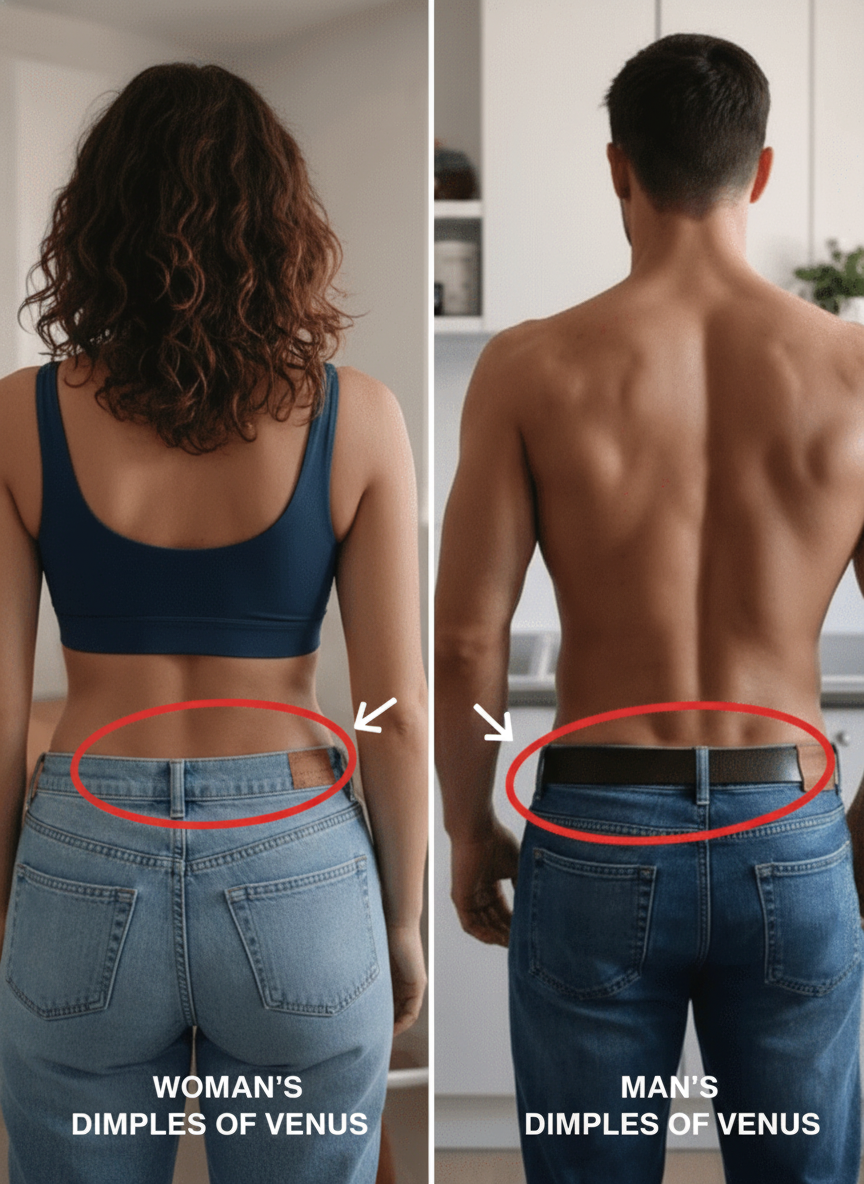
To begin, let’s clarify these distinctive lower back indentations. Far from being actual “holes,” these are shallow, natural depressions known scientifically as the “Dimples of Venus” (Fossa lumbales laterales). Positioned symmetrically on the lower back, just above the buttocks where the pelvis articulates with the spine, their name originates from the Roman goddess of beauty, reflecting their historical association with aesthetic appeal. Anatomical research confirms that these dimples are formed by short ligaments that stretch from the skin directly to the posterior superior iliac spine (PSIS), a prominent bony landmark on the ilium, which is part of the pelvic bone. This connective tissue creates a natural, subtle pull on the skin, resulting in the visible dimple. Furthermore, the prominence of these dimples can vary significantly among individuals. They tend to be more noticeable in those with lower body fat percentages and well-developed, toned muscles in the lower back region, often explaining their visibility in athletes or individuals with higher fitness levels.
The Science Behind Dimples of Venus: Anatomy and Genetics
Delving further into their biological basis, the human back is an intricate network of muscles, bones, and connective tissues. The subtle depressions that form the Dimples of Venus are strategically located over the sacroiliac joints, crucial structures for both stability and movement in the pelvis. As widely documented in authoritative anatomical texts like Gray’s Anatomy, these joints are reinforced by robust ligaments that can exert an inward pull on the overlying skin, thus creating the characteristic indentations. Beyond mere anatomy, research into body composition and human variation, often featured in scientific journals, strongly suggests a significant genetic component. It’s common for these dimples to be an inherited trait; if your biological parents possess them, your likelihood of having them increases substantially. Furthermore, gender differences are notable: Dimples of Venus are frequently more pronounced in women, potentially due to variations in fat distribution patterns and pelvic bone structure. However, men also exhibit these features, often referred to as “Dimples of Apollo.” Population studies suggest that approximately 20-30% of people have noticeable lower back dimples, with prevalence varying across different ethnicities and body types. Crucially, these anatomical features are entirely harmless and are considered purely cosmetic.
Lower Back Dimples: A Sign of Health or Just Anatomy?
While lower back dimples are frequently associated with high levels of fitness or perceived attractiveness, it’s essential to understand their actual physiological significance. From a purely anatomical perspective, prominent Dimples of Venus can indeed correlate with a lower percentage of subcutaneous fat in the lumbar region. This doesn’t, however, position them as a direct indicator of overall health. Instead, their enhanced visibility is often observed in active individuals and those with well-defined musculature. For example, consistent exercises targeting the core and lower back can improve muscle tone and definition in the surrounding area, making these natural indentations more pronounced. Essentially, they serve as a subtle accentuation of your body’s inherent contours. The crucial takeaway is this: these dimples are not diagnostic of any specific health condition. Reputable wellness resources, such as those provided by institutions like the Mayo Clinic, consistently highlight that such body variations are entirely normal and generally not a cause for medical concern. Nevertheless, if you observe sudden or significant changes in your back’s appearance accompanied by other unusual symptoms, seeking professional medical advice for a personalized assessment is always recommended.
Debunking Common Myths About Lower Back Dimples
In the age of social media, where body features often become trending topics, numerous myths and misconceptions surrounding lower back dimples have emerged. One prevalent myth suggests that having these dimples guarantees superior blood circulation or enhanced flexibility in the pelvic area. While some anecdotal accounts might draw such connections, there is currently limited scientific evidence to substantiate these claims. Research in fields like biomechanics, often published in journals such as the Journal of Orthopaedic Research, primarily focuses on critical aspects like joint function rather than purely cosmetic indentations. Another widespread misconception is that these dimples are exclusively reserved for the “genetically blessed.” In reality, factors such as body weight fluctuations, overall body composition, and even posture can significantly influence their visibility for a wide range of individuals. Furthermore, it’s essential to dismiss claims that link lower back dimples to predictions of fertility or exceptional physical strength. These notions typically originate from cultural folklore and popular belief rather than being rooted in evidence-based scientific understanding. In summary, distinguishing between scientific facts and common fiction is key to appreciating your body’s unique characteristics without succumbing to unrealistic expectations or unfounded beliefs.