 By admin
 Dealing with Red Rings and Hair Breakage on Your Child’s Scalp: A Parent’s Guide
Finding a red, circular patch on your child’s scalp accompanied by noticeable hair breakage can be an unsettling experience for any parent. It’s natural for immediate concerns to arise: “What could this be? Is it serious? Will it spread?” The worry and anxiety are completely understandable when your child is experiencing discomfort. You might even feel a sense of guilt or embarrassment, questioning if you overlooked an early sign. However, it’s important to approach this situation calmly and effectively, often without the need for an emergency room visit. This guide will walk you through essential steps and insights that many parents find invaluable in managing such a condition.
What’s Behind Red Rings and Hair Breakage on the Scalp?
When you observe distinctive red, circular patches on the scalp along with strands of hair snapping off, the most frequent culprit is a type of fungal infection known as scalp ringworm, or tinea capitis. Despite its misleading name, there are no actual worms involved. These microscopic fungi flourish in warm, damp conditions, making children particularly susceptible as their immune systems are still maturing. The characteristic redness stems from inflammation in the infected region, while the fungus itself compromises the integrity of hair shafts near the scalp, leading to them breaking rather than shedding naturally. Grasping this underlying cause is crucial for parents to avoid undue alarm and to seek appropriate, safe solutions.
Recognizing Scalp Ringworm (Tinea Capitis)
Tinea capitis stands as a prevalent scalp infection, particularly among school-aged children. Its highly contagious nature means it can spread through several common avenues:
- Direct skin-to-skin contact with an individual carrying the infection.
- Interaction with pets that are asymptomatic carriers of the fungi.
- Sharing personal items like hats, combs, hairbrushes, or other hair accessories.
- Using tools or surfaces that have been contaminated with fungal spores.
Key indicators that your child might have scalp ringworm include:
- Distinctive circular red or scaly patches on the scalp.
- Complaints of itching or a mild burning sensation.
- The appearance of small black dots where hair strands have broken off at the scalp level.
- Noticeable areas of patchy hair thinning or baldness.
Given how readily this condition can spread in environments like schools or playgrounds, prompt identification is vital not only for your child’s well-being but also to prevent transmission to others.
Distinguishing Scalp Ringworm from Other Common Scalp Conditions
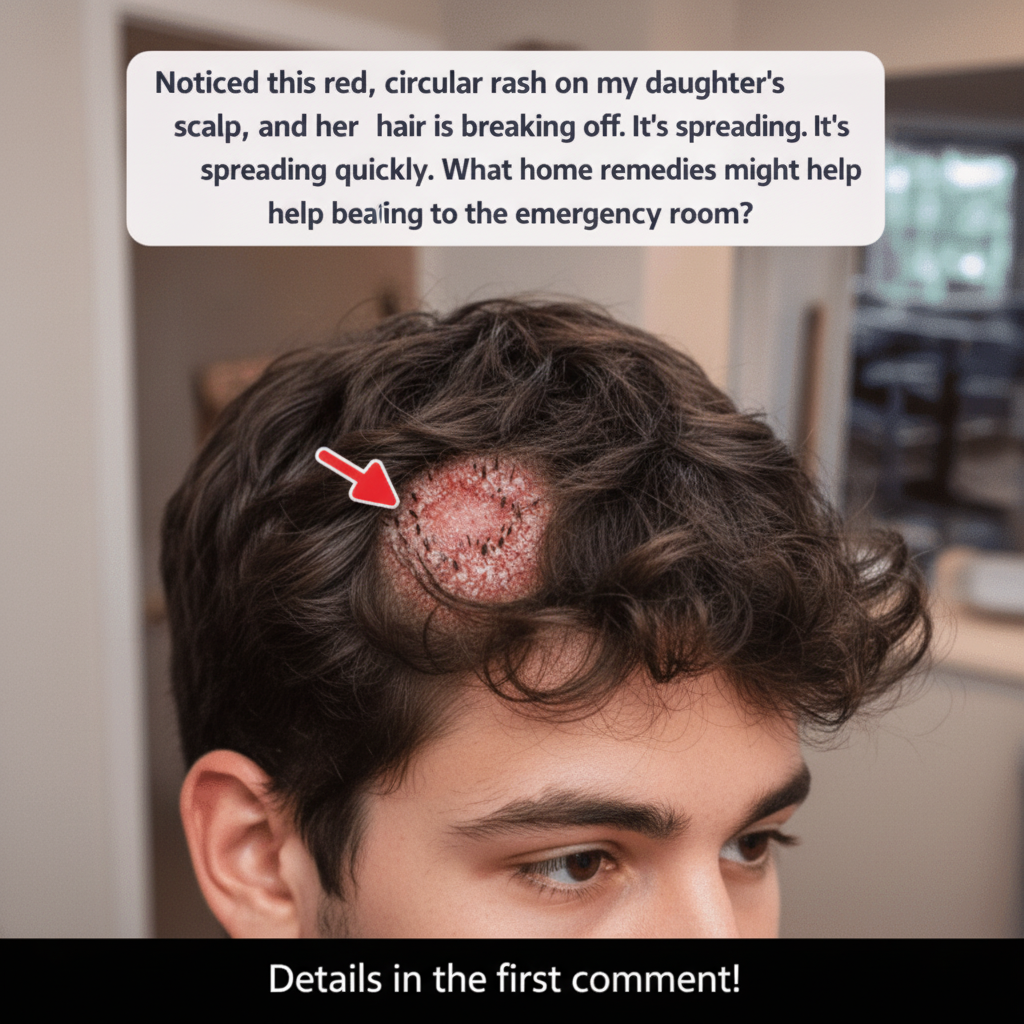
It’s easy for parents to mistake scalp ringworm for other common childhood scalp problems. Here’s how to differentiate it:
| Condition | Key Signs | How It Differs from Ringworm |
|---|---|---|
| Dandruff | Flakes of white or yellowish skin on the scalp and hair. | Lacks the distinct circular red patches and does not cause hair breakage. |
| Eczema | Generally presents as red, inflamed, and often dry or scaly skin, which may appear in other body areas. | Typically doesn’t form the well-defined, spreading ring pattern characteristic of ringworm. |
| Head Lice | Characterized by intense scalp itching, often accompanied by visible lice or their tiny eggs (nits) attached to hair shafts. | Does not result in circular bald patches or the specific type of hair breakage seen with fungal infections. |
The unique combination of a round, often expanding pattern of redness and localized hair snapping sets scalp ringworm apart from these other conditions.
When to Consult a Doctor Without Delay
While many cases of scalp ringworm are not medical emergencies, certain symptoms warrant immediate professional medical attention. Contact your pediatrician or seek urgent care if your child exhibits any of the following:
- A fever exceeding 38°C (100.4°F).
- Significant swelling or intense pain on the scalp.
- Any signs of pus, oozing discharge, or thick crusting on the affected area.
- A noticeably rapid expansion of the red patch.
- If your child appears unusually lethargic, weak, or generally unwell.
Even if you are unsure about the severity, it is always best to have a healthcare professional evaluate your child to ensure proper diagnosis and timely intervention.
Supportive Home Care Steps While Awaiting Medical Consultation
While you are in the process of arranging a medical appointment, there are several gentle steps you can take at home to provide comfort and manage the situation:
- Gentle Cleansing: Use a mild, fragrance-free shampoo and lukewarm water to wash your child’s hair. Be careful not to aggressively scrub or irritate the affected area.
- Preventing Scratching: Itching can be a persistent issue. Try to distract your child with engaging activities like games, reading, or storytelling to deter them from scratching. Scratching can worsen the infection, potentially spread it, or introduce secondary bacterial infections.