 By admin
 Understanding a Sudden Wrist Lump in Older Adults: Potential Causes and When to Seek Medical Advice
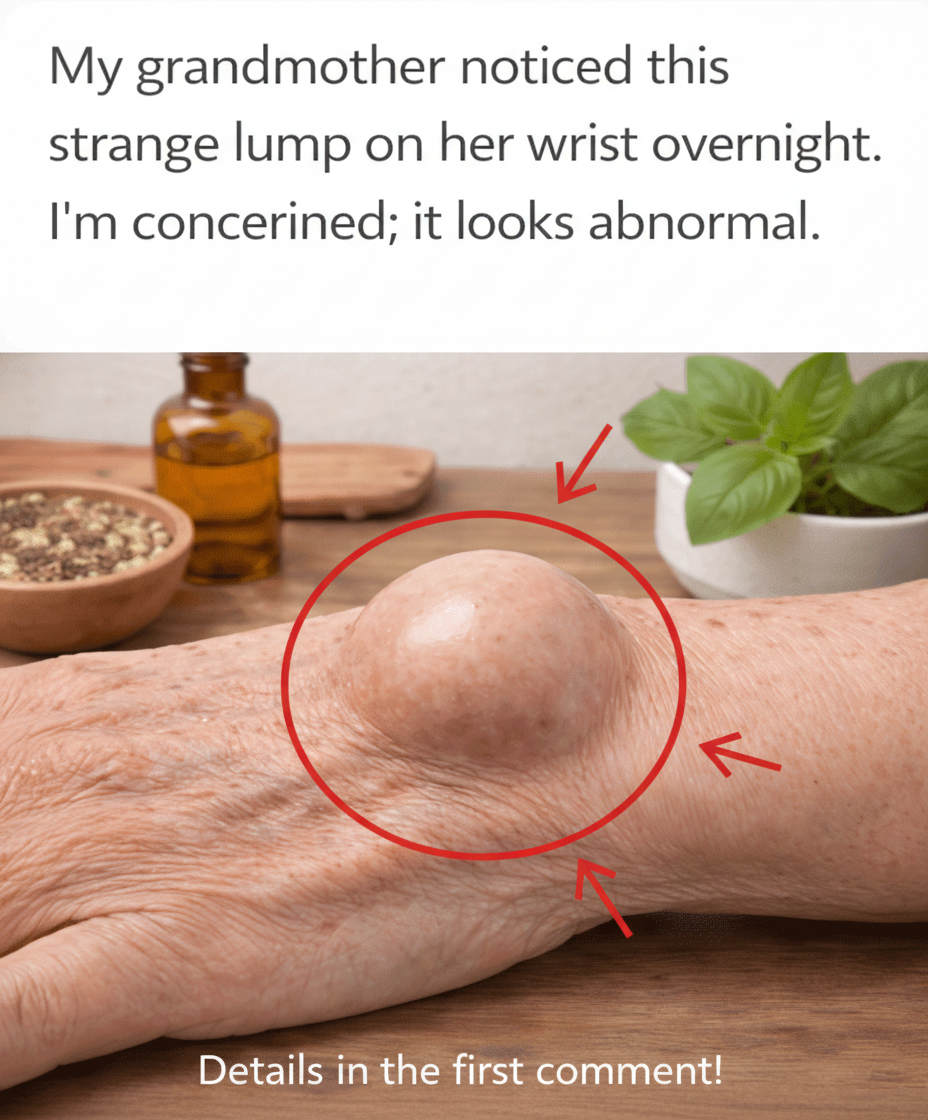
Witnessing the sudden appearance of an unusual lump on your grandmother’s wrist can be a source of significant concern and immediate anxiety regarding her well-being and overall comfort. Such abrupt changes frequently provoke worry, particularly when they manifest in older adults, as new symptoms can sometimes signal more serious underlying conditions. However, it’s reassuring to know that many wrist lumps are ultimately benign. Gaining insight into the probable causes and appropriate next steps can provide much-needed clarity and alleviate feelings of helplessness. Indeed, most sudden growths on the wrist are non-threatening, with one specific type being exceptionally prevalent. This article will delve into what this common culprit might be, explain why such a lump can emerge so quickly, and guide you on how to approach the situation prudently.
The Most Common Suspect: A Ganglion Cyst
The most frequent cause of a sudden wrist lump is often a ganglion cyst. This type of growth is a noncancerous, fluid-filled sac that typically develops close to joints or along tendons, with the wrist being a prime location. Inside these lumps is a thick, gelatinous fluid, similar to the synovial fluid found in joints. Characteristically, a ganglion cyst presents as a round, smooth, and sometimes firm or spongy mass. While they can manifest on either the back (dorsal) or palm (volar) side of the wrist, their appearance can seem quite sudden, occasionally becoming prominent literally overnight due to fluid accumulation or even minor, unobserved stress. It’s common for individuals to discover these cysts during everyday activities, which can understandably amplify alarm due to the abrupt change. While often observed in women and individuals aged 20-40, older adults are certainly not exempt, especially if they have a history of repetitive wrist movements or sustained minor joint strain over the years.
Why Does a Wrist Lump Seem to Appear So Suddenly?
The seemingly abrupt arrival of a ganglion cyst can be perplexing. These cysts are known for their ability to fluctuate in size, becoming more noticeable quite rapidly as a result of joint articulation, minor impacts, or even shifts in the fluid within the joint. Although they may not always materialize in a single night, the point at which they become prominent enough to be observed often feels sudden and can cause considerable alarm. Sometimes, a tiny tear in the joint capsule or the protective sheath around a tendon can allow synovial fluid to escape and collect quickly, forming the cyst and giving the impression that it “appeared out of nowhere,” a common source of worry for concerned family members.
Other Potential Causes of a Wrist Lump
While ganglion cysts are indeed the most frequent type of wrist lump, it’s important to be aware of other benign conditions that could also manifest in a similar way. These include:
- Epidermoid Cysts: These are small, firm lumps located just beneath the skin, filled with keratin—a protein found in skin and hair. They often arise from minor skin trauma.
- Lipomas: Characterized as soft, fatty growths, lipomas typically feel doughy and are easily movable under the skin.
- Carpal Boss: This refers to a hard, bony prominence that develops on the back of the wrist, often at the base of the index or middle finger. It’s usually a result of osteoarthritis or repetitive stress and can feel as rigid as bone.
Less common, but still possible, are conditions such as rheumatoid nodules, which can occur in individuals with rheumatoid arthritis, or localized infections that might lead to swelling. It is crucial to remember that serious conditions like cancerous tumors are exceedingly rare causes of wrist lumps. Nevertheless, any lump that persists, grows, or changes in appearance warrants a professional medical evaluation to ensure an accurate diagnosis.
Identifying Characteristics of a Ganglion Cyst
While only a medical professional can provide a definitive diagnosis, several signs commonly suggest a ganglion cyst:
- Shape and Size: Typically round or oval, varying in size from that of a pea to several centimeters.
- Skin Appearance: The skin overlying the cyst usually remains smooth and normal in color.
- Pain Level: Often painless, though it can cause discomfort, aching, or even weakness if it presses on nearby nerves or interferes with joint movement.
- Size Fluctuation: The size of the cyst might visibly change, often increasing with wrist activity and decreasing with rest.
If your grandmother’s lump exhibits these characteristics and is not accompanied by significant redness, warmth, or fever, it can be somewhat reassuring. However, relying solely on self-observation is insufficient; a professional medical assessment remains essential for complete peace of mind and proper management.
When to Consult a Doctor About a Wrist Lump
While many wrist lumps are benign, it is always prudent to seek medical advice. You should contact a healthcare provider without delay if your grandmother’s wrist lump:
- Exhibits Rapid Changes: If it grows quickly or undergoes a noticeable change in shape.
- Shows Signs of Infection: Becomes red, feels warm to the touch, is tender, or if she develops a fever. These symptoms could indicate an underlying infection.
- Causes Significant Symptoms: Leads to considerable pain, numbness, tingling sensations, or weakness in the hand or fingers.
- Impairs Function: Begins to interfere with her ability to perform daily activities or affects normal wrist movement.
Given that your grandmother is an older adult, an earlier medical evaluation is particularly advisable. This ensures that any age-related joint conditions or other potential issues are promptly identified and addressed, providing the best possible care.
How Healthcare Professionals Diagnose a Wrist Lump
When you consult a healthcare provider about a wrist lump, the diagnostic process typically begins with a thorough physical examination. The doctor will carefully assess the lump’s size, texture, its mobility under the skin, and any tenderness upon palpation. To gain further insight and confirm the diagnosis, they may utilize various imaging techniques:
- Ultrasound: This imaging method is frequently employed to determine if the lump is fluid-filled, a common characteristic of ganglion cysts.
- X-ray: An X-ray might be ordered to rule out any underlying bone abnormalities or involvement.
- MRI (Magnetic Resonance Imaging): If a more detailed view of the soft tissues, nerves, and surrounding structures is required, an MRI scan may be recommended.
Additionally, a procedure called aspiration—where fluid is drawn from the lump with a needle—can quickly confirm a ganglion cyst if the characteristic jelly-like fluid is extracted.
Treatment Approaches for Wrist Lumps, Especially Ganglion Cysts
It’s important to note that many ganglion cysts do not require active treatment. They can often shrink or even disappear spontaneously over time. However, if the lump is causing discomfort, pain, or interfering with daily life, several management options are available:
- Watchful Waiting and Activity Modification: Often, the initial approach involves monitoring the cyst and adjusting activities that might aggravate it.
- Splinting: Wearing a wrist splint can help limit movement, reduce irritation, and potentially encourage the cyst to shrink.
- Aspiration: This procedure involves draining the fluid from the cyst using a needle. While effective in reducing the cyst’s size, recurrence is a common possibility.
- Surgical Removal: For persistent, painful, or frequently recurring cysts, surgical excision may be recommended. This involves removing the cyst along with its “stalk” or root, which helps to significantly lower the risk of future recurrence.
Crucially, never attempt to pop or smash the lump at home. Such actions can lead to serious complications, including infection or further injury to the wrist.
Supporting Your Grandmother Through Her Health Concerns
When discussing this new development with your grandmother, it’s vital to approach the conversation with empathy and calm. Instead of expressing alarm, convey your genuine care and concern for her well-being. Offer practical support, such as assisting with scheduling doctor’s appointments, accompanying her, or taking notes during consultations. Your reassurance and practical help can make a significant difference in alleviating her anxiety during this time.