 By admin
 10 Crucial Breast Cancer Warning Signs Every Woman Must Recognize for Early Detection
Breast cancer remains one of the most prevalent cancers impacting women globally, and understanding its early indicators can dramatically improve treatment outcomes. While many women first notice changes during routine activities like bathing or dressing, subtle signs are often overlooked because they appear minor or fleeting. The reality is, these seemingly insignificant alterations can sometimes signal a serious underlying condition that demands prompt medical evaluation.
Ignoring a slight change in your breast could mean missing an early clue—a scenario no one wants to face. Leading health organizations such as the American Cancer Society and Mayo Clinic consistently emphasize that early recognition of these signs and timely consultation with a healthcare professional are pivotal for effective management strategies. This comprehensive guide will detail 10 vital warning signs that should never be disregarded, presented in clear language to empower you to take proactive steps for your health.
1. A New Lump or Thickening in the Breast or Underarm Area
The most commonly reported symptom is the discovery of a new lump or an area of thickened tissue within the breast or in the armpit (medically known as the axilla). This mass might feel firm, often painless, and possess an irregular shape, though some can be soft or sensitive to the touch. Data from the American Cancer Society indicates that while the majority of breast lumps are benign (non-cancerous), any newly discovered lump necessitates professional assessment. Do not delay seeking medical advice simply because it doesn’t cause pain—many early cancerous changes are asymptomatic.
To aid in early detection, incorporate a monthly breast self-examination into your routine, either in the shower or while lying down. Use the pads of your fingers, not your fingertips, to apply gentle, circular pressure across both breasts and armpits consistently. However, remember that a noticeable lump is just one potential indicator; other changes can manifest without a distinct mass.
2. Unexplained Swelling or Density Changes in Part of the Breast
Even without a clearly defined lump, you might observe swelling or a noticeable thickening in a specific section of the breast, or a change in its overall density compared to other areas. This alteration can affect an entire breast or just a portion, potentially making one breast appear or feel different from the other. The Centers for Disease Control and Prevention (CDC) highlights that such swelling can occur even when no lump is palpable, possibly resulting from blocked lymph vessels or other tissue modifications.
3. Significant Changes in Breast Size or Shape
Any sudden, unexplained alteration in the size or contour of one breast—unrelated to factors like weight fluctuations, pregnancy, or typical hormonal cycles—warrants immediate attention. A breast that becomes noticeably larger, smaller, or develops an unusual shape can be a critical indicator. Research consistently underscores that new or progressing asymmetry of the breasts, particularly without a clear explanation, should prompt an urgent consultation with your doctor.
4. Skin Dimpling, Puckering, or an Orange-Peel Texture
The skin covering the breast may develop noticeable dimples, puckers, or take on a texture similar to an orange peel, a condition medically termed peau d’orange. These visual changes often arise when underlying breast tissue pulls on the skin. According to resources from the Mayo Clinic, such visible skin alterations are important diagnostic clues, signaling potential changes beneath the surface.
- Normal Skin: Typically smooth and uniform in texture, free from pitting or indentations.
- Concerning Skin: Persistent dimpling, puckering, noticeable thickening, or rough, uneven patches.
5. Persistent Redness, Irritation, or Scaling of the Breast Skin
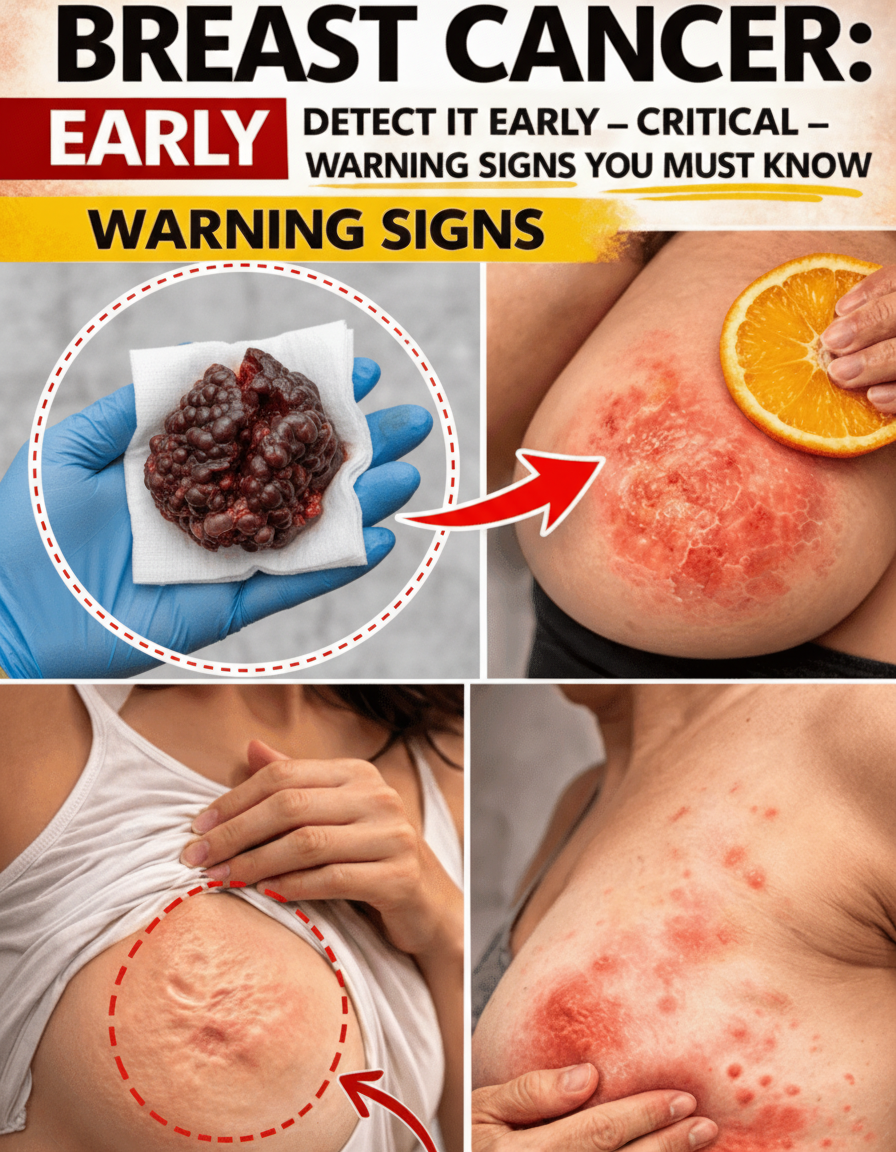
The appearance of persistent redness, rash-like irritation, scaliness, or flaking on the breast skin—especially if it covers a significant area—can indicate a problem. In some instances, the affected breast may feel warm to the touch or appear inflamed. While these symptoms can mimic common inflammatory skin conditions, they should not be dismissed if they fail to resolve promptly or worsen.
6. New Nipple Retraction or Inversion
A nipple that suddenly begins to turn inward (retracts) or flatten, particularly if it previously protruded, is a significant sign that needs evaluation. This change is distinct from nipples that have always been naturally inverted. The American Cancer Society identifies new nipple retraction or any noticeable change in its position as a potential warning sign of breast cancer.
7. Nipple Discharge Unrelated to Breastfeeding
Any discharge from the nipple that is not associated with breastfeeding—whether it is clear, bloody, or occurs spontaneously without squeezing—requires professional assessment. Spontaneous discharge, especially from a single milk duct, is particularly concerning. While nipple discharge can vary in nature, any unexplained type should be promptly discussed with a healthcare provider.
8. Persistent Nipple or Breast Pain
Although pain is not among the most common early indicators of breast cancer, persistent discomfort in the breast or nipple area, unrelated to your menstrual cycle or a recent injury, can sometimes be a symptom. Breast cancer-related pain is often characterized as constant and non-cyclical. If you experience unexplained breast pain that lasts for several weeks, it is crucial to have it examined by a medical professional.
9. Changes in Nipple or Areola Appearance or Texture
Beyond inversion, pay close attention to other alterations around the nipple or the areola (the darker skin surrounding the nipple). These can include crusting, flaking, redness, or scaling. Such changes might resemble conditions like eczema but persist despite typical treatments. These textural and visual alterations affecting the nipple and areola warrant medical review.
Recognizing these warning signs is a powerful step towards early detection and better outcomes in the fight against breast cancer. If you notice any of these changes, do not hesitate to contact your doctor or a healthcare provider for a thorough examination. Your health is paramount, and proactive awareness can make all the difference.