 By admin
 Constantly battling dry, rough hands can be more than just an annoyance; it can impact daily comfort and even make your skin appear prematurely aged. Factors like harsh weather, frequent washing, and household chores relentlessly strip away moisture, leaving your hands feeling unpleasantly coarse. When everyday actions, from typing to holding a warm mug, serve as reminders of persistent dryness and uneven texture, it’s natural to seek effective solutions.
Many turn to popular DIY hand care remedies, such as combining Vaseline with baking soda, hoping for a quick fix to achieve softer skin. However, making truly informed decisions about your skin’s health requires a deeper understanding of these methods. Join us as we explore the realities behind this viral trend and reveal a much safer, more effective strategy to transform your hand care routine.
What’s Behind the Vaseline and Baking Soda Hand Treatment Trend?
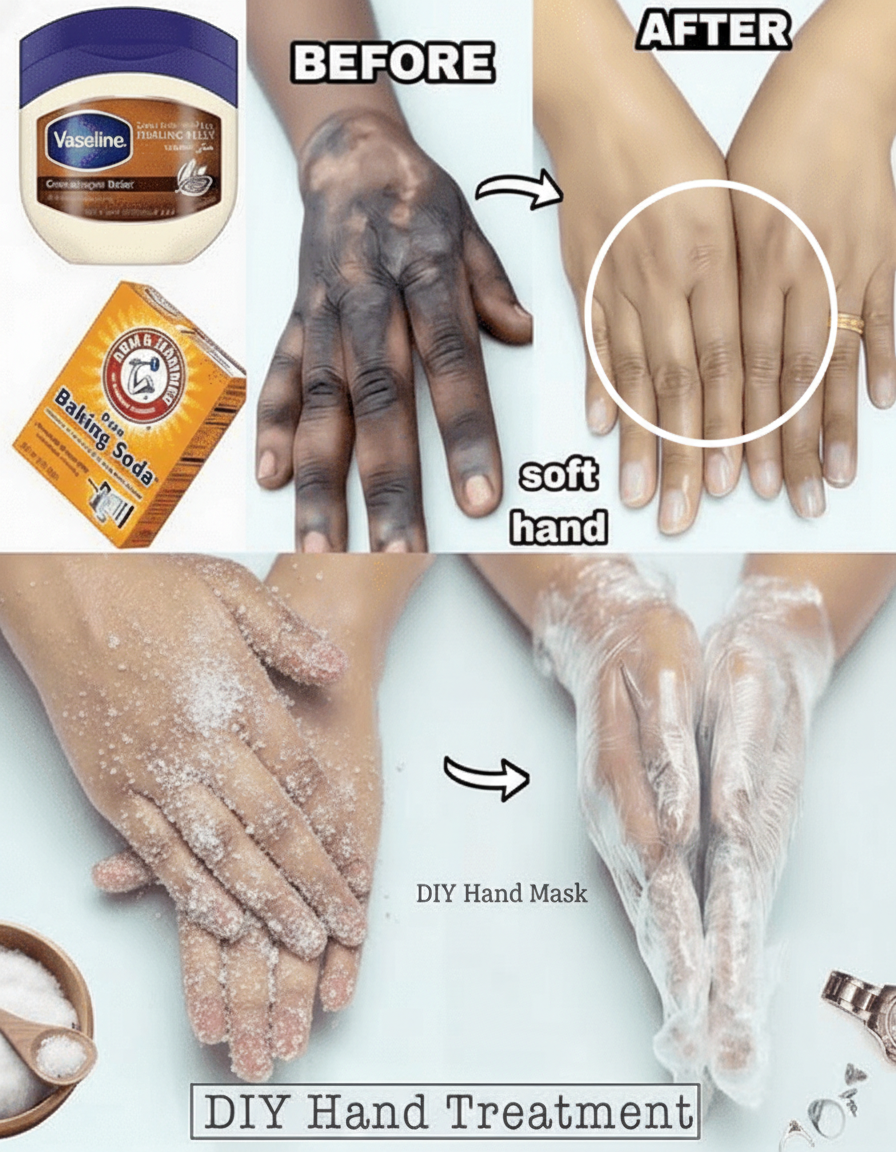
The internet, particularly social media platforms, is awash with viral posts showcasing remarkable before-and-after images of hands seemingly revitalized by a straightforward blend of Vaseline and baking soda. This prevalent DIY hand treatment typically involves concocting a paste from these two common household staples, applying it liberally to the hands, and frequently leaving it on overnight, with the promise of achieving exceptionally soft skin.
But what’s the fundamental concept driving this popular hack? Its origins lie in the distinct characteristics of each component. Vaseline, a widely recognized brand of petroleum jelly, has maintained its status as a skincare essential for well over a hundred years, celebrated for its occlusive properties. Baking soda, scientifically known as sodium bicarbonate, is primarily known for its roles in baking and as a household cleaning agent.
The standard application method usually recommends mixing equal quantities of Vaseline and baking soda, applying the mixture generously, and then covering the hands with plastic wrap or gloves for several hours, often overnight. Advocates of this routine assert that it delivers both skin exfoliation and deep moisturization. However, the crucial question remains: do these claims hold up under scrutiny? Let’s delve into the evidence.
Potential Benefits: Why This Combination Appeals to Many
It’s important to acknowledge why this particular blend has gained traction. Numerous individuals share anecdotal accounts of positive outcomes, and there is indeed a logical basis for its perceived, albeit temporary, effectiveness. Vaseline, a renowned emollient, boasts well-documented moisturizing capabilities. It functions by creating an occlusive barrier on the skin’s surface, which significantly reduces transepidermal water loss and thereby enhances skin hydration. Research consistently supports its efficacy in maintaining skin moisture, particularly in cases of dryness or minor skin abrasions.
Baking soda, on the other hand, introduces an exfoliating element to the mix. Its fine, granular texture can mechanically remove superficial dead skin cells and rough patches, much like other physical scrubs. Some proponents also suggest that baking soda possesses mild antibacterial properties, which could potentially address minor topical issues. When combined, the immediate result might be hands that feel noticeably smoother directly after application.
Users frequently report a sensation of “softness” following the routine, attributing it to the initial exfoliation followed by Vaseline’s occlusive, moisture-sealing action. Here’s a summary of the commonly reported advantages:
- Instant Smoothness: The abrasive action helps remove surface dead skin cells, leading to a smoother feel.
- Hydration Lock: Vaseline effectively seals in existing moisture, offering a temporary boost.
- Accessibility & Affordability: Both ingredients are inexpensive and readily available in most households.
- Convenient Overnight Use: The practice easily integrates into bedtime routines for busy individuals.
However, it is crucial to temper these observations with a significant caveat: these reported benefits are predominantly anecdotal. There is a notable absence of comprehensive, large-scale scientific studies specifically validating this precise mixture for hand care. This distinction is vital because while a short-term pleasant sensation might be achieved, it doesn’t necessarily equate to long-term skin health or safety.
The Possible Risks and Significant Downsides of This DIY Hand Remedy
While the allure of a quick fix is strong, it’s imperative to consider the potential drawbacks and real risks associated with any skin care hack, and this Vaseline and baking soda combination is no exception. A primary concern revolves around baking soda’s pH level. With an approximate pH of 9, it is distinctly alkaline. In stark contrast, healthy human skin maintains a naturally slightly acidic pH, typically ranging between 4.5 and 5.5. Direct application of an alkaline substance like baking soda can severely disrupt this delicate skin pH balance, potentially leading to increased dryness, redness, and significant irritation over time.
Warnings against using baking soda on the skin are prevalent across various skincare forums and expert communities due to these very risks. While Vaseline (petroleum jelly) is widely regarded as safe and highly effective for relieving dry skin, as affirmed by reputable health organizations like the Mayo Clinic, its combination with an abrasive substance like baking soda presents unique problems. The occlusive nature of Vaseline can inadvertently trap baking soda particles against the skin, raising the risk of microscopic tears or clogged pores.
Furthermore, prolonged, especially overnight, use of such a thick, occlusive layer combined with an abrasive can lead to over-moisturization. This creates an overly damp environment where the skin can become weakened and prone to breakdown, a condition medically termed maceration. Additional concerns include:
- Increased Irritation for Sensitive Skin: Individuals with pre-existing conditions like eczema or generally sensitive skin are particularly vulnerable to flare-ups and heightened discomfort.
- Potential Allergic Reactions: Although uncommon, impurities present in less purified products could trigger adverse reactions.
- Lack of Long-Term Efficacy: This routine fails to address the root causes of chronic dryness, such as frequent handwashing or environmental exposure, offering only superficial relief.
- Hygiene Concerns: Sealing hands in plastic or gloves for extended periods without proper sanitization can create an ideal breeding ground for bacteria, increasing the risk of infection.
A Safer, Dermatologist-Recommended Overnight Routine for Soft Hands
Given the potential risks associated with the Vaseline and baking soda mixture, it’s far wiser to opt for a dermatologist-recommended hand care routine that genuinely promotes skin health without compromising its integrity. The goal is to gently exfoliate, deeply moisturize, and allow for optimal repair overnight. Here’s a simple yet highly effective approach:
Step 1: Gentle Cleansing and Exfoliation (Evening)
Start by washing your hands with a mild, hydrating cleanser, avoiding harsh soaps that strip natural oils. Once clean, consider a very gentle chemical exfoliant (like a lactic acid or urea-based cream) specifically formulated for hands, or a mild physical scrub designed for sensitive skin, using it sparingly—perhaps once or twice a week. This helps remove dead skin cells without disrupting the pH balance or causing micro-tears.
Step 2: Apply a Rich Moisturizer (Evening)
Immediately after cleansing and optional exfoliation, while your skin is still slightly damp, apply a generous amount of a rich, emollient hand cream or balm. Look for ingredients like ceramides, hyaluronic acid, shea butter, glycerin, and yes, petroleum jelly (Vaseline) itself. Vaseline is an excellent occlusive on its own, without abrasive additions, to lock in moisture.
Step 3: Occlusion with Cotton Gloves (Overnight)
For an intensive overnight hand treatment, once your moisturizer is applied, slip on a pair of clean, soft cotton gloves. These gloves help to:
- Enhance the absorption of the moisturizer.
- Prevent the cream from rubbing off on your bedding.
- Create a protective, healing environment for your skin.
Step 4: Consistent Morning Care
In the morning, remove the gloves and gently massage any remaining product into your skin. Throughout the day, continue to moisturize frequently, especially after washing your hands. Consider keeping a small tube of hand cream in your bag, at your desk, and by every sink.
Why This Routine is Superior:
- Respects Skin Barrier: Uses products that support your skin’s natural pH and protective barrier.
- Targeted Ingredients: Leverages scientifically proven moisturizers and gentle exfoliants.
- Sustainable Results: Focuses on long-term skin health, not just temporary fixes.
- Reduced Risk: Minimizes the chances of irritation, maceration, or allergic reactions.
Prioritize Your Hand Health with Informed Choices
While the allure of quick DIY beauty hacks like the Vaseline and baking soda mixture for achieving soft hands is understandable, the potential risks to your skin health often outweigh the temporary, anecdotal benefits. Disrupting your skin’s natural pH balance or causing micro-abrasions can lead to more significant issues than the dryness you started with.
Instead, by adopting a consistent, gentle, and scientifically sound hand care regimen, you can achieve genuinely soft, smooth, and healthy hands. Prioritize proven methods that respect your skin’s delicate barrier and provide lasting nourishment. Your hands work hard for you every day; treat them with the care they truly deserve.