 By admin
 Essential Guide: Safely Identifying Datura Plants in Your Garden and Neighborhood
Spending time in nature, whether in your backyard or a local park, is a cherished activity for many. However, encountering unfamiliar flora can often spark unease, particularly when certain plants bear a resemblance to common garden varieties or weeds. This uncertainty can escalate into genuine concern about potential health risks from accidental exposure, especially for curious children and pets who frequently explore their surroundings. Equipping yourself with the knowledge to identify specific plants, such as the potentially toxic Datura, is crucial for fostering a safer environment around your home. This comprehensive guide will walk you through the key identification features of Datura and provide actionable safety tips. Stay with us until the end to discover a simple, yet effective, daily habit that can significantly enhance plant awareness for everyone in your household.
Understanding Datura Plants
Datura, a fascinating yet potentially dangerous genus of flowering plants, belongs to the Solanaceae family, more commonly known as the nightshade family. Several species of Datura are prevalent across various regions, including the United States and many other parts of the world. These hardy plants typically thrive in warm climates and are frequently found in disturbed areas such as roadsides, neglected fields, construction sites, and even cultivated gardens or vacant lots. Often referred to by common names like “thornapple” or “jimsonweed,” Datura species can be annual or perennial herbaceous plants, sometimes growing into bushy forms up to 5 feet (1.5 meters) in height. They are characterized by their branching stems, which can display a purplish hue or a fine, hairy texture. Early recognition of these plants is vital for maintaining a safe and vigilant approach to your outdoor spaces. Let’s delve into their distinctive characteristics.
Key Identification Features of Datura
Accurate identification of Datura begins with a careful observation of its distinct structural components.
Leaves and Stems
Datura leaves are notably large, typically ranging from 3 to 8 inches (7.5 to 20 cm) in length. They possess an ovate to broadly elliptical shape, often with wavy or irregularly toothed margins. The foliage is generally dark green and can have a somewhat coarse or rough texture. A key identifier is the distinctive, unpleasant odor released when the leaves are crushed; many describe it as a strong, musky, or even foul smell, sometimes likened to rancid peanuts or a damp, stale scent. The stems are robust and can vary in color from light green to a purplish tint, often featuring a fine, hairy coating in certain species. Crucially, the sap within the stems and leaves can cause irritation upon contact with sensitive skin, necessitating caution.
Flowers
The flowers are perhaps the most striking feature of Datura. These prominent, trumpet-shaped blooms can either hang pendulously or stand erect, depending on the species. They typically come in shades of white, pink, or purple, characterized by their five pointed lobes at the opening. Known as vespertine flowers, they famously unfurl in the evening, releasing a surprisingly sweet, heavy fragrance that effectively lures nocturnal pollinators. These impressive blossoms can reach up to 8 inches (20 cm) in length, making them particularly noticeable during twilight hours. Datura plants usually put on their floral display from early summer well into the fall.
Fruits and Seeds
Following the bloom, Datura plants produce distinctive globular fruit capsules, densely covered with sharp spines, which gives rise to one of its common names, “thornapple.” These pods are green and spiky when immature, gradually turning brown and dry as they ripen. Upon maturity, the capsules typically split into four distinct segments, dispersing a multitude of small, kidney-shaped seeds. It’s imperative to exercise extreme caution with these fruits and seeds, as they are highly toxic. Although the seeds might bear a superficial resemblance to miniature tomatoes, they must never be touched or ingested.
Comparison with Look-Alikes
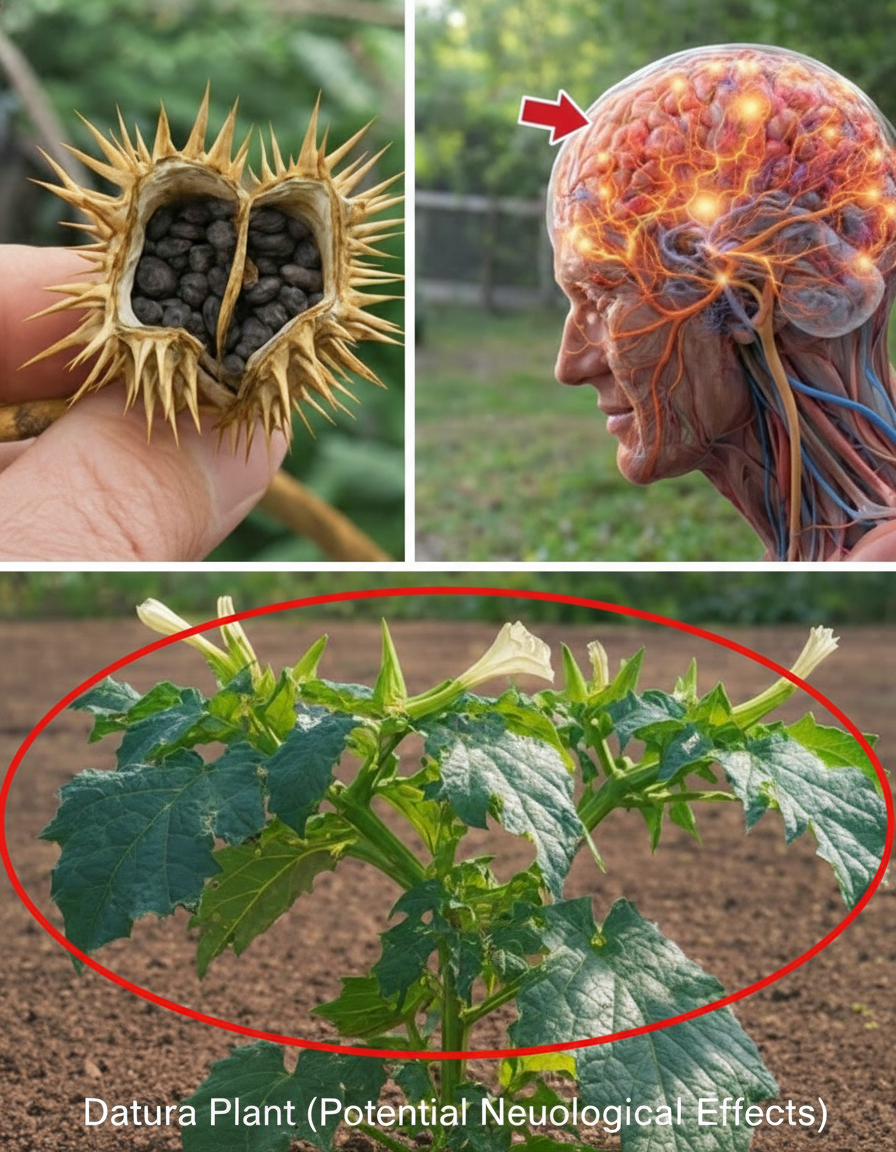
Distinguishing Datura from similar-looking plants is essential to prevent misidentification. The table below provides a clear comparison with common look-alikes, such as Morning Glory and its close relative, Brugmansia.
| Feature | Datura (Thornapple/Jimsonweed) | Morning Glory (Look-Alike) | Brugmansia (Angel’s Trumpet – Related) |
|---|---|---|---|
| Flower Shape | Large, trumpet-shaped, often hanging or erect with pointed lobes. | Upright, funnel-shaped, typically smaller. | Very large, pendulous, trumpet-shaped flowers. |
| Leaf Edges | Jagged, wavy, or irregularly toothed. | Generally smooth or slightly wavy. | Broad, often wavy margins. |
| Fruit | Distinctive spiky, globular capsule (thornapple). | Small, smooth, rounded seed pod. | Smooth or slightly spiny elongated pod. |
| Smell | Strong, unpleasant odor when leaves are crushed. | Mild or no distinct scent. | Sweet, often potent, pleasant fragrance. |
| Stem | Sturdy, can be purple-tinged, often hairy. | Slender, green, smooth, often vining. | Woody, tree-like structure. |
This detailed comparison, grounded in botanical characteristics, underscores the unique traits that set Datura apart.
Potential Health Risks Associated with Datura
It is critically important to understand that every part of the Datura plant—leaves, stems, flowers, fruits, and especially the seeds—contains potent tropane alkaloids, including atropine, scopolamine, and hyoscyamine. These compounds, when ingested or absorbed, can have severe effects on the human body, as extensively documented in medical literature. Symptoms of exposure can manifest as dry mouth, dilated pupils, blurred vision, disorientation, hallucinations, rapid heartbeat, and even convulsions or coma in severe cases. The Centers for Disease Control and Prevention (CDC) has recorded numerous instances of accidental Datura poisoning, highlighting the urgent need for public awareness. The fundamental truth remains: informed knowledge significantly mitigates risks. Furthermore, direct skin contact with Datura sap can cause irritation or allergic reactions in sensitive individuals; therefore, wearing protective gloves is strongly recommended when handling the plant. Data from poison control centers consistently show that the majority of incidents stem from unintentional contact or ingestion, reinforcing the necessity of careful identification and avoidance.
Actionable Steps for Safe Datura Identification
To ensure your safety and that of others, follow these practical, step-by-step guidelines when attempting to identify Datura plants:
- Observe from a Safe Distance: Always maintain a respectful distance. Look for the characteristic trumpet-shaped flowers and spiky seed pods without making any physical contact.
- Note the Environment: Datura plants commonly thrive in sunny, disturbed ground. Pay attention to locations such as garden edges, fence lines, vacant lots, roadsides, and areas with recently turned soil.
- Assess for Distinctive Odor (Indirectly): If you suspect a plant might be Datura, gently wave your hand near its leaves to circulate the air. Do not touch the plant directly, but try to discern any strong, unpleasant, or musky scent that might be present.
- Cross-Reference Features: Utilize reliable plant identification resources, such as specialized field guides or reputable plant identification mobile applications. Compare the plant’s features—leaves, flowers, fruits, and stem—against confirmed images and descriptions of Datura.
- Document and Consult: If you remain unsure, take clear photographs of the plant from various angles. These images can be invaluable for later reference or for consulting with local horticultural experts, botanists, or your regional extension office.
These careful steps, derived from best horticultural practices, are designed to promote safe and responsible plant identification habits.
Cultivating Habits for Ongoing Plant Safety
Beyond one-time identification, integrating consistent habits into your daily routine can significantly enhance plant awareness and safety for everyone in your home, especially children and pets.
- Regular Garden Surveys: Make it a habit to routinely walk through your garden and yard. A quick visual inspection, perhaps once a week, allows you to spot new or unfamiliar growth early on. This proactive approach ensures you can identify and address potential Datura plants before they become established or pose a greater risk.
- “Look, Don’t Touch” Rule: Instill a firm “look, don’t touch” policy for all unknown plants with children and pets. Teach them that only adults can determine which plants are safe to interact with. This simple rule is a powerful preventative measure against accidental exposure.
- Educate and Discuss: Periodically discuss plant safety with your family. Point out examples of common safe plants and, from a distance, highlight any potentially harmful ones in your neighborhood (like Datura) so they learn to recognize and avoid them.
- Utilize Resources: Keep a trusted plant identification app or field guide handy. Make it a fun family activity to identify plants together, fostering a sense of curiosity while reinforcing safety.
By adopting these habits, you transform plant identification from a chore into a seamless part of your outdoor routine, creating a safer and more informed environment for your entire household.