 By admin
 Unmasking Silent Threats: Subtle High Cholesterol Signs & Essential Habits for Heart Health
In our busy lives, juggling careers, family, and daily pressures, it’s easy for health issues to develop unnoticed. High cholesterol is a prime example, often progressing silently without obvious symptoms or pain. This stealthy nature makes it dangerously easy to ignore until more serious cardiovascular problems emerge. For those with a family history of heart disease, this silent threat can be particularly concerning. However, what many don’t realize is that our bodies can offer subtle clues, and our daily routines hold significant power in managing this condition. Understanding these nuanced high cholesterol warning signs and adopting proactive habits can be truly transformative for your heart health. 🫀
What Is High Cholesterol and Why It Demands Your Attention
At its core, high cholesterol signifies an unhealthy elevation of cholesterol levels within your bloodstream, specifically an excess of low-density lipoprotein (LDL), commonly referred to as ‘bad’ cholesterol. When these levels remain consistently high, a gradual and dangerous process begins: fatty deposits, known as plaque, start to accumulate along the inner walls of your arteries. This insidious buildup, over time, can significantly narrow and harden the arteries, impeding vital blood flow. This arterial restriction is precisely why high cholesterol is a major precursor to serious cardiovascular diseases, including heart attacks and strokes.
The truly challenging aspect of high cholesterol lies in its asymptomatic nature. Many individuals with dangerously high levels experience no discernible symptoms, feeling entirely normal even as their blood vessels are quietly compromised. Medical studies consistently highlight that a vast majority of people only discover their elevated cholesterol through routine blood screenings, not because they’ve experienced any noticeable discomfort or illness. This underscores a critical truth: relying solely on how you feel is insufficient.
Grasping the nuances of high cholesterol, its subtle indicators, and associated risk patterns can empower you. Instead of feeling anxious or helpless, this knowledge equips you to take proactive steps towards better health management.
⚠️ Subtle High Cholesterol Warning Signs That Warrant Attention
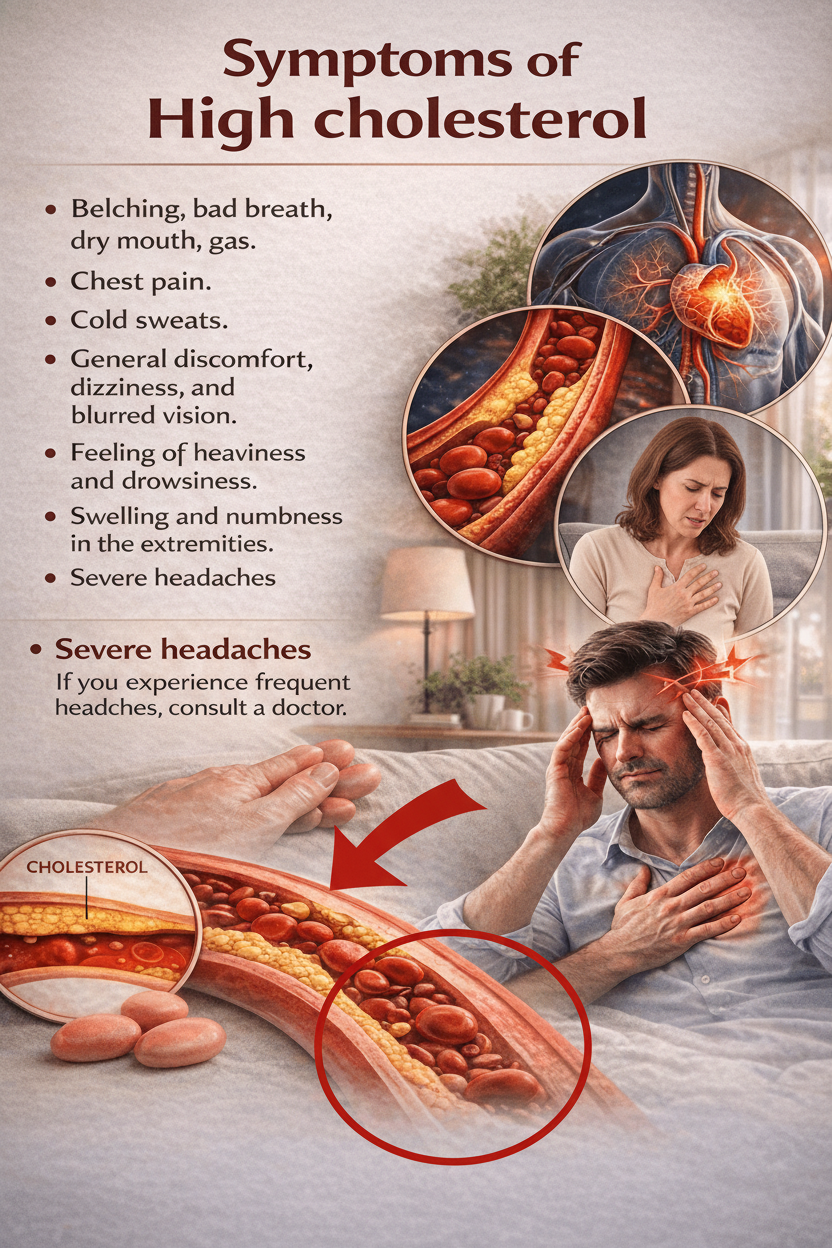
While high cholesterol often remains symptomless for years, prolonged elevation can, in some instances, manifest as certain physical changes. These aren’t direct ‘symptoms’ in the typical sense, but rather external indicators that could signal an underlying issue.
- Yellowish Patches Around the Eyes (Xanthelasma): One visible clue can be the appearance of small, soft, yellowish patches, typically found near the eyelids. These harmless deposits, medically termed xanthelasma, are often indicative of lipid accumulation in the body. If you’ve observed such changes, it’s a good prompt to discuss a cholesterol screening with your doctor.
- A Gray or White Ring Around the Cornea (Corneal Arcus): A faint, pale ring encircling the colored part of the eye, known as corneal arcus, can also be linked to elevated cholesterol, especially when observed in younger individuals. Though this ring doesn’t impair vision, its presence can be a signal that high cholesterol levels warrant investigation.
- Chest Discomfort or Shortness of Breath: This particular sign carries more immediate concern. When arterial narrowing, a consequence of high cholesterol, becomes significant, you might experience a sensation of chest tightness or breathlessness, particularly during physical exertion. While easily dismissed as general stress or exhaustion, these symptoms could be a critical indicator of compromised blood flow due to cholesterol buildup.
- Unusual Fatigue During Mild Activity: Experiencing disproportionate tiredness or exhaustion during routine, light activities can be both perplexing and disheartening. While fatigue has numerous potential causes, advanced cases of high cholesterol can lead to circulatory problems that hinder efficient oxygen delivery throughout the body, contributing to profound tiredness.
It’s crucial to reiterate: many individuals with high cholesterol report feeling perfectly healthy. This is precisely why proactive prevention and regular testing are indispensable tools for managing your heart health.
🧬 Understanding Your Risk: Who Is More Susceptible to High Cholesterol?
The development of high cholesterol is seldom a random event; it’s often influenced by a combination of lifestyle choices and genetic predispositions that collectively heighten your susceptibility over time. You might find yourself in a higher risk category for elevated cholesterol if any of the following factors apply:
- Dietary Choices: Consuming a diet rich in saturated and trans fats, alongside an abundance of highly processed foods, significantly contributes to unhealthy cholesterol levels.
- Family History: A strong family history of elevated cholesterol or early heart disease indicates a genetic predisposition that can increase your personal risk.
- Inactive Lifestyle: A sedentary lifestyle, characterized by a lack of regular physical activity, negatively impacts your body’s ability to manage cholesterol efficiently.
- Excess Body Weight: Carrying extra weight, particularly around the abdomen, is closely linked to higher LDL cholesterol and lower beneficial HDL cholesterol.
- Chronic Stress: Persistent, unmanaged stress has been shown to influence cholesterol levels indirectly through various physiological pathways.
Beyond lifestyle, scientific research consistently demonstrates that genetics play a profound role in determining an individual’s cholesterol profile. Inherited conditions, such as familial hypercholesterolemia (FH), can lead to exceptionally high cholesterol levels from birth, even in individuals who meticulously follow a healthy diet and lifestyle.
A frequently surprising revelation for many is that even seemingly fit and healthy individuals can harbor high cholesterol. This crucial insight underscores why routine cholesterol screenings are not just for those who feel unwell, but are an indispensable part of comprehensive health management for everyone, irrespective of outward appearance or perceived wellness.
🥗 Empowering Daily Habits for Healthy Cholesterol Management
The encouraging news is that managing and even improving your cholesterol levels doesn’t require drastic, overnight changes. Instead, adopting small, consistent daily habits can profoundly support balanced cholesterol and foster overall cardiovascular wellness. If the prospect of high cholesterol causes anxiety, focusing on these actionable, research-backed steps can transform feelings of overwhelm into a sense of empowerment:
- Integrate Soluble Fiber into Your Diet: Foods rich in soluble fiber, such as oats, barley, beans, lentils, apples, and ground flaxseeds, are powerful allies. Research consistently indicates that soluble fiber can help reduce the absorption of cholesterol into your bloodstream, thereby lowering LDL (‘bad’) cholesterol levels. A simple bowl of oatmeal for breakfast or adding lentils to your soup can make a significant difference.
- Prioritize Heart-Healthy Fats: Make a conscious effort to replace unhealthy saturated and trans fats with beneficial unsaturated fats. Excellent sources include olive oil, avocados, nuts, seeds, and fatty fish like salmon and mackerel, which are packed with omega-3 fatty acids. This dietary shift not only helps lower LDL but can also boost your HDL (‘good’) cholesterol.
- Embrace Regular Physical Activity: Even moderate exercise can have a substantial positive impact. Aim for at least 30 minutes of moderate-intensity aerobic activity most days of the week. Activities like brisk walking, jogging, swimming, or cycling can help lower LDL cholesterol and triglycerides while increasing your HDL cholesterol.
By consistently incorporating these simple yet effective habits into your daily routine, you can take significant strides toward maintaining healthy cholesterol levels and safeguarding your long-term heart health. Always consult with a healthcare professional before making major dietary or lifestyle changes, especially if you have existing health concerns.