 By admin
 Enhance Your Oral Care Naturally: 3 Simple Ways to Use Guava Leaves
Maintaining optimal oral health is a universal concern, with issues like tooth decay, sensitivity, and plaque buildup affecting millions. Many individuals are increasingly exploring gentle, natural alternatives to complement their daily hygiene routines. Among these, guava leaves have emerged as a traditional botanical remedy, drawing significant interest for their potential benefits in promoting a healthier mouth environment.
Rich in natural compounds, these leaves have been the subject of various studies investigating their role in oral wellness. This guide will walk you through three practical, easy-to-prepare methods for incorporating guava leaves into your home dental care, requiring minimal effort and readily available ingredients.
Why Guava Leaves Are a Game-Changer for Oral Health
Guava leaves (from the Psidium guajava plant) are packed with powerful bioactive compounds, including flavonoids (such as quercetin and guaijaverin), tannins, and phenolic acids. These elements are not just buzzwords; scientific research indicates they possess strong antibacterial properties, particularly effective against problematic bacteria like Streptococcus mutans – a primary culprit behind plaque formation and acid erosion in the mouth.
Studies published in various scientific journals have demonstrated that extracts from guava leaves can actively inhibit bacterial growth, significantly reduce bacterial adhesion to tooth surfaces, and contribute to lower plaque scores in clinical trials. One comprehensive review underscored guava’s promising role as an adjunct in oral care, noting its ability to disrupt harmful bacterial processes without severely altering the overall oral microbiome.
Furthermore, comparative clinical studies have shown that guava-based mouthrinses can lead to noticeable reductions in microbial counts and improvements in general oral parameters when used alongside standard hygiene practices. While these findings from in vitro and small-scale human trials highlight supportive, rather than curative, benefits for routine care, their accessibility and affordability make guava leaves a compelling natural option.
1. Guava Leaf Mouth Rinse: A Refreshing Daily Elixir
Perhaps the most straightforward way to integrate guava leaves into your oral hygiene regimen is by preparing a simple mouth rinse. This natural concoction can help refresh your breath and provide a gentle, yet effective, cleanse.
Step-by-step guide to making your own guava leaf mouth rinse:
- Gather Leaves: Collect 10-15 fresh, young guava leaves. If fresh leaves are unavailable, dried ones can also be used.
- Clean Thoroughly: Rinse the leaves meticulously under running water to remove any dirt or debris.
- Boil for Potency: Place the cleaned leaves in approximately 2 cups of water and bring to a boil. Let them simmer for 10-15 minutes, or until the water takes on a light green hue, indicating the extraction of beneficial compounds.
- Cool and Strain: Allow the liquid to cool completely. Once cool, strain out the leaves, reserving the liquid.
- Store and Use: Transfer the cooled, strained liquid into a clean, air-tight bottle. Use about 1/2 cup as a mouth rinse, swishing it around your mouth for 30-60 seconds after brushing, twice daily.
Research on guava leaf mouthrinses consistently reports reductions in bacterial colonization and plaque indices among participants. A randomized trial even revealed significant changes in microbial levels compared to a placebo group, suggesting its potential to effectively complement regular brushing and flossing. Users often appreciate its natural astringent quality, which feels soothing, along with a mild, pleasant herbal taste that’s easy to adapt to.
Consider this natural alternative alongside other options:
- Guava Leaf Rinse: A natural, cost-effective choice with a mild herbal flavor, offering research-backed antibacterial support.
- Commercial Antibacterial Rinse: Delivers a stronger immediate effect but carries a potential for side effects like tooth staining with prolonged use.
- Plain Water: Provides basic hydration but lacks the additional supportive compounds found in guava leaves.
2. Guava Leaf Paste for Targeted Application
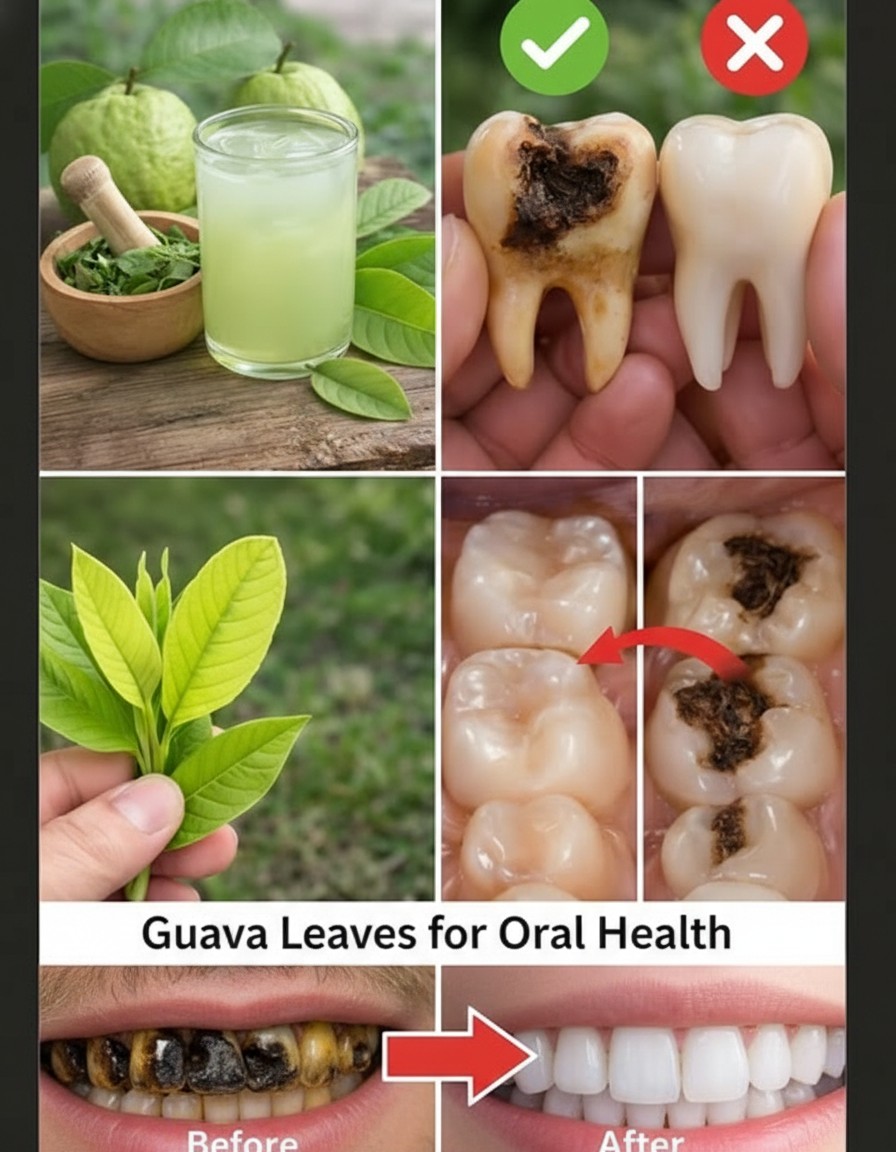
For those areas where plaque feels particularly stubborn or where your gums need extra attention, a concentrated guava leaf paste offers direct, targeted contact with beneficial compounds.
How to prepare and apply this natural paste:
- Create the Paste: Crush 5-7 fresh guava leaves into a fine paste. Add a few drops of water if necessary to achieve the desired consistency.
- Optional Enhancement: For a mild abrasive effect, you can mix in a small pinch of salt.
- Apply Directly: Using a clean finger or a soft toothbrush, apply the paste directly to the affected teeth or gums.
- Allow to Work: Leave the paste on for 2-3 minutes to allow the active compounds to interact with the target area.
- Rinse Thoroughly: After the designated time, rinse your mouth thoroughly with water.
- Frequency: Use this method 2-3 times per week. Avoid daily application to prevent potential over-irritation.
Traditional practices across various cultures have long involved chewing tender guava leaves or applying their pastes for oral freshness and health. Modern laboratory studies support these age-old customs, showing that compounds in guava leaves can indeed limit bacterial adherence and growth on enamel surfaces. This hands-on method provides a sense of empowerment, allowing you to directly address specific problem spots.
An interesting scientific observation is that some guava leaf extracts have been shown to reduce the hydrophobicity of bacteria. In simpler terms, this makes it harder for bacteria to stick to tooth surfaces, essentially creating a less hospitable environment for plaque to form.
3. Chewing Fresh Guava Leaves: An Ancient Practice with Modern Benefits
In many parts of the world, the simple act of chewing fresh, young guava leaves is a time-honored tradition for promoting oral health. This method offers a straightforward and immediate way to harness the natural benefits of the plant.
How to incorporate chewing guava leaves into your routine:
- Select Young Leaves: Choose 1-2 fresh, tender, young guava leaves. These are generally less fibrous and have a milder taste.
- Rinse Well: Always rinse the leaves thoroughly under clean water before use.
- Gentle Chewing: Chew the leaves gently for several minutes, allowing the natural juices and compounds to be released and mix with your saliva. This action helps to cleanse the mouth, stimulate saliva production, and distribute the beneficial properties.
- Discard After Use: Once you’ve chewed them sufficiently (typically 5-10 minutes), spit out and discard the fibrous remnants.
- Frequency: This can be done once a day, or as needed for a quick refresh, but ensure it complements, not replaces, your regular brushing.
Chewing guava leaves provides a dual benefit: the mechanical action helps to gently scrub away loose plaque and food particles, while the direct release of antibacterial and anti-inflammatory compounds works to combat oral bacteria and soothe gum tissues. It’s an excellent natural way to freshen breath and can even help stimulate healthy saliva flow, which is crucial for neutralizing acids and remineralizing tooth enamel.
Embracing Natural Oral Wellness
Integrating guava leaves into your oral care routine offers a natural, accessible, and scientifically supported approach to enhancing your dental hygiene. Whether you opt for a refreshing mouth rinse, a targeted paste, or the simple act of chewing fresh leaves, these methods harness the potent properties of nature to support a healthier mouth.
Remember, while guava leaves offer significant supportive benefits, they are intended to complement, not replace, professional dental care. Consistent brushing, flossing, and regular check-ups with your dentist remain the cornerstones of excellent oral health. By combining these traditional practices with modern dental care, you can take proactive steps towards a naturally brighter, healthier smile.