 By admin
 Many individuals grapple with persistent fatigue, digestive issues, or muscle tension, often overlooking a profound connection: their feet might be subtly signaling their overall well-being. When specific areas of the feet exhibit unusual sensitivity or tightness, it can sometimes mirror stress patterns linked to various parts of the body.
The fascinating aspect is that ancient practices like reflexology propose that the feet offer intricate clues about internal balance. Deciphering these signals has the potential to transform your daily self-care routine. What’s more, incorporating a few straightforward foot-care habits could heighten your awareness of these vital signals, fostering daily wellness in ways many people tend to disregard.
What Exactly Is Reflexology?
Reflexology is a time-honored holistic practice centered on the principle that particular points on the feet correspond to different organs, glands, and systems within the body. Its roots stretch back thousands of years, with evidence of its application found in historical records from ancient Egypt, China, and India.
Today, reflexology is widely recognized as a complementary wellness modality, primarily aimed at promoting deep relaxation and enhancing body awareness. The fundamental concept is elegantly simple:
- Distinct zones across the foot are believed to correlate with specific body regions.
- Applying gentle, targeted pressure to these reflex points may induce a state of relaxation throughout the corresponding areas.
- Increased awareness of these points can empower individuals to identify and address patterns of tension within their bodies.
Research within the field of complementary medicine suggests that reflexology can contribute to relaxation, improve circulation, and support overall well-being when integrated with a healthy lifestyle. However, it is crucial to remember that reflexology serves as a complementary therapy and should never replace professional medical diagnosis or treatment. Instead, it is best utilized as an integral component of a comprehensive wellness strategy.
Navigating the Reflexology Map of the Foot
Reflexology practitioners typically utilize a detailed map that divides the foot into zones, each linked to major organs and bodily systems. This reflexology foot chart acts as a guide, helping them focus on areas that may benefit most from targeted relaxation or massage. Here are some commonly referenced reflex points:
| Foot Area | Associated Body Region |
|---|---|
| Toes | Head and brain |
| Ball of the foot | Lungs and chest |
| Center of the foot | Digestive organs |
| Inner arch | Spine area |
| Heel | Lower body and pelvis |
It’s important to reiterate that this map is not a diagnostic tool for medical conditions. Rather, it provides a framework for practitioners to apply pressure and facilitate relaxation. And this is where the journey of self-discovery truly begins…
During a session, people sometimes observe that specific points on their feet feel tender or tense when pressure is applied. But what causes these sensations? Let’s delve deeper.
Common Foot Sensations During a Reflexology Session
While the primary goal of reflexology is to promote relaxation and support wellness, individuals frequently report experiencing particular sensations in various areas of their feet. These can include:
- Slight tenderness in certain zones
- A feeling of tightness or restricted movement
- Noticeable warmth during the massage
- Heightened sensitivity when pressure is applied
These sensations are often simple indicators of localized muscle tension, circulatory patterns, or the accumulated effects of daily stress. For instance:
1. Toes and the Head Area: A Window to Mental Well-being
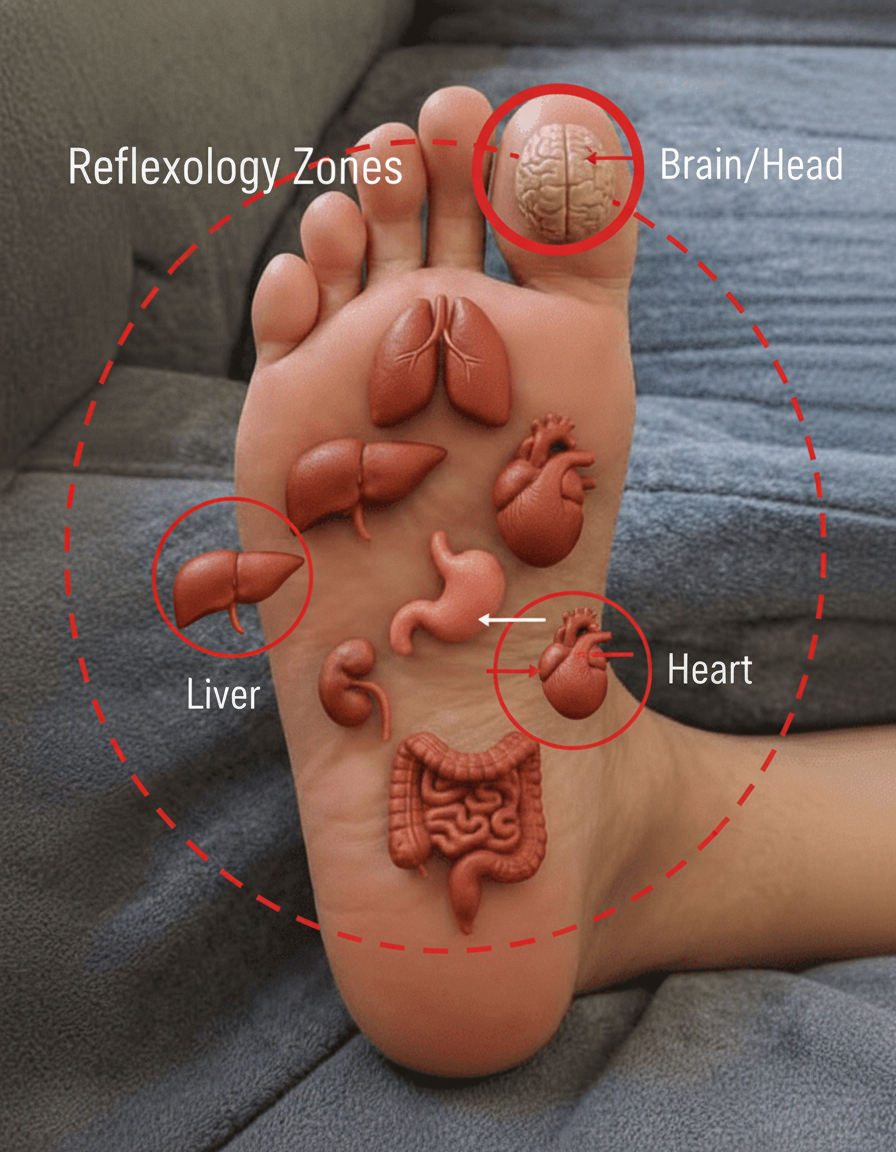
The tips of the toes are traditionally associated with the head and neck region. It’s not uncommon for individuals to notice increased sensitivity here when they are experiencing:
- Mental strain or cognitive overload
- Eye fatigue from prolonged screen time
- Tension in the neck and shoulders due to extended periods of sitting
However, the narrative doesn’t end there. The body possesses a remarkable ability to store stress in unexpected places.
2. Ball of the Foot and the Chest Area: Breathing and Posture
The ball of the foot is commonly linked to the chest region and respiratory system. Reflexology practitioners frequently focus on this area to encourage deeper relaxation and enhance awareness of breathing patterns. Individuals who spend extensive hours seated or hunched over desks may experience tightness here, often a direct result of posture-related tension.
3. Arch of the Foot: The Core of Digestive Harmony
The arch of the foot stands out as one of the most critical zones in reflexology, often corresponding to vital digestive organs such as the:
- Stomach
- Liver
- Pancreas
- Intestines
Many reflexology sessions dedicate considerable attention to this region because the arch is rich in nerve endings and muscles that greatly benefit from gentle pressure and relaxation techniques. But there’s more to this area than meets the eye.
4. Heel Area: Supporting Your Foundation
In reflexology maps, the heel of the foot is frequently connected to the lower body, including the hips and pelvis. People may perceive tightness or discomfort in this area due to a variety of factors:
- Prolonged periods of standing
- Wearing footwear that lacks adequate support
- General physical fatigue
Simple practices like targeted stretching and regular massage can often provide significant relief from this accumulated tension.
The Remarkable Sensitivity of Your Feet
Here’s a truly fascinating fact: the human foot is an incredibly complex structure, housing over 7,000 nerve endings, making it one of the most sensitive parts of the entire body. This intricate neural network allows the feet to respond profoundly to various stimuli, including pressure, temperature fluctuations, and touch.
According to studies published in complementary therapy journals, this inherent sensitivity is precisely what makes the feet an ideal gateway for reflexology, allowing practitioners to engage with the body’s subtle energy pathways and promote holistic balance and well-being.