 By admin
 4 Subtle Early Warning Signs of Breast Cancer You Can’t Afford to Miss – And Why Vigilance is Key
Many individuals navigate their daily routines unaware that seemingly minor alterations in their breasts could signify a serious underlying condition. While breast cancer often develops discreetly in its nascent stages, and not every change indicates malignancy, overlooking persistent anomalies can significantly delay crucial medical intervention. Leading health organizations, such as the American Cancer Society and the Mayo Clinic, consistently underscore that understanding your own breasts and promptly recognizing anything unusual empowers you to seek timely professional guidance. The reassuring news is that the vast majority of breast changes are benign; however, knowing what specific indicators to look for can be pivotal in identifying potential issues early, when treatment outcomes are typically most favorable. In this comprehensive guide, we will delve into four frequently overlooked early warning signs of breast cancer, illustrate their potential manifestations, and provide actionable steps you can implement today. Stay with us until the end for simple habits that foster optimal breast health and answers to commonly asked questions.
Why Early Detection Saves Lives
Extensive research from reputable health authorities unequivocally demonstrates that breast cancer diagnosed in its initial stages generally responds exceptionally well to available therapeutic approaches. Despite this, many individuals tend to disregard non-lump symptoms, often deeming them insignificant or transient. This highlights precisely why a combination of personal awareness and routine screenings forms such a formidable defense. Crucially, these four specific signs frequently manifest before a palpable lump becomes apparent, offering a vital head start in the diagnostic process.
1. Persistent Changes in Breast Size, Shape, or Contour
One of the most insidious early indicators is a gradual or even sudden alteration in how one breast appears relative to the other. You might observe one breast becoming noticeably larger, swollen, or adopting an irregular shape – even in the absence of pain or a discernible lump. This phenomenon occurs because nascent tumors can affect the underlying tissues, leading to a new or increased asymmetry that was not previously present. Scientific studies and clinical observations emphasize that unexplained swelling or distinct changes in the contour of any part of the breast warrant immediate attention, particularly if these persist beyond a typical menstrual cycle.
What to do right away: Conduct a visual self-examination. Stand before a mirror with your arms relaxed at your sides, then raise them overhead, and finally place them on your hips. Carefully compare both breasts for any disparities in size, shape, or overall outline. Note any persistent swelling or distortion in a specific area. If you identify such changes, do not delay – schedule an appointment with your healthcare provider promptly.
2. Skin Alterations Such as Dimpling, Puckering, or an Orange-Peel Texture
Breast skin that abruptly develops a dimpled appearance, puckers inward, or takes on a rough, orange-peel-like texture (medically termed peau d’orange) represents another critical red flag that many mistakenly attribute to dry skin or the natural aging process. This distinct change arises when underlying cancerous processes pull the skin inward or cause lymphatic fluid buildup and thickening. Authoritative sources, including the Centers for Disease Control and Prevention (CDC) and the Mayo Clinic, consistently list unusual irritation, dimpling, or persistent redness and flakiness as key warning signs. Here’s a concise checklist of skin-related changes to vigilantly monitor:
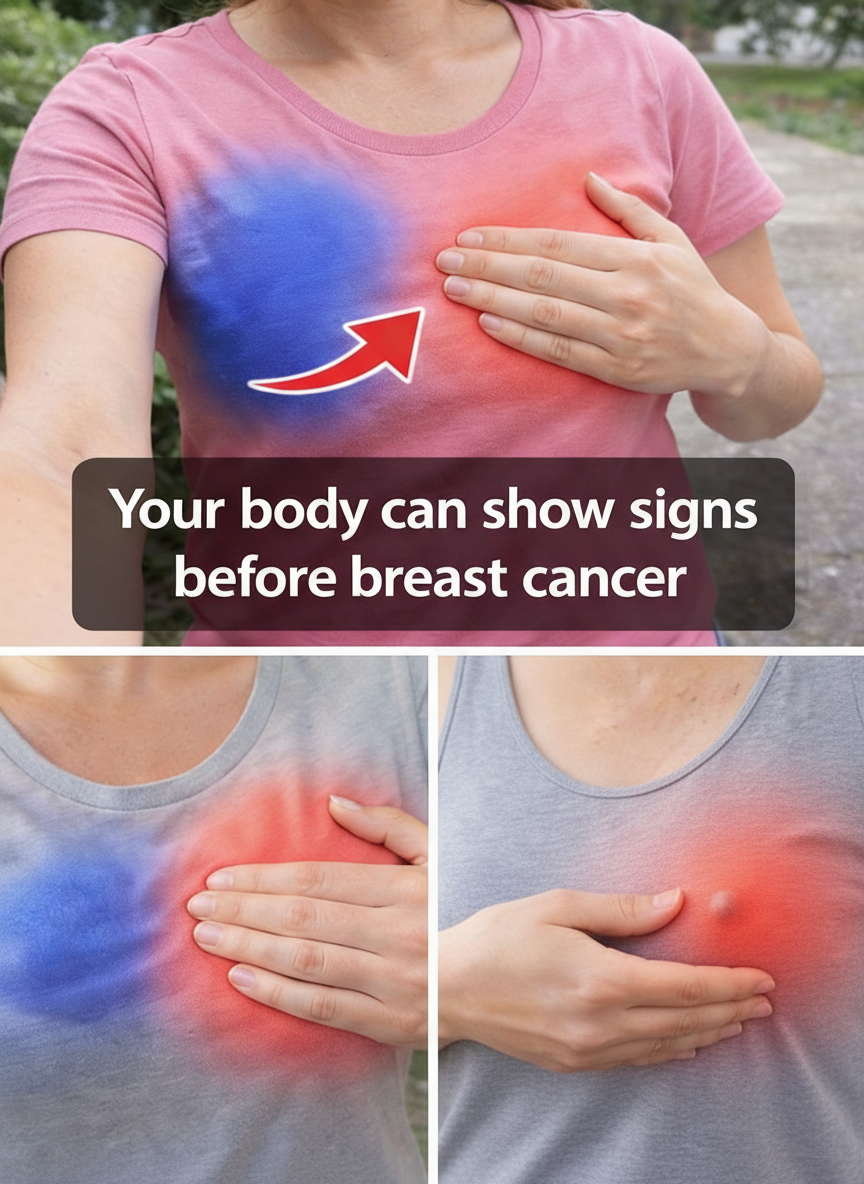
- New or pronounced dimpling, pitting, or indentations on the breast surface.
- Unexplained redness, warmth, or inflammation in one specific area (not associated with an infection).
- Areas of thickened, scaly, or flaky skin.
- The appearance of new ridges or an uneven, textured quality to the skin.
These crucial visual cues are particularly significant because they can manifest without any palpable lump, making visual inspection an indispensable part of breast self-awareness.
3. Nipple Changes or Inversion
Your nipples can also provide vital diagnostic clues. A nipple that flattens, begins to turn inward (a new inversion), or exhibits new scaling, crusting, or changes in color should never be disregarded. If a nipple that has always protruded starts to retract, or if you notice peeling or flaking around the areola (the darker skin surrounding the nipple), these could signal underlying issues. Furthermore, any nipple discharge that is bloody, clear, or occurs spontaneously (not related to breastfeeding or manual squeezing) is a significant concern highlighted by experts at institutions like the American Cancer Society. Do not dismiss these changes as mere irritation – meticulously track them and consult with a medical professional if they do not resolve swiftly.
4. Unusual Nipple Discharge or Persistent Localized Pain
While general breast pain is a common experience, often linked to hormonal fluctuations, pain that is distinctly localized to one specific area and does not coincide with your menstrual cycle warrants careful consideration. When such pain is combined with unusual discharge from the nipple (especially if it’s bloody, clear, or occurs without squeezing), this combination necessitates prompt medical evaluation. Although most nipple discharge is benign, when it is new, unexplained, and persistent, health guidelines strongly recommend seeking professional assessment.
Here are actionable steps to maintain a proactive stance regarding your breast health:
- Perform a monthly breast self-exam: Ideally, conduct this a few days after your menstrual period concludes, when breasts are typically less tender.
- Utilize the mirror method: Regularly employ the visual inspection technique described earlier to spot any subtle changes in size, shape, or skin texture.
- Keep a detailed symptom journal: Document any new or concerning symptoms, including their onset dates, duration, and even helpful photos if applicable.
- Schedule regular clinical breast exams and mammograms: Adhere to screening recommendations tailored to your age and individual risk factors. Generally, mammograms are advised starting around age 40, or earlier if there is a family history of breast cancer or other elevated risks.
Incorporating these simple habits into your routine takes just minutes but can offer invaluable peace of mind and crucial early insights into your breast health. Prioritize your well-being by staying informed and vigilant.