 By admin
 Ovarian cancer stands as a formidable challenge in women’s health, frequently diagnosed in advanced stages where treatment options can appear daunting. For patients and their families, the search for comprehensive information and potential avenues for support is constant, driven by the profound emotional burden of fear and uncertainty. Amidst this quest for hope, an unexpected contender from the realm of ancient remedies is capturing the attention of modern oncology researchers: frankincense.
While celebrated for millennia in traditional medicine, recent laboratory and pre-clinical investigations are meticulously examining its core components and their intriguing effects on ovarian cancer cells in controlled environments—insights that may reveal a surprising intersection between ancient wisdom and cutting-edge science.
The Enduring Legacy of Frankincense: Beyond Traditional Uses
Frankincense, a fragrant resin sourced from the Boswellia trees indigenous to regions like the Middle East and Africa, boasts a rich history spanning thousands of years. Ancient civilizations revered it for its role in spiritual rituals, perfumery, and various traditional healing practices. Yet, its story doesn’t end there…
What many might not realize is that this very resin contains potent bioactive compounds—most notably, boswellic acids—which have piqued the interest of contemporary scientists. These compounds are now the subject of intense study, scrutinized for their potential anti-inflammatory properties and other biological activities across diverse laboratory models.
What Current Research Suggests About Frankincense and Ovarian Cancer
Laboratory studies have delved into how specific constituents of frankincense, such as acetyl-11-keto-β-boswellic acid (AKBA), interact with ovarian cancer cells. For instance, pre-clinical investigations have explored its impact on cell viability and other critical cellular processes within ovarian cancer models. These findings indicate that AKBA may influence the behavior of cancer cells in both test-tube (in vitro) and animal studies, potentially affecting aspects like cell proliferation and resistance mechanisms.
However, it is crucial to emphasize that the majority of this work remains in its nascent, non-clinical phases—primarily involving cell-based and some animal models—with limited human data specifically pertaining to ovarian cancer. But there’s more to the scientific narrative.
Related research on boswellic acids extends to other cancer types, providing valuable context for the scientific community’s growing interest. A modest clinical trial involving breast cancer patients, for example, observed a reduction in tumor cell proliferation after participants received a Boswellia extract prior to surgery. While this particular study does not directly address ovarian cancer, it underscores the increasing focus on these compounds within broader oncology research.
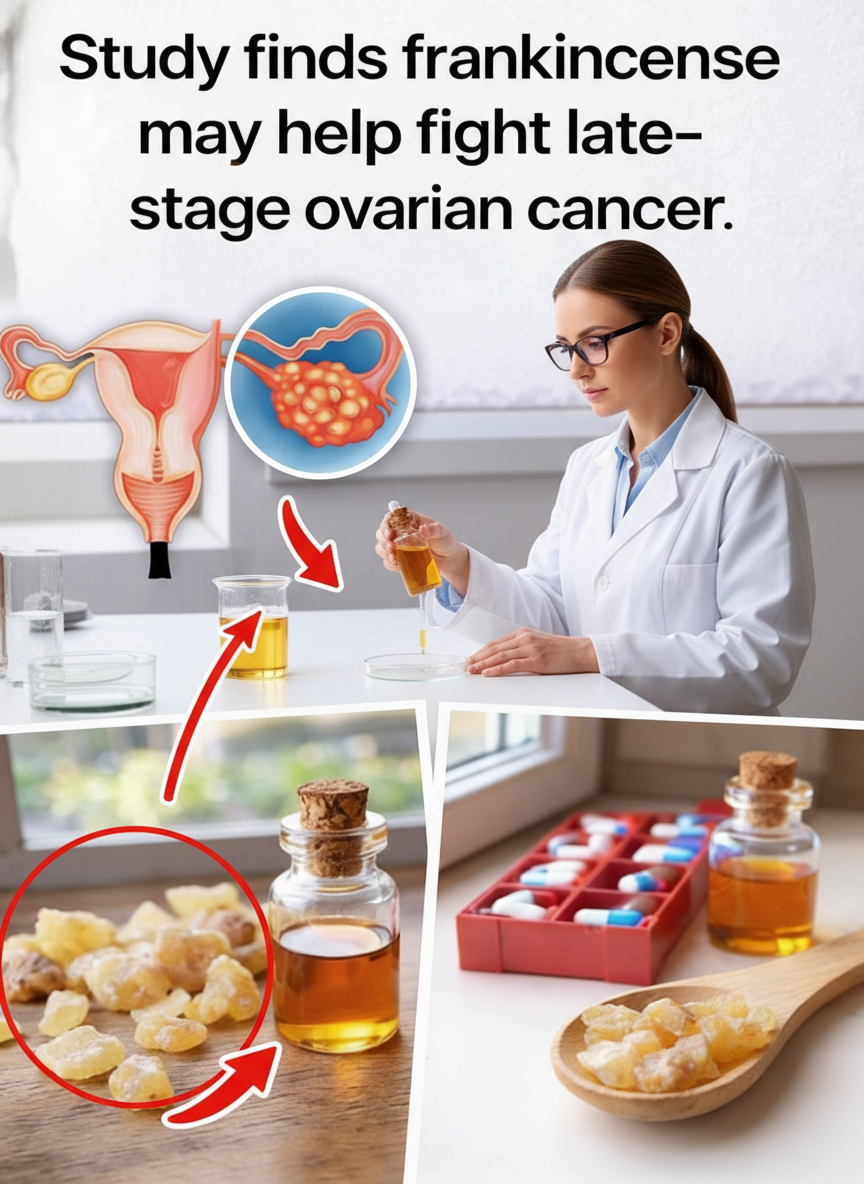
Here’s a summary of key insights gleaned from the existing body of evidence:
- Laboratory Observations: Studies have documented cytotoxic effects (impacting cell survival) on ovarian cancer cell lines when exposed to certain concentrations.
- Mechanistic Understanding: Compounds like AKBA appear to influence pathways crucial for cell proliferation and apoptosis (programmed cell death) in controlled laboratory settings.
- Broader Anti-inflammatory Focus: Boswellic acids are well-recognized for their role in supporting inflammatory balance, a significant factor given that chronic inflammation can contribute to various disease processes, including certain cancers.
These points are derived from peer-reviewed sources, including pre-clinical papers and scientific reviews. Nevertheless, experts consistently highlight the imperative for far more rigorous human clinical trials before any definitive conclusions can be drawn regarding real-world therapeutic applications.
Key Bioactive Compounds in Frankincense: A Brief Overview
To facilitate understanding, here’s a concise list of the principal compounds frequently cited by researchers:
- β-Boswellic acid (BA): A foundational compound recognized for its general anti-inflammatory potential.
- Acetyl-β-boswellic acid (ABA): Demonstrates activity across various cell models.
- 11-Keto-β-boswellic acid (KBA): Implicated in inhibiting specific enzymes linked to inflammatory responses.
- Acetyl-11-keto-β-boswellic acid (AKBA): Often singled out in cancer-related laboratory studies due to its demonstrated potency in cell-based assays.
Researchers frequently concentrate on AKBA because it has exhibited stronger activity in some experimental models compared to other boswellic acids.
Contemporary Applications of Frankincense
While scientific inquiry progresses, frankincense remains widely accessible in various forms, including essential oil, raw resin, or dietary supplements (often standardized to contain specific boswellic acid concentrations). Many individuals integrate it into their daily routines for general wellness and as a complementary approach to overall health. The ongoing research into its more targeted applications, particularly in complex areas like ovarian cancer, continues to underscore the profound potential of this ancient botanical in the context of modern health science.