 By admin
 The Datura Plant: 12 Critical Dangers of This Alluring Yet Toxic “Angel’s Trumpet”
Many individuals are captivated by the beautiful, trumpet-shaped flowers they encounter in public parks, along roadsides, or within private gardens. However, a significant number remain unaware that some of these attractive plants, like the Datura, pose severe risks if touched or ingested. Accidental contact or simple curiosity, particularly among young children or household pets, can trigger alarming symptoms that demand immediate medical intervention. Learning to accurately identify the Datura plant is crucial for ensuring safer outdoor experiences for families and communities.
Are you wondering how to recognize the Datura plant and why such extreme caution is necessary? Let’s delve into reliable identification techniques and essential safety protocols. We’ve also included a straightforward comparison chart further down to help clarify common confusions.
🌿 Understanding the Datura Plant and Its Widespread Presence
The Datura genus, frequently referred to as jimsonweed or thornapple, thrives as a wild species across numerous regions within the United States and globally. Varieties such as Datura stramonium are characterized by their prominent flowers and distinctive spiky seed pods, often found flourishing in disturbed ground like vacant lots or alongside highways. While undeniably striking in appearance, it is vital to remember that every single part of the Datura plant contains potent natural compounds capable of inducing adverse health effects.
Reports from poison control centers consistently highlight cases of accidental exposure, primarily stemming from a lack of understanding regarding its toxic properties. Recognizing the Datura plant early can alleviate unnecessary anxiety during outdoor activities. But how precisely can you differentiate it from harmless flora? The following characteristics offer clear and simple identification guidance.
🌺 Key Identification Features of the Datura Plant
Accurate identification of the Datura plant is paramount for preventing unintended incidents. Here are its distinguishing traits:
- Large, Trumpet-Shaped Flowers: Often white or purple, these blooms typically open during the evening hours and emit a strong, noticeable fragrance.
- Jagged, Toothed Leaves: Dark green in color, these leaves are arranged alternately along the stem and possess a distinctive, irregular edge.
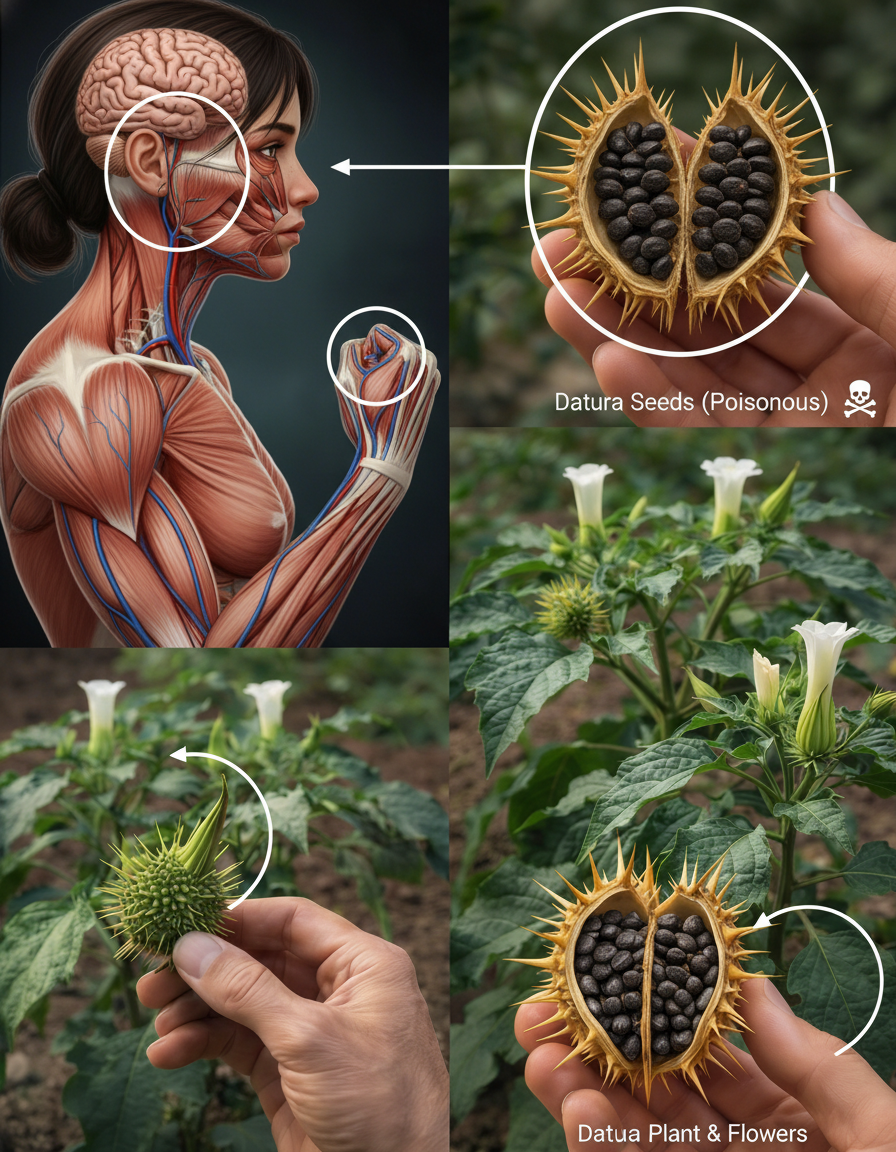
- Spiny, Round Seed Pods: Known as “thornapples,” these prickly, spherical pods are a definitive characteristic that sets Datura apart from many similar-looking plants.
- Unpleasant Odor: Many Datura species release a disagreeable scent when their leaves are crushed.
The Datura plant flourishes during warmer periods, making summer and fall the primary seasons for its observation. Educating family members about these features significantly contributes to safer outdoor exploration.
⚠️ Significant Risks Associated with the Datura Plant
Every component of the Datura plant—including its seeds, leaves, and flowers—is laden with highly toxic tropane alkaloids such as scopolamine and atropine. Exposure, whether through ingestion or prolonged skin contact, can precipitate a range of anticholinergic symptoms. Commonly reported effects include a parched mouth, blurred vision, an accelerated heart rate, disorientation, and vivid hallucinations. In severe instances, exposure can lead to far more serious and life-threatening complications.
Cases frequently involve accidental consumption by curious children or pets, or deliberate misuse by individuals seeking hallucinogenic effects. It is crucial to understand that the plant’s potency varies unpredictably, making any intentional use exceptionally dangerous. Medical literature indicates that symptoms can manifest rapidly and persist for several hours or even days. While many individuals recover with timely and appropriate medical care, the inherent dangers of the Datura plant underscore the critical importance of avoiding all contact.
🛡️ What Actions to Take If Datura Exposure Occurs
If an individual comes into contact with or ingests any part of the Datura plant:
- Seek immediate medical attention: Contact poison control services or proceed directly to an emergency medical facility without delay.
- Do not wait for symptoms to worsen: Prompt action is vital for the best possible outcome.
- Provide comprehensive details: Furnish as much information as possible about the plant and the exposure circumstances to facilitate quicker and more effective assistance.
Early intervention is paramount, as specific supportive care may be required to manage the effects. Ultimately, preventing such concerns entirely by keeping the Datura plant out of reach remains the most effective strategy. Curious about plants that resemble Datura but are safe? The following section addresses common mistaken identities.
🔍 Datura Plant vs. Common Look-Alikes
Confusion between Datura and non-toxic plants, such as morning glories, or even its close relative, Brugmansia (a distinct but related genus), is not uncommon. Here is a helpful comparison to differentiate them:
| Feature | Datura Plant (e.g., Jimsonweed) | Morning Glory (Ipomoea) | Brugmansia (Angel’s Trumpet) |
|---|---|---|---|
| Flower Direction | Erect or slightly nodding trumpets | Flat or upright funnel-shaped | Large, hanging pendants |
| Leaves | Jagged, toothed edges; distinct, often unpleasant smell | Heart-shaped, smooth texture | Smooth, elongated shape |
| Seed Pods | Spiny, round “thornapples” | Smooth, rounded capsules | Smooth, elongated pods |
| Growth Habit | Bushy annual weed | Vining plant | Woody shrub or small tree |
| Toxicity Level | High—all parts are toxic | Seeds mildly toxic in large quantities | High—all parts are toxic |
This table underscores why meticulous observation is essential when encountering trumpet-like flowers in nature. The Datura plant’s characteristic spiny seed pods serve as a definitive and unmistakable identifier.
🛑 Essential Prevention Tips Regarding the Datura Plant
Adopting simple precautionary measures can significantly reduce the risks associated with the Datura plant:
- Educate Children: Teach them never to touch, pick, or taste any unknown plants.
- Wear Protective Gear: Always use gloves when gardening, especially in areas where Datura might be present.
- Safe Removal: If you suspect Datura is growing on your property, remove it carefully, consulting local guidelines for safe disposal.
- Supervise Pets: Keep a watchful eye on pets when they are outdoors, as their natural curiosity might lead them to investigate unfamiliar plants.
- Utilize Reliable Resources: Always refer to trusted sources for accurate plant identification.
By following these steps, families can safely enjoy the natural environment while minimizing potential exposure to hazardous plants like Datura.