 By admin
 Experiencing a wobble when rising from a chair or feeling less confident climbing stairs can be more than just frustrating – it can be unsettling. Many individuals over 60 observe a decline in hip strength, diminished balance, and an increased effort required for daily activities. Prolonged sitting often exacerbates this, leading to underutilized and stiff muscles in the posterior hip region. However, there’s excellent news: by incorporating specific, targeted movements, you can safely and effectively reactivate these crucial muscles, rebuilding strength and stability. Plus, a simple yet powerful technique revealed later in this article can significantly enhance the effectiveness of these exercises.
Why Glute Strength Becomes Paramount After 60
The gluteal muscle group, comprising the gluteus maximus, gluteus medius, and gluteus minimus, forms the powerhouse of your lower body. These muscles are fundamental for supporting your hips, lower back, and knees, playing a critical role in essential movements like standing, walking, ascending stairs, and maintaining overall balance. With advancing age, a natural process known as sarcopenia—age-related muscle loss—can significantly diminish both strength and stability. Extensive research, frequently highlighted in journals dedicated to gerontology and physical activity, consistently demonstrates a strong correlation between robust lower body strength and sustained mobility and independence in older adults. Simply put, well-conditioned hips are often synonymous with safer, more confident movement.
However, it’s crucial to understand a key distinction: routine walking, particularly if characterized by shorter, slower strides, often doesn’t adequately engage and strengthen all gluteal muscles. This is precisely why incorporating targeted, specific strengthening exercises can yield a profound and noticeable improvement in your everyday functional capacity and well-being.
Recognizing the Signs of Weak Gluteal Muscles
You don’t necessarily need a clinical diagnosis to suspect your hip muscles might benefit from some attention. There are several common indicators that your glutes could be underperforming:
- Difficulty standing up from a chair without relying on your hands for support.
- A noticeable feeling of instability or wobbliness when attempting to stand on one leg.
- Experiencing tightness or discomfort in your lower back after periods of standing or walking.
- Observing your knees tending to cave inward, especially when navigating stairs.
- Unusual fatigue or aching sensation in your hips following relatively short walks.
If several of these descriptions resonate with your experiences, incorporating targeted glute-strengthening exercises could significantly enhance your daily comfort, mobility, and overall confidence. This is where a focused approach truly begins to make a difference.
5 Essential Glute Exercises for Seniors Over 60
These five foundational exercises are designed to be straightforward, require minimal or no equipment, and can be comfortably performed in the safety of your own home. Remember to execute each movement slowly and with deliberate control. Should you experience any sharp pain, discontinue the exercise immediately and consult with a healthcare professional.
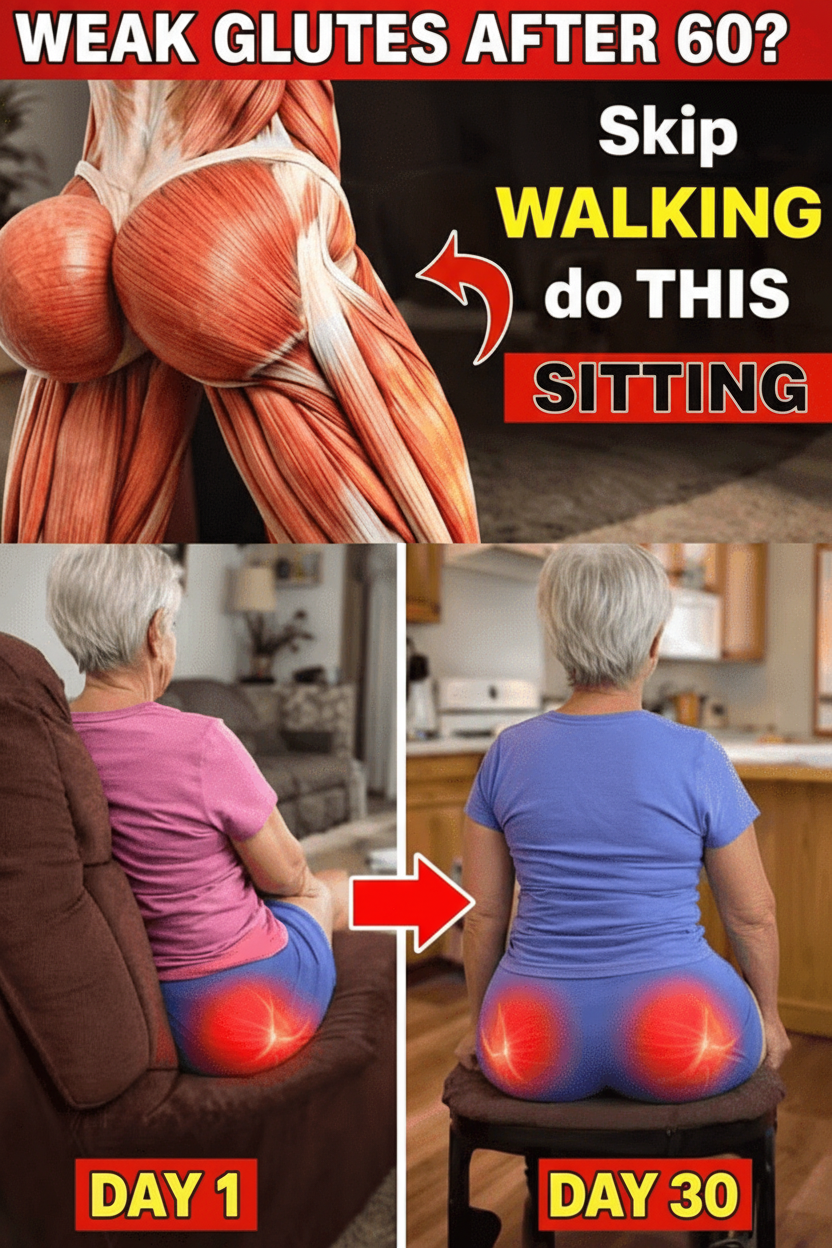
1. Seated Glute Squeeze
This gentle yet effective exercise is an ideal starting point for re-establishing a connection with your gluteal muscles.
How to perform:
- Sit tall in a stable chair, ensuring your feet are flat on the floor.
- Engage and contract the muscles in your buttocks, as if you’re subtly trying to lift your hips just slightly off the chair.
- Maintain this contraction for a count of 5 seconds.
- Release and relax the muscles. Repeat this process for 10 to 15 repetitions.
Why it’s beneficial:
The Seated Glute Squeeze is excellent for cultivating crucial mind-muscle awareness. Research in rehabilitation science consistently highlights that conscious, intentional muscle activation significantly contributes to improved strength gains over time. This foundational exercise sets the stage for more dynamic movements.
2. Glute Bridge
The Glute Bridge is a fantastic exercise that effectively engages the posterior chain of your hips and provides supportive strength for your lower spine.
How to perform:
- Lie comfortably on your back with your knees bent and feet positioned flat on the floor, hip-width apart.
- Press firmly through your heels, engaging your glutes to lift your hips off the floor, aiming towards the ceiling until your body forms a straight line from your shoulders to your knees.
- Hold this elevated position for 3 to 5 seconds.
- Slowly and with control, lower your hips back down to the starting position. Repeat 10 times.
Expert Tip:
Prioritize slow, controlled movements over how high you can lift your hips. The quality of the contraction is far more important. Studies focusing on older adults indicate that consistent practice of bridge variations can substantially enhance hip strength and overall functional mobility.
3. Sit to Stand
Often hailed as a functional powerhouse, the Sit to Stand exercise directly translates to improved daily independence.
How to perform:
- Begin by sitting in a sturdy chair with your feet positioned hip-width apart.
- Lean slightly forward, then engage your leg and glute muscles to stand up, ideally without using your hands for support.
- With deliberate control, slowly lower yourself back down to the seated position. Repeat for 8 to 12 repetitions.
Why it’s invaluable:
This exercise directly mimics a fundamental movement of daily life, simultaneously strengthening your hips, thighs, and core. According to established physical therapy guidelines, consistent practice of the Sit to Stand exercise is a key factor in enhancing functional independence for older adults. Many individuals report feeling noticeably stronger and more stable within just a few weeks of incorporating this movement into their daily routine.
4. Side Leg Raises
Targeting the often-overlooked side hip muscles, this exercise is crucial for enhancing overall balance and stability.
How to perform:
- Stand behind a stable chair or counter, holding onto it for support.
- Slowly lift one leg directly out to the side, ensuring your torso remains upright and you don’t lean.
- Lower the leg back down with controlled precision. Repeat 10 times for each side.
The impact on your mobility:
The gluteus medius, a key muscle targeted here, plays a vital role in stabilizing your pelvis during walking. Weakness in this area is a common contributor to balance challenges and an increased risk of falls. Strengthening these muscles directly translates to improved balance, fostering greater confidence in your movements, especially when navigating uneven terrain or moving outdoors.
5. Standing Hip Extension
This exercise effectively isolates and strengthens the gluteus maximus, your body’s largest and most powerful gluteal muscle.
How to perform:
- Stand tall, holding onto a chair or counter for steady support.
- Keeping your leg straight but not locked, slowly extend one leg directly backward. Crucially, avoid arching your lower back; the movement should primarily come from your hip.
- Pause briefly at the peak of the extension.
- Gently and with control, return your leg to the starting position. Perform 10 repetitions on each side.
Key focus:
Maintain an upright posture throughout the exercise and ensure your movements are smooth and controlled, avoiding any jerky motions.
How Often Should You Practice These Exercises?
When it comes to building lasting strength and improving mobility, consistency is far more impactful than high intensity. Aim to perform these exercises 2-3 times per week, allowing a day of rest in between sessions for muscle recovery. Listen to your body; some days you might feel more energetic, while others require a gentler approach. The goal is steady, sustainable progress.
Remember that “simple shift” mentioned at the beginning? It’s about integrating these movements not just as exercises, but as mindful practice. Focus on truly engaging the muscles, feeling the contraction, and making each repetition count. This conscious effort amplifies the benefits, helping you build stronger glutes, enhance your balance, and reclaim confidence in every step you take.