 By admin
 Experiencing persistent bad breath, even after thorough brushing, can significantly impact your confidence, transforming everyday interactions into sources of anxiety. Coupled with a persistent sore throat or the unsettling feeling of something lodged in your throat, this discomfort can be profoundly frustrating, particularly when the cause remains elusive. Many individuals endure these symptoms in silence, unaware that tonsil stones, also known as tonsilloliths, might be the underlying reason for their embarrassment and physical discomfort. Fortunately, understanding and effectively managing tonsil stones is achievable through straightforward daily practices. Continue reading to discover how minor adjustments can lead to significant relief and improved oral health.
Demystifying Tonsil Stones: What Are They and How Do They Develop?
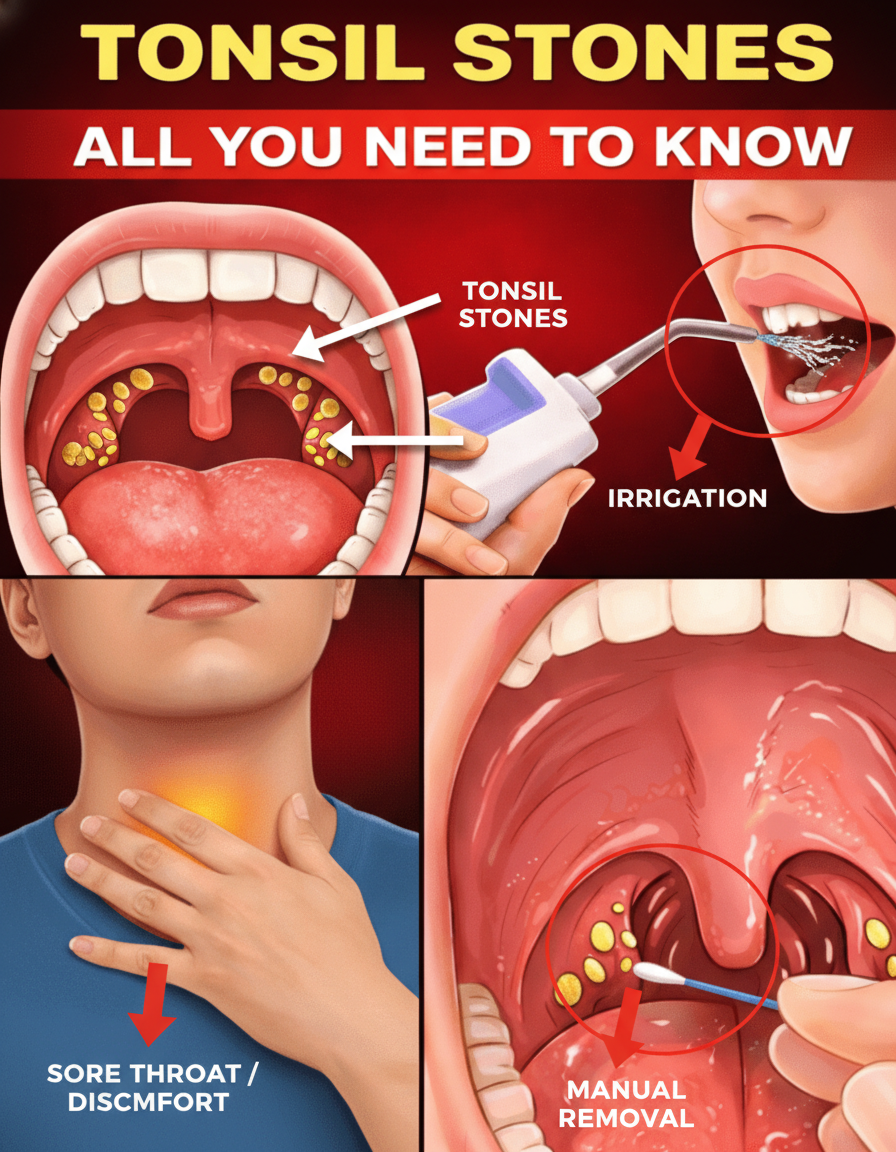
Tonsil stones, medically referred to as tonsilloliths, are small, calcified masses that accumulate within the natural indentations or ‘crypts’ of your tonsils. These hardened deposits can lead to considerable discomfort and, frequently, embarrassing symptoms like persistent foul breath and throat irritation, disrupting one’s overall quality of life.
Functioning as a crucial component of your immune system, your tonsils are designed to filter and trap pathogens, along with other foreign matter such as bacteria, microscopic food particles, dead skin cells, and mucus. However, when this organic debris becomes lodged within the deep pockets of the tonsil crypts and undergoes calcification over a period, it solidifies into tonsil stones. These are often visually identifiable as distinct white or yellowish specks on the tonsil surface. While reputable health organizations like the Cleveland Clinic confirm that tonsil stones are a widespread and generally benign condition, particularly prevalent among adults, the chronic halitosis they induce can severely undermine social confidence.
It’s important to note that the size of tonsil stones can vary significantly, ranging from minuscule grains to more substantial formations. Regardless of their dimensions, even the smallest tonsilloliths are capable of provoking noticeable symptoms that can profoundly impact your well-being and comfort.
Recognizing the Signs: Common Symptoms of Tonsil Stones
A significant number of individuals may harbor tonsil stones without initial awareness. Yet, once symptoms manifest, they often present an unrelenting source of frustration, most notably persistent bad breath (halitosis) that remains impervious to conventional breath fresheners. This pervasive issue can foster profound self-consciousness during social engagements and intimate interactions. Here are the primary indicators suggesting the presence of tonsil stones:
- Persistent Bad Breath (Halitosis): The anaerobic bacteria thriving on tonsil stones produce volatile sulfur compounds, which are the primary culprits behind the chronic, often intense, foul odor. This distinctive halitosis is frequently misattributed to inadequate oral hygiene or dietary factors.
- Sore Throat or Irritation: As tonsil stones expand, they can exert pressure on the delicate tissues of the tonsils, resulting in a persistent scratchy sensation or localized pain, particularly noticeable when swallowing. This discomfort can be quite bothersome and long-lasting.
- Visible White or Yellow Spots: A direct visual inspection in a mirror may reveal small, often irregular, white or yellowish specks embedded within the tonsils. These are direct physical manifestations of developing tonsil stones.
- Ear Pain: Due to the intricate network of shared nerve pathways, tonsil stones can trigger referred pain that manifests as an ache or discomfort in the ears, even in the absence of an actual ear infection.
- Chronic Cough or Swelling: In an attempt to dislodge these foreign bodies, the immune system may initiate an inflammatory response, leading to chronic throat irritation, a persistent cough, or noticeable swelling of the tonsils.
Crucially, the symptoms associated with tonsil stones are frequently misdiagnosed as common ailments like the flu, a cold, or seasonal allergies, which can unfortunately delay appropriate management and prolong discomfort. To help differentiate, consider this comparative overview of tonsil stone symptoms versus common mistaken conditions:
| Symptom | Characteristic of Tonsil Stones | Common Misinterpretation |
|---|---|---|
| Persistent Bad Breath | Result of bacterial sulfur compounds from stones | Poor oral hygiene or dietary choices |
| Sore Throat/Irritation | Due to physical pressure from embedded debris | Typical viral throat infection |
| Visible Spots | Direct observation of calcified deposits in tonsil crypts | Lingering food particles |
| Ear Pain | Referred discomfort via shared nerve pathways | Primary ear infection |
| Cough/Swelling | Inflammatory reaction as the body attempts to clear irritation | Allergic reactions or acid reflux |
Accurately identifying these distinct symptoms can alleviate undue anxiety concerning tonsil stones. This understanding naturally leads to a crucial question: What exactly triggers their formation? Delving into the underlying causes is fundamental for developing effective prevention strategies.
Uncovering the Roots: What Triggers Tonsil Stone Formation and Who Is Most Susceptible?
Tonsil stones primarily form when everyday organic matter, such as bacteria, food particles, and mucus, becomes trapped and subsequently hardens within the intricate pockets of the tonsils. This process invariably culminates in the distressing symptoms of persistent bad breath and chronic throat irritation. Furthermore, inadequate oral hygiene significantly exacerbates the problem by facilitating the excessive accumulation of bacteria and debris, which then contributes to the development and growth of tonsilloliths over time.
Common risk factors that increase an individual’s susceptibility to developing tonsil stones include:
- Chronic Tonsillitis or Inflamed Tonsils: Individuals suffering from recurring tonsillitis often have enlarged or inflamed tonsils with deeper, more numerous crypts, which act as ideal reservoirs for trapping debris.
- Larger Tonsils: Anatomically larger tonsils inherently possess more surface area and deeper crevices, making them naturally more susceptible to collecting and retaining foreign particles.
- Post-Nasal Drip: Conditions like allergies or sinus infections can lead to increased mucus production and post-nasal drip. This excess mucus can flow into the tonsil crypts, contributing to the material that forms tonsil stones.
- Specific Dietary Habits: While not definitively proven for all, some evidence suggests that diets rich in dairy products or certain other foods might contribute to an environment conducive to the buildup of debris within the tonsils.
Current research highlights a higher prevalence of tonsil stones among individuals with ‘cryptic tonsils’—those characterized by exceptionally deep and irregular crypts. Nevertheless, it is crucial to understand that tonsilloliths can affect anyone, regardless of their specific tonsil anatomy. The encouraging news is that adopting certain straightforward daily habits can substantially diminish the likelihood of tonsil stone formation and recurrence.
Gentle Approaches: Safe Home Remedies for Managing Tonsil Stones
Upon discovering tonsil stones, it’s natural to feel concerned. However, it’s reassuring to know that many tonsilloliths either dislodge spontaneously or can be safely removed using gentle, at-home techniques, often providing rapid relief from bad breath and throat irritation. When attempting any home remedy, always prioritize safety and gentleness to prevent any potential injury or further irritation to the delicate tonsil tissue.
One effective and widely recommended home approach for managing tonsil stones is:
- Salt Water Gargle: A simple yet effective method involves dissolving 1/2 teaspoon of table salt in a glass of warm water. Gargle vigorously with this solution for approximately 30 seconds, ensuring it reaches the back of your throat. Repeat this process several times throughout the day. The saline solution helps to dislodge the stones by loosening them and can also provide a soothing effect while reducing bacterial load.