 By admin
 From Petunia Paradox to Precision Medicine: The Unforeseen Discovery of RNA Interference
Have you ever considered how a simple botanical experiment, aimed at cultivating more vibrant purple flowers, could inadvertently unlock one of the most profound genetic mechanisms in modern biology? In the early 1990s, scientists faced a perplexing setback when their efforts to intensify petunia color spectacularly backfired, yielding pure white blooms instead of the anticipated deep purple. This unexpected outcome was far more than a gardening mishap; it unveiled a hidden cellular pathway for controlling gene activity, sparking a wave of curiosity that ultimately led to groundbreaking insights in genetics.
The true significance of this plant puzzle emerged years later, laying the groundwork for innovative approaches to understanding gene regulation at a molecular level. What began as a peculiar laboratory incident with petunias eventually contributed to discoveries honored with a Nobel Prize and opened up entirely new avenues in biomedical research. Join us as we explore the fascinating journey that connects this floral enigma to today’s cutting-edge science – and why its implications are far greater than you might imagine.
The Unforeseen White Petunias That Revolutionized Genetics
The year was 1990. Researchers at DNA Plant Technology in California, under the leadership of Richard Jorgensen, embarked on an ambitious project: to engineer petunias with even richer purple hues. Their strategy involved introducing an additional copy of a gene already responsible for producing the pigment, with the logical expectation of boosting color intensity. However, the results were anything but logical. Instead of the desired vibrant purple flowers, the genetically modified plants produced entirely white blossoms. The very gene intended to enhance pigment production had been effectively silenced, not amplified.
This baffling phenomenon, later termed co-suppression, sent ripples of confusion through the scientific community. The prevailing understanding of gene expression offered no clear explanation for why an excess of a gene would lead to its deactivation. Yet, this counterintuitive observation ignited an intense period of investigation into the intricate ways genes might influence each other, moving beyond simple additive or subtractive effects.
From Botanical Enigma to a Cellular Breakthrough
Throughout the 1990s, scientists worldwide observed similar gene-silencing effects not only in plants but also in various other organisms. They noted a remarkable precision with which introducing specific RNA molecules could effectively switch off particular genes. The pivotal moment arrived in 1998 when researchers Andrew Fire and Craig Mello, conducting experiments with the tiny nematode worm C. elegans, conclusively demonstrated that double-stranded RNA (dsRNA) was the trigger for this powerful silencing process.
Their seminal work revealed that dsRNA prompts cells to systematically destroy matching messenger RNA (mRNA) before it can be translated into proteins. This elegant and highly efficient mechanism, now universally recognized as RNA interference (RNAi), provides cells with a sophisticated means to precisely regulate gene expression. In recognition of this fundamental discovery, Fire and Mello were jointly awarded the 2006 Nobel Prize in Physiology or Medicine. Subsequent studies have confirmed that RNAi plays a crucial natural role in cellular defense against viral infections and in maintaining genome stability across a vast array of species. But the story doesn’t end there…
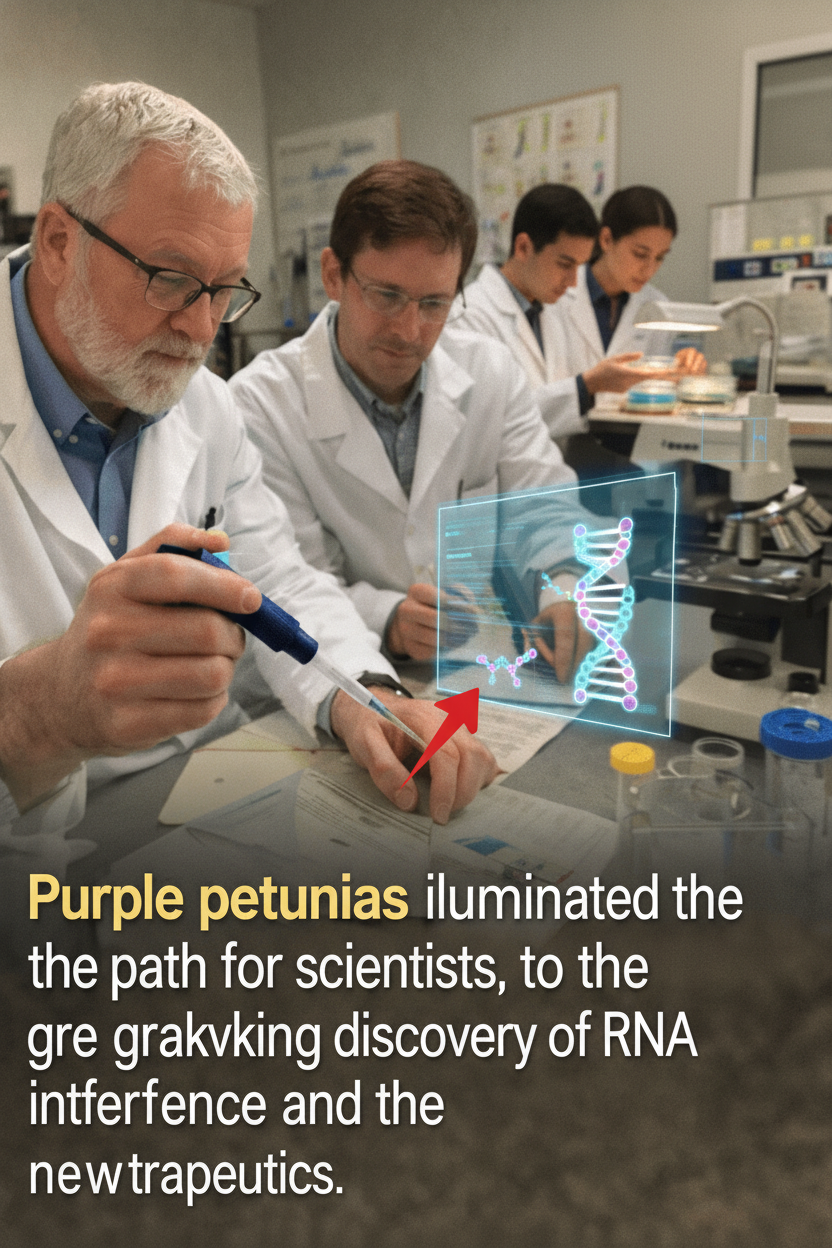
Harnessing RNAi: A Powerful Tool in Research
RNAi operates much like a highly targeted ‘search-and-destroy’ system within cells, executing its function through a precise molecular cascade:
- Initially, double-stranded RNA (dsRNA) enters the cell.
- This dsRNA is then processed into smaller fragments known as small interfering RNAs (siRNAs).
- These siRNAs subsequently guide protein complexes to locate and bind with complementary messenger RNA (mRNA) strands.
- Finally, the targeted mRNA is cleaved and degraded, effectively preventing that specific gene from producing its corresponding protein.
This unparalleled precision has transformed RNAi into an indispensable tool in laboratory research. Scientists now routinely utilize it to temporarily ‘knock down’ or inhibit the expression of specific genes, a technique that allows them to uncover gene functions without permanently altering the cell’s DNA. Here are some key advantages that highlight the utility of RNAi in scientific investigations:
- High Specificity: It targets individual genes with remarkable accuracy, avoiding broad disruptions to other cellular processes.
- Reversibility: The effects of RNAi are often temporary, fading over time, unlike irreversible gene edits.
- Versatility: Its application spans a wide range of biological systems, including plants, animals, and human cells, for diverse experimental designs.
- Speed: RNAi enables rapid testing of gene roles in various models, including those for human diseases.
Numerous research publications underscore how RNAi has dramatically accelerated discoveries in critical fields such as developmental biology, neuroscience, and oncology, pushing the boundaries of our understanding.
The Transformative Leap to Modern Biomedical Applications
What began as a curious observation in petunias has blossomed into a foundational principle for developing novel therapeutic strategies. Scientists have successfully engineered synthetic small interfering RNAs (siRNAs) that expertly mimic the natural RNAi triggers. These meticulously designed molecules possess the extraordinary capability to silence disease-related genes with unparalleled accuracy, offering new hope for previously untreatable conditions.
Indeed, several RNAi-based therapies have already achieved regulatory approval for a variety of challenging medical conditions. A prime example is fitusiran (approved by the FDA in 2025 as Qfitlia), which leverages this innovative approach to reduce levels of antithrombin, a protein that naturally inhibits blood clotting. In individuals suffering from hemophilia A or B, this reduction helps to promote more effective thrombin generation, thereby supporting hemostasis and significantly reducing the frequency of bleeding episodes as a crucial prophylactic measure. This remarkable journey from a gardener’s frustration to life-changing medicine perfectly illustrates how fundamental curiosity, even rooted in a simple plant, can ultimately lead to profound advancements in human health and well-being.