 By admin
 There’s a unique satisfaction in air-drying laundry outdoors on a warm, sunny day. The crisp freshness and natural sunlight are unbeatable. However, this pleasant routine can sometimes be interrupted by an unexpected visitor: bees. Spotting these buzzing insects circling your shirts or settling on towels can be quite alarming, particularly if you have concerns about stings or young children and pets playing nearby. What seems like an invasion is, in fact, a fascinating interplay of natural instincts and common household practices. Fortunately, understanding why bees are attracted to hanging laundry makes it easy to implement simple, bee-friendly strategies to keep your clothesline buzz-free, ensuring you can continue to enjoy the benefits of outdoor drying without any apprehension. Discover the surprising reasons behind this phenomenon and how to make a few minor adjustments for a more peaceful laundry day.
The Enticing Aroma: How Laundry Scents Draw Bees In
Bees possess an incredibly sophisticated sense of smell, which is their primary tool for discovering vital food sources like flowers and nectar. Scientific studies by entomologists highlight their remarkable ability to identify and track floral aromas over considerable distances. When you observe bees hovering around your freshly washed items, it’s often because your chosen laundry products – be it detergents, fabric conditioners, or scent boosters – emit sweet, floral, or fruity perfumes. These potent fragrances, designed to make our clothes smell pleasant, inadvertently mimic the very nectar-laden blossoms that bees are instinctively programmed to find. For a foraging bee, the delightful aroma emanating from your clothesline can be indistinguishable from a vibrant patch of flowers. This isn’t an act of aggression but rather an innocent case of mistaken identity; the bees are merely following their natural drive to locate sustenance. However, scent isn’t the sole culprit in attracting these pollinators to your outdoor drying rack…
Beyond Scent: The Visual Allure of Colors and Sunlight
Complementing their keen sense of smell, bees also rely heavily on their vision. Research into bee perception consistently shows their innate attraction to specific bright hues, particularly shades of blue, yellow, white, and various pastels, which closely resemble the vibrant petals of many flowering plants. This visual appeal becomes significantly amplified when bees are attracted to hanging laundry. Garments displayed in direct sunlight reflect light intensely, causing them to gleam and stand out vividly against their surroundings. The interplay of these elements—bright, flower-like colors radiating under the sun, combined with any lingering floral fragrances—creates an irresistible beacon for foraging bees. It’s little wonder they might perceive your clothesline as a promising source of nectar or pollen. Interestingly, this phenomenon is most pronounced on sunny, warm days, precisely when bees are most active and when we are most inclined to dry our clothes outdoors.
Are Bees on Your Clothesline a Threat? Understanding the Risk
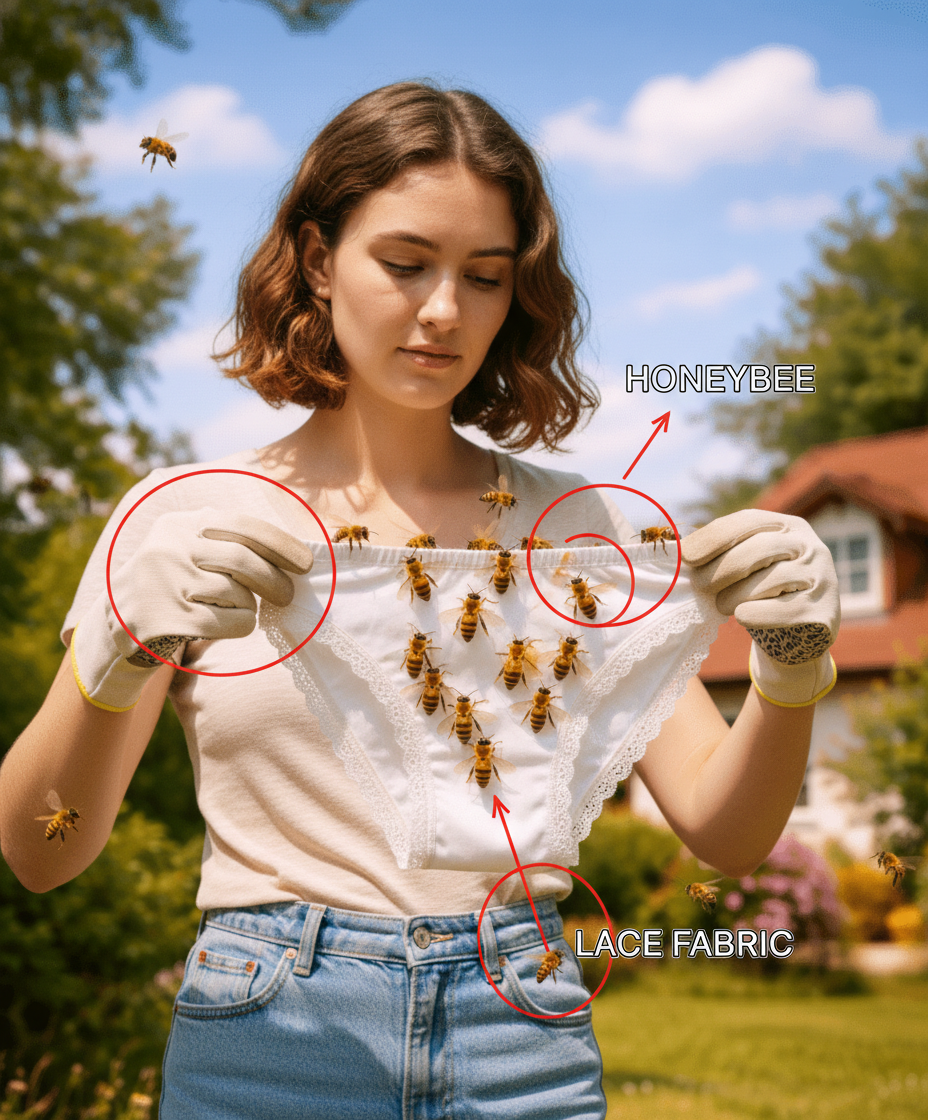
Discovering bees near your laundry can certainly cause apprehension, particularly for those with allergies or past negative experiences with stings. However, it’s crucial to understand that in the vast majority of cases, these encounters are entirely benign. Bees approaching your hanging clothes are typically driven by curiosity and their foraging instincts, not by aggression. They usually alight momentarily, quickly ascertain that there’s no actual nectar or pollen, and then depart without incident. According to apiary experts, stings predominantly occur when a bee perceives a direct threat or feels physically trapped, such as being accidentally folded into an item of clothing. Nevertheless, minimizing these interactions offers valuable peace of mind, especially in environments with children or household pets. The reassuring news is that gentle, non-harmful methods can effectively deter these visitors.
Gentle Prevention: Practical Strategies to Deter Bees from Your Laundry
Implementing minor adjustments to your laundry routine can remarkably decrease the frequency of bees visiting your hanging clothes. Here are several effective, bee-friendly approaches you can adopt immediately:
- Select fragrance-free or subtly scented detergents: Transitioning to laundry products devoid of strong perfumes, particularly opting out of scented fabric softeners, eliminates the primary olfactory “invitation” that initially draws bees.
- Prioritize darker or muted color garments for outdoor drying: Whenever feasible, choose to air-dry items in deep blues, greens, grays, blacks, or other earth tones. Bright whites and vibrant pastels, which are highly attractive to bees, are better suited for indoor drying.
- Utilize shaded drying spots: Hanging your clothes under a covered patio, porch, or in an area with dappled shade helps to diminish the intense light reflections that attract bees, while still ensuring adequate air circulation for effective drying.
- Strategically schedule your drying times: If you reside in an area with a high bee population, consider drying your laundry during off-peak hours, typically early morning or late evening, to avoid periods when bees are most active (mid-morning to late afternoon).
- Perform a quick, gentle shake before retrieving items: As a precautionary measure, lightly shake each garment before bringing it back inside. This simple action safely dislodges any bees that might still be resting on the fabric.
The Bigger Picture: Coexisting with Our Vital Pollinators
Recognizing the reasons bees are attracted to our outdoor laundry extends beyond mere convenience; it underscores our interconnectedness with the natural world. Bees are indispensable pollinators, crucial for the reproduction of countless plants, including a significant portion of the crops that feed humanity. Alarming global trends indicate a consistent decline in bee populations, making conscientious coexistence not just beneficial, but imperative. By adopting small, thoughtful changes in our daily routines—such as opting for unscented laundry products—we not only safeguard our personal space but also contribute positively to the well-being of these essential insects and the broader ecological balance.