 By admin
 Optimizing Forward Head Posture After 60: A Gentle 4-Minute Daily Routine Inspired by Japanese Wellness
As individuals reach their sixties and beyond, a common observation is a gradual shift in head position, often attributed to prolonged desk work, extensive screen time, or the natural progression of aging. This prevalent condition, known as forward head posture, frequently manifests as discomfort in the neck, persistent fatigue, restricted breathing capacity, and even slight difficulties with maintaining balance. Extensive research, particularly studies focusing on spinal alignment in older populations, consistently links these postural patterns to elevated stress on the cervical spine and upper back, alongside broader implications for daily vitality and stability. The encouraging news is that positive changes are entirely achievable. Incorporating small, gentle daily movements can effectively promote improved alignment without the need for strenuous effort or discomfort. Inspired by the wellness philosophies embraced by Japan’s notably long-lived senior population—including mindful, low-impact techniques advocated by seasoned medical professionals—this straightforward 4-minute routine prioritizes safety, heightened body awareness, and a gradual return to natural, effortless posture. Imagine the possibility: just a few minutes each day could help you experience a sense of being taller, lighter, and more comfortable in your own body. Continue reading to explore this easy-to-follow sequence, designed to foster nervous system comfort rather than demanding exertion.
The Emergence of Forward Head Posture in Later Adulthood
With advancing age, factors such as extended periods of sitting, frequently looking down at digital devices, or ingrained habits can subtly encourage the head to shift forward. Research indicates that a substantial proportion of older adults exhibit some degree of this postural misalignment, which places considerable additional strain on the cervical spine. Biomechanical calculations estimate that for every inch the head drifts forward, an extra 10 pounds of pressure is exerted on the neck. Over time, this cumulative stress can subtly contribute to chronic muscle tension, diminished respiratory capacity, and impairments in proprioception—your body’s crucial sense of its position in space—thereby potentially affecting overall stability and balance.
While many well-meaning interventions, such as persistent admonitions to “stand up straight” or the use of restrictive braces, aim to correct this issue, they can often generate more counter-tension than genuine relief. The human body frequently perceives external force or rigidity as a threat, prompting a reflexive tightening of protective muscles rather than encouraging relaxation. Consequently, approaches that are gentle, invitational, and non-confrontational are generally more effective in fostering sustained comfort and improvement. This is particularly true for individuals over 60, whose nervous systems respond more favorably to cues of safety and support, rather than being subjected to perceived challenges or strain.
The Neurological Basis of Gentle Postural Improvement
Posture extends far beyond mere muscle strength; it is intrinsically linked to how the brain and central nervous system perceive and interpret “safe” and efficient body positioning. When forward head posture becomes chronic, the body can adapt to this suboptimal alignment as its new default “normal,” even though it imposes significant stress. Deliberate, mindful practices play a crucial role in re-educating the nervous system by stimulating proprioceptors—the body’s internal sensors for position and movement—and encouraging a state of parasympathetic calm, which promotes rest and recovery. Studies involving older adults have demonstrated that consistent, gentle mobility exercises can significantly enhance neck awareness and progressively alleviate sensations of stiffness over several weeks. Japanese wellness philosophies frequently emphasize principles of harmony, subtle effort, and a deep focus on breath and conscious awareness, fostering a gradual opening and release. These principles resonate profoundly with contemporary insights in geriatric care and physical well-being.
The 4-minute routine presented here is meticulously designed around these foundational concepts: it avoids any aggressive stretching, requires no specialized equipment beyond an optional rolled towel for support, and ensures that all movements are performed well within your personal comfort zone.
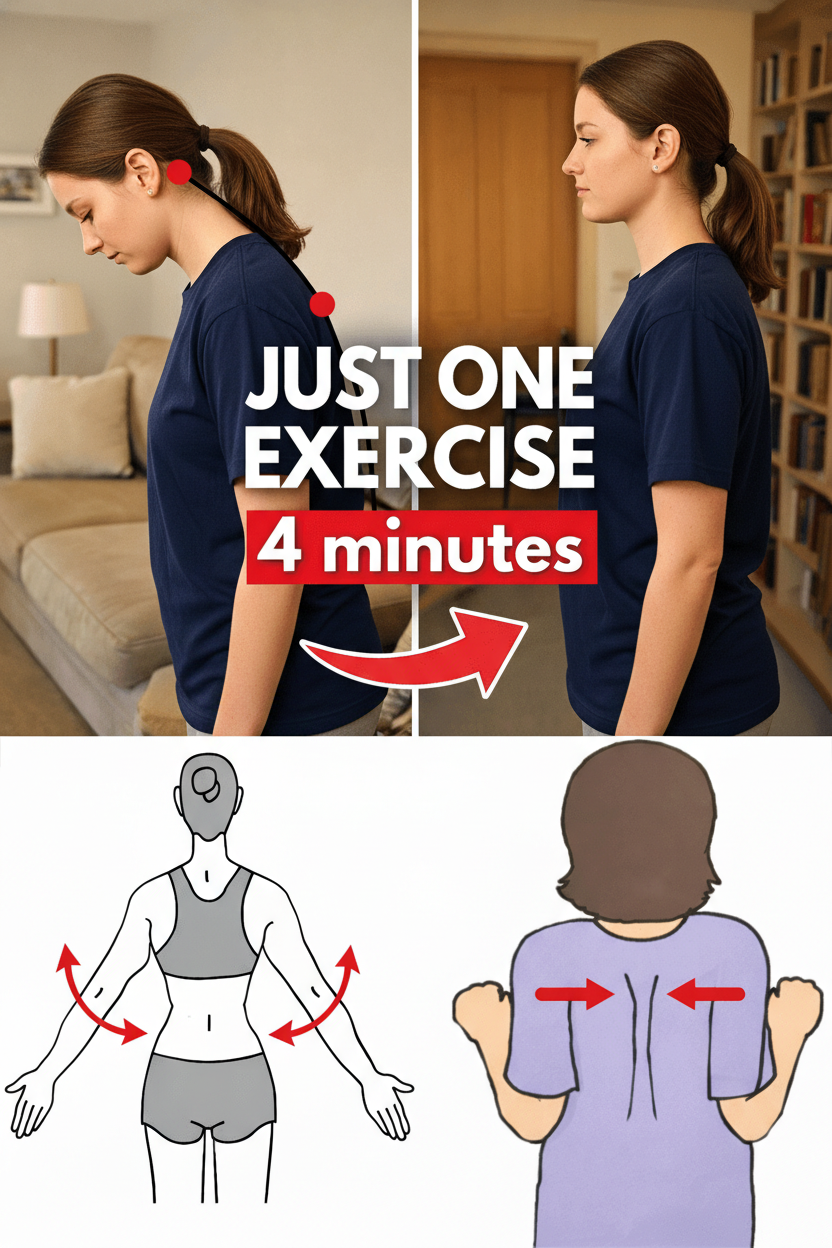
Your Daily 4-Minute Gentle Routine: A Step-by-Step Guide
Incorporate this routine into your daily schedule—it’s particularly beneficial first thing in the morning or following extended periods of sitting. The entire sequence takes approximately 4 minutes. Always prioritize listening to your body’s signals; discontinue any movement if you experience discomfort beyond a gentle, mild sensation.
Step 1: Gentle Sensory Neck Mobilization (60–90 seconds)
Begin either by sitting or standing in a relaxed, comfortable position. Rest your hands lightly on your thighs or interlace them gently behind your back. Initiate a slow, deliberate rotation of your head: move from right, through the center, to left, and back to the center, executing these movements smoothly for approximately 30 seconds (aim for 5–6 complete cycles). Next, gently lower your chin towards your chest, then softly lift your gaze slightly upwards (without straining or forcing the movement). Conclude by tilting one ear towards its corresponding shoulder, then repeat on the other side. Coordinate your breath: inhale as you prepare for a movement, and exhale as you gently ease into it. Crucially, only move within a range that feels comfortable and safe—never force or push to your maximum limits. This gentle, multi-directional activation helps awaken the sensory receptors in your neck and contributes to calming any protective muscle tension. Research focused on older adults consistently indicates that similar low-intensity mobility exercises are effective in improving proprioception within the neck and significantly reducing perceived stiffness.
Step 2: Integrated Chin Retraction with Scapular Engagement (60 seconds)
Assume a tall seated or standing posture. Gently draw your shoulder blades closer together and slightly downwards, as if you are trying to lightly hold a small object between them. Ensure your shoulders remain relaxed and away from your ears. Next, without tilting your head either upwards or downwards, gently slide your chin straight backward—imagine creating a subtle “double chin”—while maintaining a level gaze. Focus on feeling a gentle lengthening sensation at the back of your neck. Hold this position for 10–15 seconds, breathing calmly and steadily, then gently release. Repeat this sequence 3 times. This exercise effectively engages the deep postural muscles of the neck and upper back, helping to reinforce proper alignment.