 By admin
 Centuries before the advent of modern pharmacies and readily available prescriptions, humanity relied on innate wisdom and the bounty of the natural world to address health challenges. This article delves into 14 traditional remedies that have echoed through the annals of history, demonstrating their persistent relevance.
Long before shelves were stocked with synthetic antibiotics and specialized medications, our forebears instinctively looked to nature’s vast dispensary. They sought out plant-based solutions to bolster their body’s inherent defenses against common ailments such as minor wounds, soothing sore throats, and navigating seasonal discomforts. Life in those eras presented formidable challenges; without immediate access to medical professionals, even a minor infection could escalate, causing distress and prompting families to seek dependable aids within their immediate surroundings – be it their gardens, kitchens, or local woodlands.
These venerable plant-based remedies, meticulously preserved and transmitted across countless generations through diverse cultures—from the sophisticated practices of ancient Egypt and traditional Chinese medicine to the profound knowledge of indigenous communities—provided crucial comfort and support during times of need. What’s truly captivating is their enduring legacy: many of these very same natural helpers continue to be subjects of contemporary scientific inquiry, underscoring how the profound wisdom of the past remains a potent catalyst for exploring pathways to everyday wellness.
Why Ancient Civilizations Embraced Natural Healing
Throughout antiquity, healers and wise elders meticulously observed nature, discerning effective remedies through systematic trial and the careful preservation of traditional knowledge. This rich tapestry of healing spans millennia: from the Egyptians, who applied specific natural substances to wounds as early as 2000 B.C., to the detailed herbal descriptions found in Indian Ayurvedic texts promoting bodily balance, and the intricate recipes of medieval Europe that ingeniously combined common kitchen ingredients. Across these diverse cultures, the fundamental philosophy remained consistent: to support the body’s innate healing mechanisms and overall well-being.
Intriguingly, contemporary scientific research frequently mirrors these ancient insights. Modern studies actively investigate how various plant compounds interact with microorganisms and biological systems in laboratory environments, often validating the efficacy observed by our ancestors. The remarkable aspect of these historical healing methods lies in their accessibility; they didn’t rely on rare or imported ingredients. Instead, these powerful helpers were derived from everyday sources—roots, bulbs, leaves, and sweet nectars that people cultivated in their gardens or readily foraged from local environments. Now, let’s delve into 14 such remedies that consistently emerge in historical accounts across the globe.
14 Timeless Natural Remedies from History
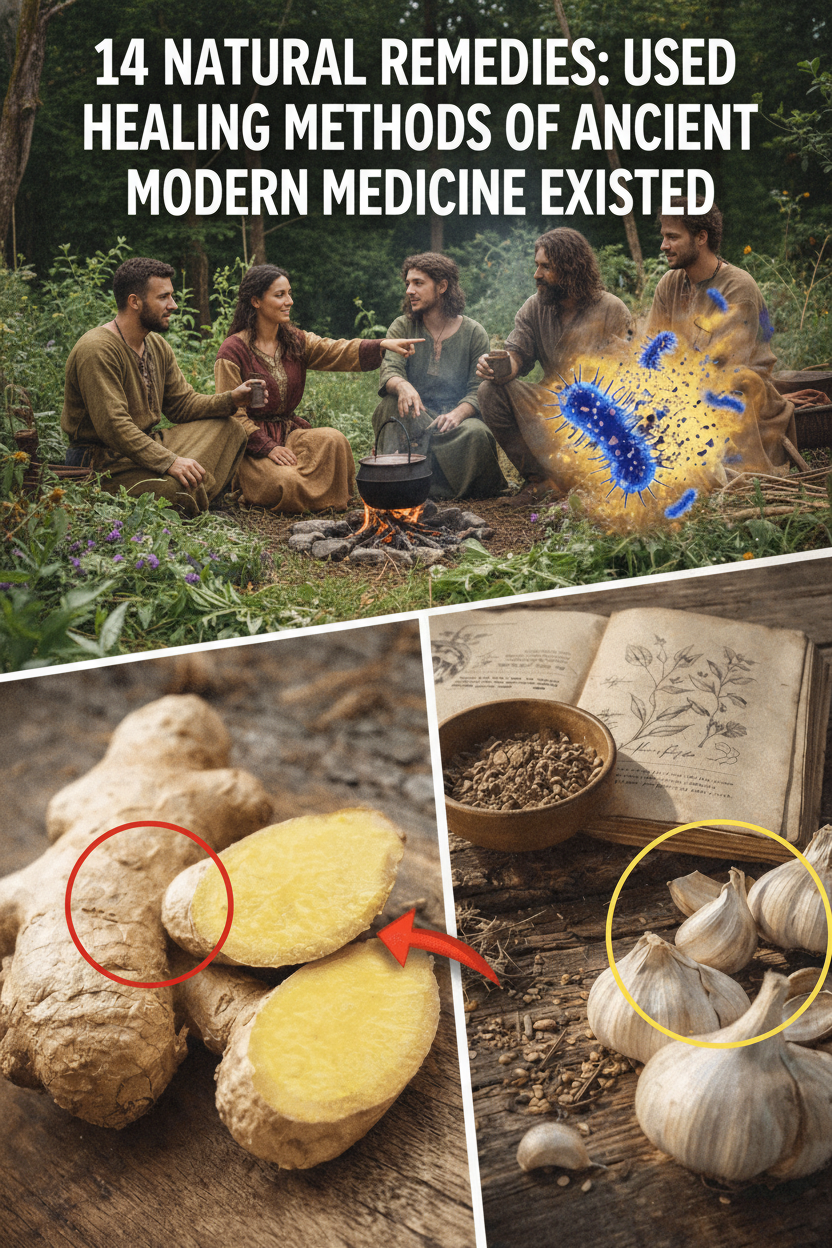
Here’s a closer look at some of the most frequently referenced natural helpers found across diverse cultures and historical periods:
- Garlic: Renowned across ancient Egypt, China, Greece, and numerous other civilizations, garlic was revered not just for its pungent aroma but for its traditional contributions to overall wellness. Contemporary scientific analyses frequently highlight its organosulfur compounds, which have demonstrated intriguing effects in various studies.
- Honey: Among the most ancient of remedies, honey’s medicinal uses are documented as far back as the Sumerians and Egyptians, who applied it topically to wounds. Its unique natural viscosity and acidic pH create an inhospitable environment for certain microbial growth.
- Onion: A ubiquitous ingredient in global folk medicine, onions were often combined with honey to provide soothing relief for coughs and general discomforts.
- Ginger: Esteemed for millennia in Traditional Chinese Medicine and Ayurvedic practices, ginger has been a cornerstone for aiding digestion and offering comfort during issues related to inflammation.
- Turmeric: With a history spanning nearly 4000 years in South Asia, this vibrant golden root has been incorporated into healing pastes and teas. Curcumin, its primary active compound, is frequently the focus of modern research into its diverse properties.
- Cinnamon: Valued in ancient remedies for its inherent warming properties, cinnamon also showed promise in traditional applications against specific microbes.
- Clove: The dried flower buds of the clove tree have long been utilized in traditional oral hygiene practices and as a potent spice, prized for its strong aromatic and beneficial qualities.
- Oregano: Within Mediterranean healing traditions, both the leaves and essential oil of oregano were highly regarded for their robust supportive properties.
- Thyme: A common feature in European herbalism, thyme leaves were frequently steeped into teas or infusions to provide comfort for respiratory ailments.
- Echinacea: Indigenous Native American healers extensively employed Echinacea for its perceived immune-boosting qualities and its role in wound care.
- Myrrh: Ancient texts frequently cite myrrh for its resinous sap, valued for its protective and cleansing qualities when applied to the skin.
- Goldenseal: In traditional North American herbal practices, the root of goldenseal was a highly esteemed ingredient in various healing blends.
- Cedar: Held sacred in many indigenous traditions, cedar oils were recognized for their properties in repelling certain environmental elements and for ceremonial purification.
- Elderberry: A cornerstone of European folk medicine, elderberries were a go-to remedy, particularly for supporting seasonal wellness and overall vitality.
These powerful natural allies often become even more effective when combined in simple, synergistic preparations.
Integrating Traditional Remedies into Modern Living
Curious about incorporating some of these time-honored remedies safely into your home routine? Below are practical steps for preparing a couple of popular options. Remember to always begin with small quantities and carefully monitor your body’s individual response.
For a Soothing Honey-Based Infusion (Inspired by Historical Cough Aids):
- Begin by thinly slicing 1 small onion and crushing 2-3 garlic cloves. Allow these to sit for about 10 minutes to help activate their beneficial compounds.
- Next, add slices of fresh ginger (approximately 1 inch in length) and a small pinch of turmeric powder.
- Carefully layer these ingredients into a clean, sterile jar, then completely cover them with raw honey.
- Permit the mixture to infuse at room temperature for 12-24 hours. Afterward, transfer it to the refrigerator, where it can be stored for up to one week.
- Consume 1 teaspoon as needed, or stir it into a cup of warm water for a comforting drink. (Important Note: Due to the risk of infant botulism, honey should never be given to children under one year of age).
For a Warming Ginger-Turmeric Tea:
- Grate 1 teaspoon of fresh ginger and ½ teaspoon of turmeric. For enhanced absorption of curcumin (the active compound in turmeric), consider adding a small pinch of black pepper.
- Place the grated ginger and turmeric into a mug. Pour 1 cup of hot water over the ingredients.
- Allow the tea to steep for 5-10 minutes. Strain if desired, and sweeten with honey or a slice of lemon to taste. Enjoy this comforting, warming beverage.