 By admin
 Fragrance and Your Thyroid: Understanding the Risks of Neck Application and Safer Scent Strategies
For many, a daily spritz of perfume on the neck is an ingrained ritual, a quick way to feel refreshed and self-assured. Yet, this seemingly harmless habit might be subtly exposing you to a cocktail of synthetic chemicals. Health professionals increasingly warn that these compounds can accumulate over time, potentially disrupting delicate hormone balances and impacting thyroid function. Common fragrances often harbor ingredients such as phthalates and synthetic musks, recognized as endocrine-disrupting chemicals (EDCs). Scientific studies have established links between these substances and possible interference with the body’s intricate hormonal systems. The reassuring news is that you needn’t abandon your beloved scents altogether; adopting a few mindful adjustments can allow you to revel in fragrance more securely. The thyroid gland, a vital regulator of metabolism, energy levels, and overall hormonal equilibrium, is situated remarkably close to the skin’s surface, precisely where many habitually apply perfume. This article delves into why application location is crucial, what current scientific understanding suggests, and offers actionable strategies to mitigate potential risks.
Why Your Neck Might Be a Vulnerable Spot for Fragrance Absorption
The skin covering your neck is notably more delicate and permeable than skin on other body parts, such as your arms or legs. Furthermore, it boasts a dense network of blood vessels, facilitating quicker absorption of topically applied substances directly into your bloodstream. A significant concern arises because many commercially available fragrances list “fragrance” as a single ingredient, a broad umbrella term that can conceal hundreds of distinct chemical compounds. Reputable organizations like the Environmental Working Group (EWG) and the Endocrine Society have consistently underscored that specific chemicals within these mixtures, particularly phthalates (often employed to enhance scent longevity) and various synthetic musks, are categorized as endocrine-disrupting chemicals (EDCs). Laboratory and animal studies indicate that EDCs possess the capability to mimic or disrupt natural hormones, prompting serious inquiries into their potential long-term impacts on crucial systems, including the thyroid. While a singular application is unlikely to trigger immediate adverse effects, accumulating evidence suggests that recurrent exposure to EDCs from personal care items may gradually contribute to subtle hormonal imbalances over time. For individuals with pre-existing thyroid sensitivities or those who apply fragrance daily, exercising caution by minimizing direct application to sensitive zones represents a prudent preventative measure.
Unpacking the Science: Fragrance Chemicals, Hormones, and Your Thyroid
Leading health organizations have dedicated extensive research to understanding the presence and impact of endocrine-disrupting chemicals in consumer products for decades. The National Institute of Environmental Health Sciences (NIEHS), for example, highlights that phthalates and analogous compounds are ubiquitous in our environment and possess the capacity to interfere with vital hormone signaling pathways. A growing body of research indicates a correlation between elevated exposure levels to these chemicals and alterations in thyroid-related functions, reproductive health, and metabolic processes. Scientific reviews further elaborate that while dermal absorption rates differ across the body, areas characterized by thinner skin facilitate significantly greater uptake of substances. The central concern isn’t acute toxicity from an isolated perfume application, but rather the compounding, long-term impact of consistent, daily exposure. Organizations such as the EWG have consistently identified fragrance blends within cosmetic products as containing undisclosed or potentially harmful ingredients. The crucial message is clear: scientific awareness is advancing, and compelling evidence advocates for adopting a mindful approach, particularly when applying products near hormone-sensitive regions.
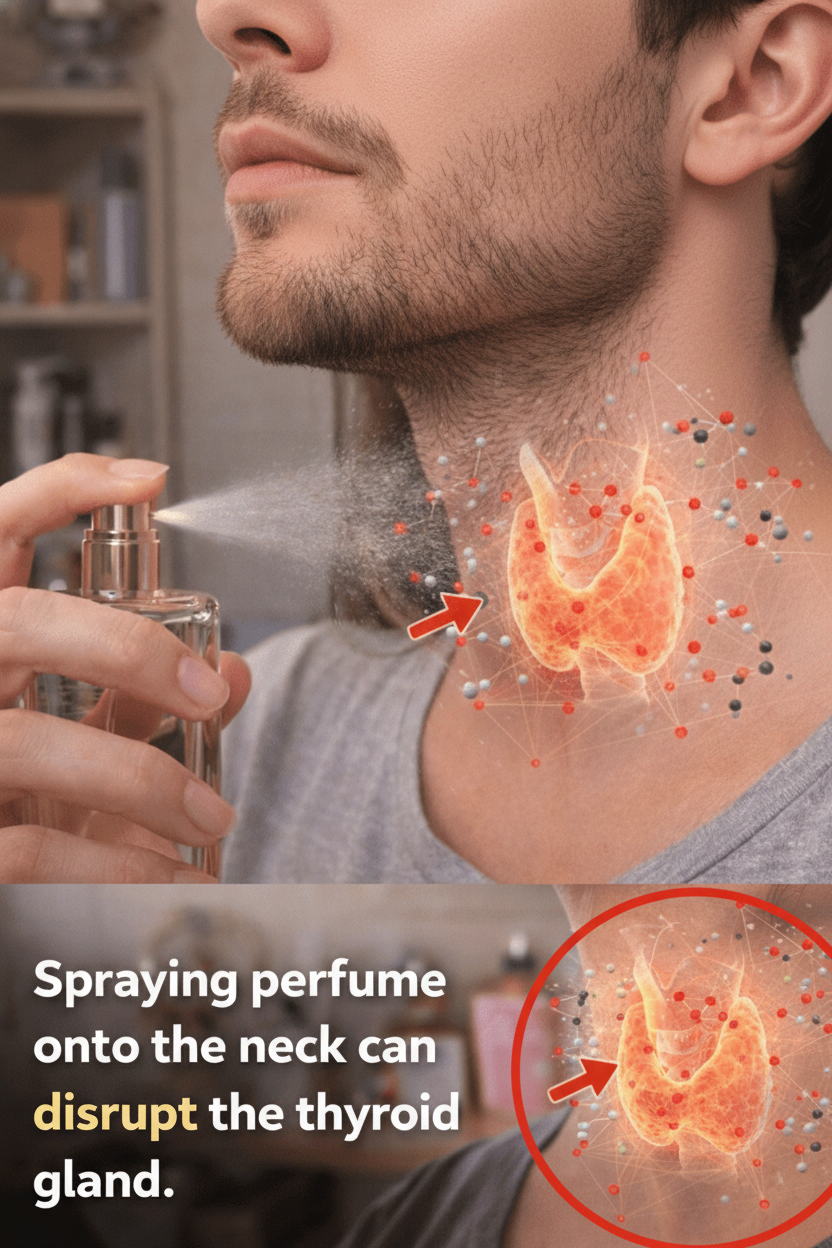
To illustrate the difference in potential exposure:
- Direct Neck Application: Features thinner skin and direct proximity to the thyroid gland, leading to a higher potential for EDC absorption.
- Wrists or Behind Knees: Offers thicker skin and is situated further from major endocrine glands, resulting in lower direct chemical exposure.
- Clothing or Pulse Points Away from Neck: Minimizes direct skin contact, allowing the scent to diffuse via fabric, thereby significantly reducing chemical uptake by the body.
Practical Steps for Safer Fragrance Enjoyment
Embracing a safer approach to fragrance doesn’t require a complete overhaul of your existing beauty regimen. Health and wellness experts frequently suggest these accessible and impactful adjustments:
- Bypass the Neck Area: Consciously choose alternative pulse points such as your wrists, the crooks of your inner elbows, or behind your ears. These spots effectively project the scent as your body warms, yet crucially keep the thyroid region out of direct contact.
- Apply to Clothing: Instead of direct skin application, gently mist your scarves, shirt collars, or even your hair (from a reasonable distance). This method allows the aroma to subtly linger through the fabric, significantly reducing direct dermal absorption of chemicals.
- Opt for Healthier Formulations: Actively seek out products clearly labeled “phthalate-free,” “paraben-free,” or “fragrance-free” (which often means they use natural essential oils for scent). Brands committed to ingredient transparency typically offer cleaner, more health-conscious formulas.
- Practice Moderation: Less is often more when it comes to perfume. A subtle, light application is usually sufficient, whereas over-spraying merely heightens your exposure to potential irritants without enhancing the scent’s quality or longevity.
- Thoughtful Layering: To prolong your fragrance’s presence without needing additional sprays, consider layering it over an unscented body lotion. This creates a base that helps the scent adhere longer and more subtly.
Implementing these minor adjustments into your daily beauty routine requires minimal effort but can profoundly reduce your contact with potential endocrine disruptors. Especially if fragrance is a cherished part of your everyday ritual, these conscious choices empower you to enjoy your favorite scents with greater peace of mind and enhanced safety.