 By admin
 Your Calves: The ‘Second Heart’ Essential for Healthy Circulation and Leg Wellness
Do you frequently experience persistent leg heaviness, unexplained chronic fatigue, noticeable ankle swelling, cold feet, or a pervasive sense of weariness that lingers even after rest? These common symptoms, particularly after extended periods of sitting or standing, are often dismissed as mere signs of aging. However, they frequently point to a more specific underlying issue: your body’s venous return system, responsible for sending blood back to your heart from your lower extremities, may be underperforming.
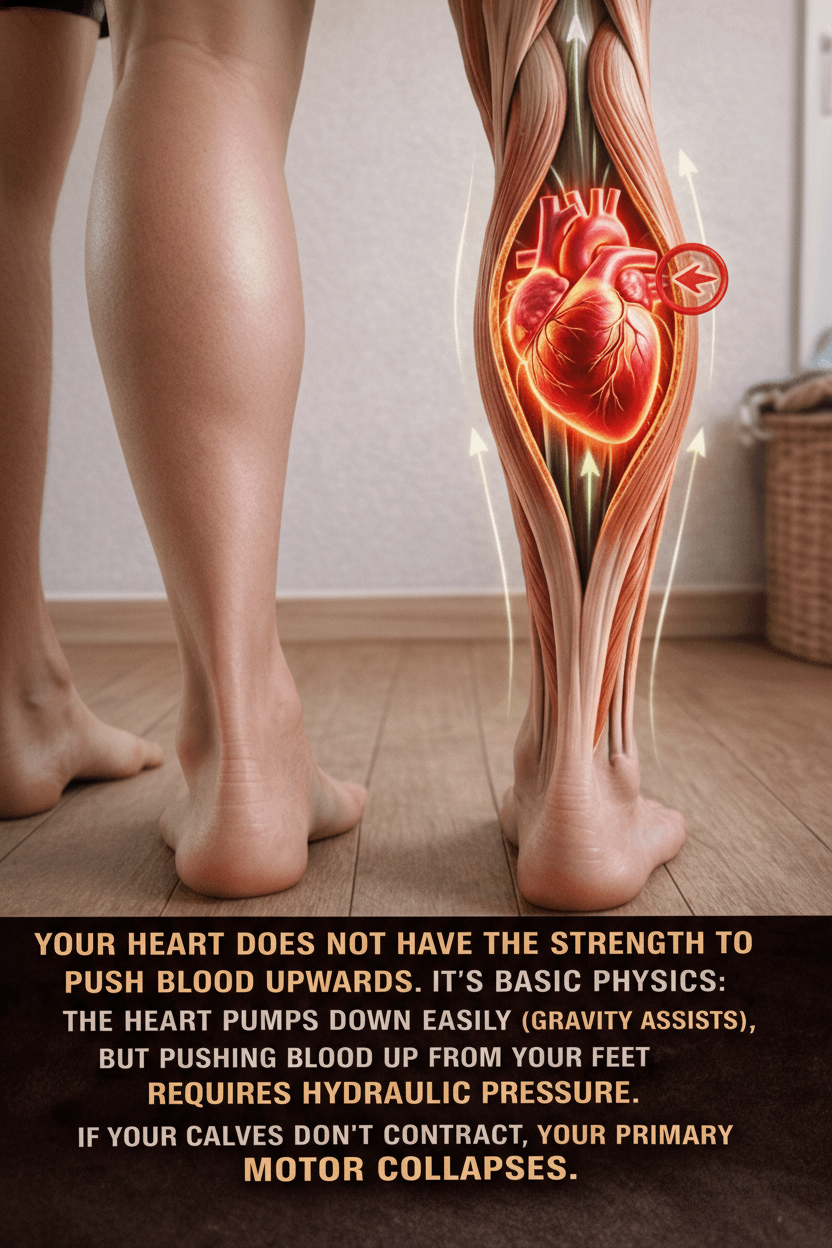
The fundamental physiological truth, increasingly emphasized by cardiologists and vascular specialists, is straightforward: your heart excels at pumping blood downwards, a task aided by gravity. But to propel blood upwards from your feet against the constant pull of gravity, your body relies on a crucial “second pump” – your calf muscles. This powerful mechanism, comprising the gastrocnemius and soleus muscles along with the venous valves in your legs, is vital for efficient blood flow.
Without regular, strong contractions from your calf muscles, blood can stagnate and pool in the lower legs. This leads to increased pressure on your veins, potential damage to the delicate venous valves, and ultimately contributes to conditions like varicose veins, chronic venous insufficiency, persistent leg fatigue, swelling, and an increased workload on your primary heart. In essence, weak or inactive calves compel your heart to compensate, elevating the long-term risk of cardiac overload, hypertension, and various heart failure symptoms.
The Critical Oversight: Why Leg Strength is More Than Aesthetic
One of the most significant misconceptions, especially prevalent in individuals over 40 or 50, is viewing leg strength as purely aesthetic or secondary in importance. Many neglect lower-body activation, believing that occasional walking suffices or that they are simply “too tired.” The reality is that prolonged sitting, a hallmark of modern lifestyles, keeps calf muscles relaxed, effectively shutting down this vital venous pump and compromising overall circulation.
The Proactive Solution: Activating Your Calf Pump Daily
Incorporating these simple, highly effective daily habits can restore the critical “second heart” function of your calves. These techniques are widely utilized in sports biomechanics, vascular rehabilitation programs, and longevity clinics:
1. Heel Raises (The Core Venous Pump Exercise)
- How to do it: Stand with your feet hip-width apart, using a chair or wall for balance. Slowly rise onto the balls of your feet, achieving a full calf contraction. Hold this peak position for 1-2 seconds, then slowly lower your heels back down.
- Recommendation: Perform 3 sets of 15-25 repetitions every morning. This routine typically takes only 2-3 minutes.
- Why it works: Each repetition powerfully compresses the deep veins within your calves, efficiently propelling blood upwards towards the heart. This action significantly reduces cardiac preload throughout the day.
2. Power Walking with Full Foot Roll (Toe-to-Heel Motion)
- How to do it: Engage in brisk walking, consciously rolling your foot from the toes through the arch to the heel with each step. This deliberate motion maximizes the contraction of both the soleus and gastrocnemius muscles.
- Recommendation: Aim for 20-40 minutes daily. This can be split into two 15-20 minute sessions if preferred.
- Why it works: This technique transforms ordinary walking into a continuous, dynamic venous pumping session, promoting consistent blood flow.
3. Office / Sitting Micro-Activation
- How to do it: Every 30-60 minutes while seated, lift your heels off the floor 20-30 times (seated calf raises). Alternatively, stand up and perform 10-15 standard heel raises.
- Recommendation: Integrate these micro-breaks into your workday.
- Why it works: This practice actively prevents blood from pooling in your lower legs during prolonged periods of sitting, addressing a significant modern risk factor for venous insufficiency.
4. Leg Elevation + Gentle Ankle Pumps (Evening Reset)
- How to do it: Lie down or sit with your legs elevated above heart level (using pillows or resting them against a wall) for 10-15 minutes. While elevated, flex and point your ankles 20-30 times, then gently circle them in both directions.
- Recommendation: Incorporate this routine every evening before bed.
- Why it works: Gravity assists in draining pooled fluid, while the ankle pumps stimulate residual venous action, providing a restorative boost to circulation.
5. Hydration + Electrolytes (Magnesium & Potassium)
- How to do it: Drink 2.5-3 liters of water daily, distributed evenly throughout the day. Consider supplementing with magnesium glycinate (300-400 mg) at night and consume potassium-rich foods such as bananas, avocados, and spinach.
- Recommendation: Make hydration and electrolyte balance a daily priority.
- Why it works: Optimal muscle contraction efficiency, crucial for the calf pump, is heavily dependent on a balanced supply of magnesium and potassium. Deficiencies can lead to weaker pumping action.
Realistic Timeline & Expected Improvements
- Days 3–7: Many individuals report warmer legs, a noticeable reduction in daytime heaviness, and decreased morning stiffness.
- Days 7–21: You’ll likely observe a significant decrease in evening swelling, find walking and standing for longer periods easier, and experience calmer restless legs at night.
- Weeks 4–8: Expect lighter legs overall, improved tolerance for heat/humidity/standing, and a common sentiment of “my legs finally feel normal again.”
Important Considerations: What This Approach Does NOT Do
While highly beneficial, these practices are not a cure for advanced medical conditions. They will not:
- Cure advanced venous insufficiency, Deep Vein Thrombosis (DVT), Peripheral Artery Disease (PAD), or existing heart failure.
- Replace prescribed compression stockings, essential medications, or necessary vascular procedures.
- Provide rapid relief for severe swelling, which warrants urgent medical evaluation.
Safety Notes & Red Flags for Urgent Medical Attention
These exercises are generally very safe for most individuals. However, seek urgent medical attention if you experience any of the following:
- Sudden or one-sided leg swelling, pain, redness, or warmth: These could be signs of a Deep Vein Thrombosis (DVT), a medical emergency.
- Leg swelling accompanied by shortness of breath or chest pain: This combination may indicate a pulmonary embolism, which requires immediate care.
- Open sores or ulcers on your legs that are not healing: This can be a symptom of serious venous insufficiency requiring specialized treatment.
- Severe leg pain coupled with a fever: This could signal a significant infection.
The Bottom Line
Your calves truly function as your “second heart.” Without consistent, regular activation, blood stagnates, veins can weaken, and your primary heart is forced to work harder than it should. This accelerates fatigue, exacerbates swelling, and significantly increases long-term cardiac risk. By integrating the five simple habits outlined above – heel raises, power walking, office micro-activations, leg elevation, and proper hydration – you can proactively support your circulatory system, enhance leg health, and safeguard your overall cardiovascular well-being for years to come.