 By admin
 How Long Does It Take to Digest Food?
The Surprising Truth About What Happens After You Eat
Have you ever finished a big meal and wondered, “Where does all this food actually go?” Some meals leave you full for hours, while others make you hungry again in no time. That’s because every type of food digests at a different pace — and knowing how this process works can help you feel lighter, more energized, and less bloated.
The Journey of Digestion
Digestion starts the moment you take a bite. Enzymes in your saliva begin breaking down carbs before food even reaches your stomach. Once there, acids and enzymes continue the process for anywhere between 30 minutes and 6 hours, depending on what you eat. The food then moves to the small intestine for nutrient absorption (6–8 hours), and finally to the large intestine, where water is absorbed before elimination.
In total, a full digestive cycle can take 24 to 72 hours.
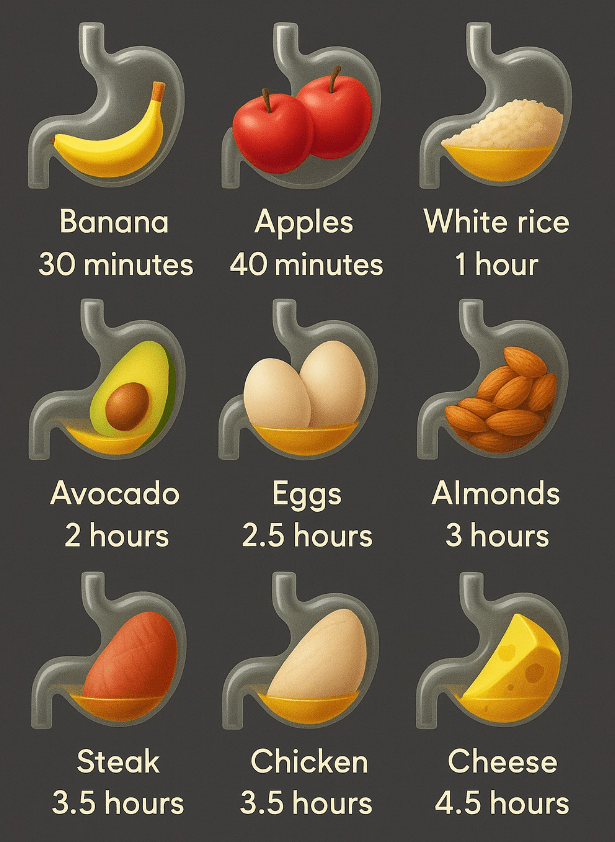
Why Some Foods Digest Faster
The speed of digestion depends on what’s on your plate:
-
Fruits and veggies (high in water) move quickly — 30 minutes to 2 hours.
-
Starches like rice or pasta take 2–3 hours.
-
Proteins such as chicken or eggs need 3–4 hours.
-
Fatty or heavy foods like cheese or red meat can linger for 5–6 hours or more.
That’s why a salad leaves you feeling light, while a steak keeps you full all afternoon.
Fast vs. Slow Digestion
Both have benefits. Fast-digesting foods give you quick energy — great before a workout — but can cause energy crashes later. Slow-digesting foods release energy steadily, keeping hunger away. The best approach? Combine both — a balance of fresh produce, whole grains, and lean proteins.
Signs Your Digestion Needs Support
If you often feel bloated, tired after eating, or uncomfortably full for hours, your digestion may be sluggish. Causes can include eating too quickly, poor food combinations, or dehydration.
How to Improve Digestion Naturally
-
Chew slowly and eat mindfully.
-
Stay hydrated — water helps move food efficiently.
-
Avoid lying down after meals.
-
Eat smaller portions to prevent overload.
-
Move a little — even a short walk helps digestion.
You can also add probiotics (like yogurt or kefir), fiber, and healthy fats to support gut health and keep your digestive rhythm balanced.
The Big Picture
Digestion time isn’t just biology — it’s a reflection of your eating habits and lifestyle. Fast or slow, your goal is balance: meals that nourish you without leaving you heavy or drained.
Next time you eat, notice how long your meal keeps you satisfied. Those small observations can help you tune in to your body’s natural rhythm — and transform the way you feel after every meal.