 By admin
 The Silent Impact: How Uncontrolled Blood Sugar May Be Reshaping Your Brain
Envision navigating your daily routine, effortlessly making choices, cherishing memories, and finding joy in small accomplishments. Now, consider a less visible threat: the possibility that persistently high blood sugar could be subtly altering the very pathways your brain uses for these essential functions. For individuals living with type 2 diabetes or prediabetes, elevated glucose levels are often associated with energy fluctuations or weight management challenges. However, a growing body of scientific inquiry indicates a deeper connection, suggesting that these levels could impact crucial brain regions responsible for memory, executive decision-making, and even our capacity to experience reward.
This discussion isn’t intended to provoke anxiety but rather to illuminate the compelling evidence underscoring the profound importance of effective blood sugar control for enduring brain health. Crucially, there’s an encouraging message to take away: incorporating straightforward, daily practices to achieve better glucose balance has the potential to safeguard these vital neural connections for years to come.
Unveiling the Connection: Blood Sugar’s Influence on Brain Function
An expanding body of scientific investigation is progressively highlighting a strong correlation between sustained high blood sugar—a prevalent characteristic of type 2 diabetes—and alterations in brain activity that bear a striking resemblance to the initial signs of cognitive impairment. A particular area of intense focus for researchers is the anterior cingulate cortex (ACC), a critical brain region instrumental in processing rewards, guiding our choices, and facilitating tasks related to memory.
Findings from various studies, including significant research conducted at the University of Nevada, Las Vegas, and published in the Journal of Neuroscience, reveal that elevated glucose concentrations can diminish neural signaling within the ACC. Furthermore, experiments using animal models have demonstrated that chronic high blood sugar seems to impair the brain’s ability to process rewards and can reduce the efficiency of communication between the ACC and the hippocampus—the brain’s crucial hub for the creation and retrieval of long-term memories. Yet, the implications extend beyond these specific areas.
The impact of uncontrolled glucose isn’t confined to isolated brain regions. Other independent studies have drawn links between chronically high glucose levels and a reduction in brain volume in zones vital for memory, disturbances in brain insulin signaling, and broader neurological shifts that mirror early characteristics associated with Alzheimer’s disease. While no research conclusively states that high blood sugar directly causes Alzheimer’s, the compelling evidence suggests it significantly heightens susceptibility by fostering detrimental brain changes over a prolonged period.
The Anterior Cingulate Cortex (ACC): A Crucial Hub for Cognition
Consider the ACC as a central control tower within your brain, orchestrating complex operations. It plays a pivotal role in evaluating choices (e.g., “Is this endeavor worthwhile?”), interpreting emotional rewards, and working in close partnership with the hippocampus to enrich memories with context—allowing you to recall not merely an event, but also the emotions it evoked or its specific location. When elevated blood sugar levels disrupt this intricate system:
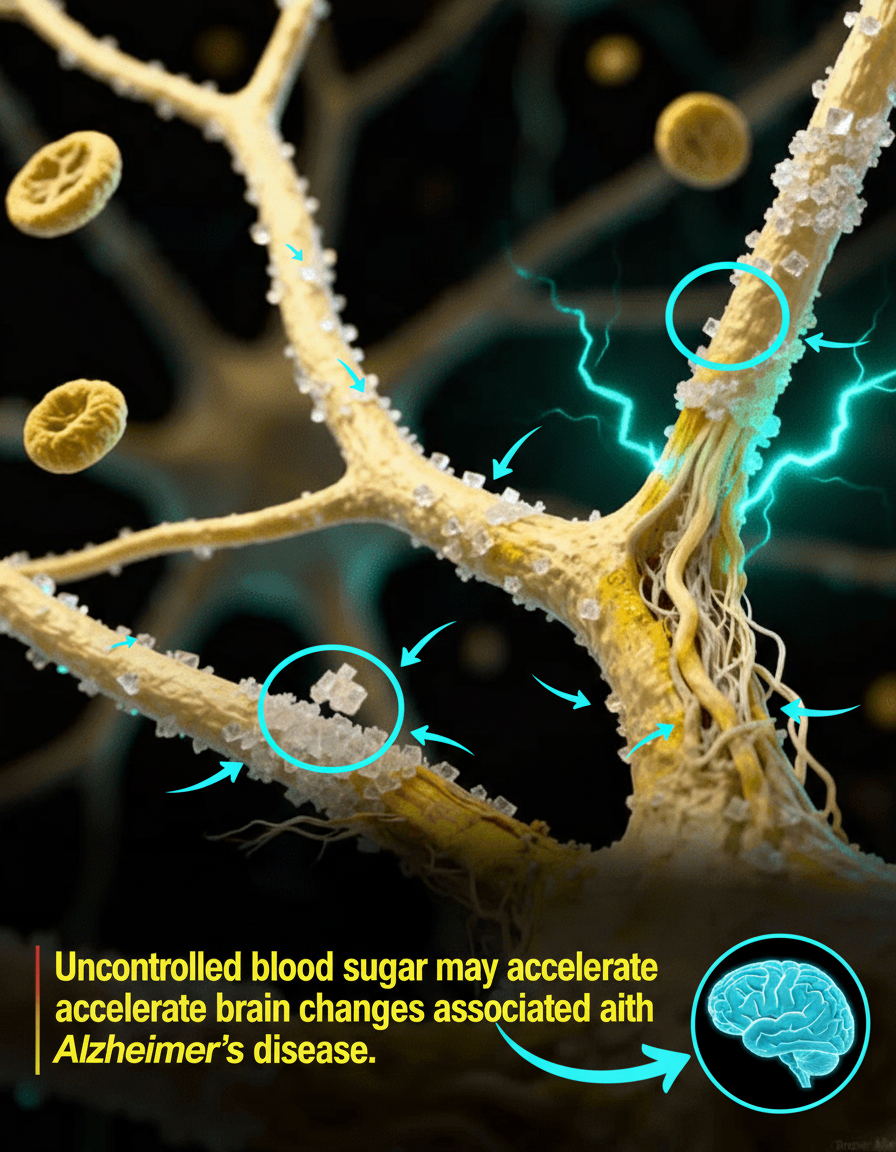
- Reward processing diminishes: The brain’s signals for positive outcomes become weaker, potentially reducing motivation and the ability to derive pleasure.
- Neural communication slows: The vital dialogue between the ACC and the hippocampus becomes sluggish, impacting cognitive functions that demand deep thought, contextual understanding, or precise memory retrieval.
Observations from animal studies corroborate these findings, showing that such disruptions result in diminished capabilities in memory and decision-making tasks. These outcomes parallel the subtle cognitive alterations frequently observed in the initial stages of cognitive decline. It’s important to recognize that these aren’t sudden, dramatic transformations, but rather a progressive neural reorganization that accumulates silently over years of inadequate glucose management.
Beyond the ACC: Broader Implications of High Blood Sugar for Brain Health
While the connection between the ACC and hippocampus is significant, further research illuminates additional mechanisms through which persistently high glucose can compromise overall brain health. These include:
- Reduced Brain Volume: Imaging studies of individuals with type 2 diabetes frequently reveal a reduction in the volume of brain regions crucial for memory function.
- Impaired Brain Insulin Signaling: Often referred to as “brain insulin resistance,” this condition disrupts how neurons efficiently utilize energy, essential for their proper functioning.
- Elevated Inflammation and Oxidative Stress: High glucose levels contribute to increased vulnerability to chronic inflammation and oxidative stress, both of which are well-established contributors to cognitive decline.
These insights are derived from a diverse range of studies, encompassing human neuroimaging, long-term observational cohorts, and controlled animal models. Collectively, they paint a coherent picture of potential risk factors, carefully avoiding oversimplified claims of direct causation.
Empowering Your Brain: Practical Steps for Better Blood Sugar Control
The good news is profoundly encouraging: numerous evidence-backed lifestyle choices can effectively help you maintain healthier glucose levels and, in turn, potentially offer significant protective benefits for your brain. Here is a clear, actionable guide to get started:
- Embrace Balanced Nutrition: Center your meals around fiber-rich vegetables, high-quality lean proteins, and beneficial healthy fats. This combination helps to moderate glucose absorption. For instance, consider pairing carbohydrate-rich foods with sources like nuts or avocado.
- Integrate Regular Physical Activity: Strive for at least 30 minutes of moderate-intensity exercise on most days. Even a simple walk after meals can be remarkably effective in mitigating post-meal blood sugar spikes.
- Actively Monitor Glucose Trends: With guidance from your healthcare provider, regularly track how various foods and physical activities influence your blood sugar levels. This personalized data can help you identify optimal strategies.
- Ensure Adequate Hydration and Quality Sleep: Both insufficient hydration and poor sleep quality have a detrimental impact on your body’s ability to manage glucose effectively.
- Implement Stress Management Techniques: Chronic stress is a known contributor to elevated blood sugar. Incorporating practices such as deep breathing exercises or brief mindfulness meditations can be highly beneficial in mitigating this effect.
Remember, making small, consistent changes over time can lead to significant improvements in your overall health and cognitive well-being.
”
}
“`