 By admin
 Experiencing sciatica pain can be debilitating, with sudden, sharp sensations shooting down your leg, making everyday movements a struggle. This pervasive nerve pain, often radiating from the lower back through the glutes and into the leg, frequently arises from common triggers like extended sitting, daily activities, or minor physical strain. The constant discomfort can profoundly impact your quality of life, disrupting sleep, work, and precious family time, leaving you desperate for immediate relief without the wait for a doctor’s appointment. The good news is that effective, natural strategies, including specific stretches and accessible home remedies, can often alleviate this pressure and provide significant comfort within minutes. This comprehensive guide will walk you through practical steps you can implement today. Make sure to read to the very end—we’ll share a crucial, often-missed tip that many find surprisingly beneficial for sustained relief.
Understanding Sciatica Discomfort and Why Targeted Movement is Crucial
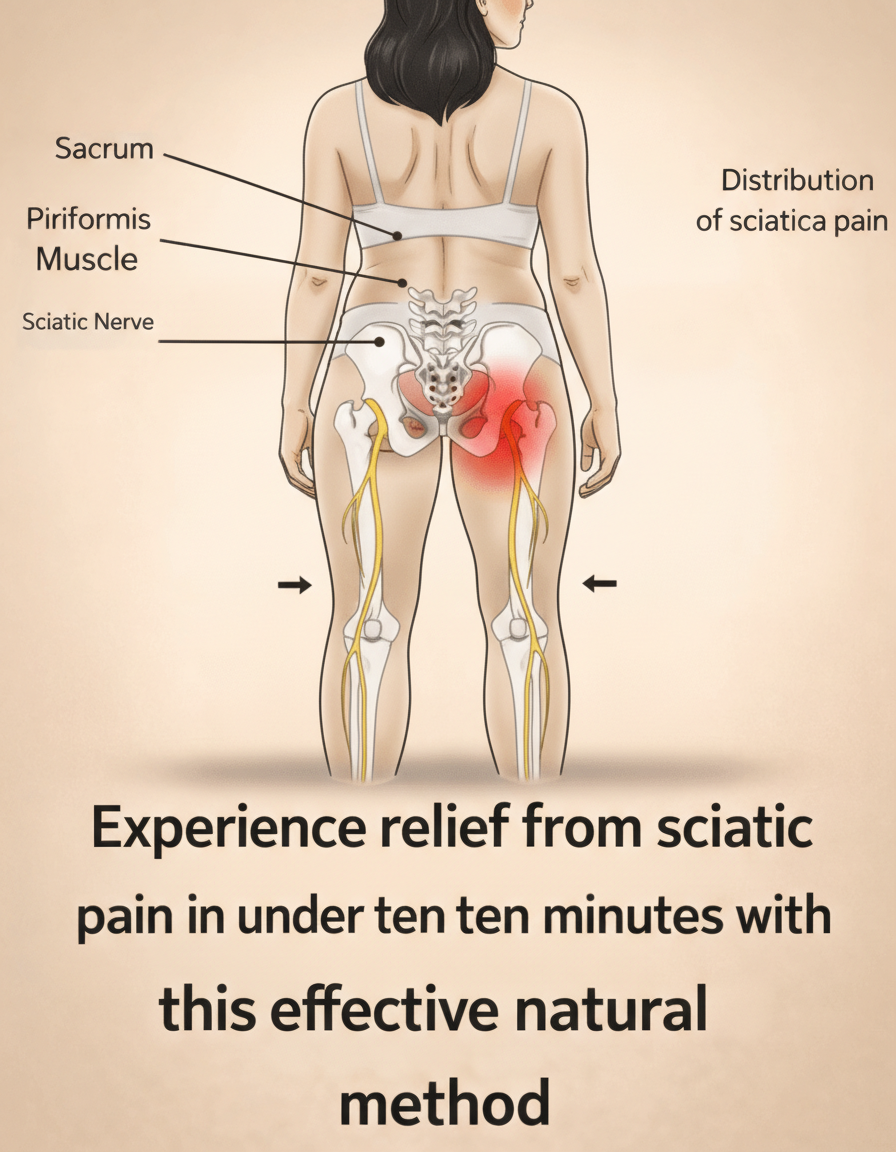
Sciatica is a medical term describing symptoms caused by irritation or compression of the sciatic nerve—the body’s longest nerve, originating in the lower back and extending down both legs. This irritation, often due to factors like tight muscles, piriformis syndrome, or minor disc issues, manifests as radiating nerve pain along its extensive pathway. Compelling research, including recent findings on the efficacy of exercise for nerve-related conditions (e.g., Frontiers in Neurology, 2024), highlights that gentle, controlled movement and therapeutic stretching are vital for enhancing flexibility and improving blood flow to the affected regions. The cornerstone of effective sciatica relief lies in performing low-impact exercises that specifically target the lower back, hips, and gluteal muscles, always ensuring movements remain pain-free. Furthermore, integrating these stretches with simple temperature therapy can often significantly enhance the soothing effect.
The Science Behind These Gentle Relief Techniques
These natural remedies are effective because they promote crucial physiological changes: they encourage deep muscle relaxation, optimize blood circulation, and carefully alleviate direct pressure on the irritated sciatic nerve. Esteemed physical therapists and leading health organizations frequently advocate for these methods as essential components of a proactive daily self-care regimen. Clinical studies consistently demonstrate that stretches designed for the hips and lower back can significantly enhance mobility and mitigate nerve hypersensitivity in individuals experiencing nerve irritation. Crucially, always prioritize your body’s signals: discontinue any exercise that intensifies your discomfort and seek expert medical advice.
1. Knee-to-Chest Stretch: Immediate Relief for Lower Back Tension
This foundational stretch is an excellent way to gently elongate the muscles of the lower back, often providing an instant sensation of calm and relief. Here’s how to perform it effectively:
- Begin by lying flat on your back on a comfortable yet firm surface, such as a yoga mat or your bed.
- Bend one knee and, using both hands, slowly and deliberately pull it towards your chest.
- Allow your other leg to remain either fully extended or slightly bent, choosing the position that feels most comfortable for your body.
- Maintain this stretch for 10 to 30 seconds, focusing on deep, steady breaths, then gently release the leg back to the starting position.
- Repeat this sequence 2-3 times for each leg. If comfortable and pain-free, you may also try bringing both knees to your chest simultaneously.
Many individuals report that this exercise quickly helps to loosen tightness in the lumbar region. However, there’s another targeted stretch that addresses a specific muscle frequently implicated in sciatic discomfort.
2. Piriformis Stretch: Directly Addressing Deep Gluteal Muscle Tightness
The piriformis muscle, nestled deep within the gluteal region, is a common culprit in sciatic nerve irritation when it becomes overly tight. This stretch is designed to target it directly:
- Start by lying on your back with both knees bent and your feet positioned flat on the floor.
- Cross the ankle of the leg experiencing discomfort over the opposite knee, creating a “figure four” shape.
- Gently grasp the thigh of the supporting leg and slowly draw it towards your chest until you perceive a gentle, yet distinct, stretch in the buttock of the crossed leg.
- Hold this position for 20 to 30 seconds, maintaining calm, consistent breathing.
- Release, then switch sides and perform the stretch 2-3 times on each leg.
Many users find that this particular stretch delivers significant and noticeable relief specifically in the hip and glute areas, helping to decompress the sciatic nerve.
3. Cobra Stretch: Promoting Gentle Spinal Extension and Decompression
This gentle back extension is beneficial for opening the anterior chain of the body and, for some individuals, can effectively alleviate pressure on the lower back. Here’s how to perform the Cobra Stretch safely:
- Lie face down on your mat or bed, placing your hands flat on the surface directly beneath your shoulders, with elbows tucked close to your body.
- Slowly engage your back muscles and gently press into your hands to lift your chest and head upward, ensuring your hips remain grounded.
- Maintain a slight bend in your elbows and keep your gaze directed forward or slightly downward to protect your neck.
- Hold this posture for 15 to 30 seconds, then carefully lower yourself back down to the starting position.
- Repeat this motion 3-5 times, always ensuring you only extend as far as feels comfortable and pain-free.
Numerous yoga and physical therapy resources highlight how poses like the Cobra Stretch contribute significantly to enhancing overall spinal flexibility and promoting better posture.
Rapid Temperature Therapy Options for Sciatica Relief
Integrating alternating cold and heat therapy is a widely adopted and effective home remedy for managing sciatica symptoms. This dual approach leverages distinct physiological benefits:
- Cold Application: For acute pain or fresh inflammation, gently wrap an ice pack in a thin towel and apply it to the affected area—typically the lower back or gluteal region—for 5 to 10 minutes. The cold helps to constrict blood vessels, reducing swelling and numbing the area.
- Heat Application: Once the initial inflammation subsides, or for chronic muscle tension, use a warm (never excessively hot) heating pad or a warm, damp towel. Apply for 10 to 15 minutes to encourage muscle relaxation, improve blood circulation, and soothe stiffness.
A common strategy is to begin with cold therapy if your discomfort is recent or feels inflammatory. You can then transition to heat therapy as needed, or even alternate between the two for amplified comfort and pain management. Always ensure a barrier between the skin and the heat/cold source to prevent injury.
Supportive Rest Positions for Enhanced Comfort
Often, one of the most immediate and effective steps you can take to alleviate sciatica pain is to adjust your resting posture. Finding a position that minimizes pressure on the sciatic nerve can provide significant relief. Here are a couple of recommended positions:
- Lying on Your Back with Elevated Legs: Lie on your back with a pillow or cushion placed under your knees, ensuring they are slightly bent. This position helps to flatten your lower back against the surface, which can reduce pressure on the sciatic nerve.
- Fetal Position: Lying on your side in a gentle fetal position, with knees drawn slightly towards your chest, can also relieve pressure on the nerve roots in the lower back by opening up the spaces between vertebrae. Placing a pillow between your knees can further improve spinal alignment.
Experiment with these positions to discover which offers you the most comfort and helps to ease your sciatic discomfort. Remember, maintaining proper spinal alignment even while resting is key to effective pain management.
The Often-Overlooked Key: Mindful Movement and Posture Awareness
While targeted stretches and immediate therapies offer significant relief, the most impactful, yet frequently overlooked, tip for sustained sciatica comfort lies in cultivating mindful movement and consistent posture awareness throughout your day. It’s not just about what you do for a few minutes; it’s about how you sit, stand, lift, and bend for hours. Avoid prolonged static positions, especially sitting. If you must sit, ensure your lower back is supported, your feet are flat on the floor, and your knees are level with your hips. Regularly stand up, stretch gently, and walk around every 30-60 minutes. Paying attention to these subtle adjustments in your daily routine can prevent sciatic flare-ups and contribute profoundly to long-term pain management, transforming temporary relief into lasting well-being.