 By admin
 Do you often find yourself walking into a room only to forget why you entered, or noticing your tongue feels unusually smooth and appears remarkably red, making meals taste oddly bland? These minor, often frustrating, changes are frequently dismissed as just another part of the natural aging process. However, they could be subtle indicators of a more specific underlying issue: insufficient vitamin B12 levels. This deficiency becomes increasingly prevalent as we age, largely due to diminished stomach acid production and reduced nutrient absorption.
Many individuals overlook these early warnings or receive standard blood test results that appear “normal,” yet their persistent symptoms suggest otherwise. The good news is that recognizing these early clues empowers you to take proactive steps. Continue reading to explore eight unusual signs research connects to low B12, understand what your test numbers truly signify, and discover straightforward ways to support healthy B12 levels.
Why Vitamin B12 Becomes More Critical After 50
Vitamin B12 is an essential nutrient, playing a pivotal role in maintaining robust nerve function, facilitating red blood cell production, and supporting optimal brain health. Studies indicate that up to 20% of adults aged 60 and above may experience low B12 levels. This susceptibility often stems from age-related physiological changes, such as a natural decrease in stomach acid (hydrochloric acid), which is crucial for releasing B12 from food and enabling its absorption. Consequently, a deficiency can occur even if your diet includes B12-rich sources like meat, eggs, or fortified foods.
When B12 levels decline, symptoms typically emerge gradually and can easily be mistaken for normal aging. This delayed recognition explains why many cases go unnoticed until more severe health issues manifest. Importantly, some signs surface long before the classic symptoms of anemia, a later stage of severe B12 deficiency, become apparent.
8 Uncommon Indicators Linked to Low Vitamin B12
Here are eight less-recognized symptoms that scientific research associates with vitamin B12 deficiency. These often arise from the vitamin’s profound impact on the nervous system, skin integrity, and emotional well-being.
1. Altered Sense of Smell
Have you noticed familiar scents suddenly smelling different—perhaps coffee takes on a burnt or metallic aroma, or garlic seems to have an unusually strange odor? Vitamin B12 is crucial for supporting the healthy function of the olfactory nerve. When levels are low, it can lead to early distortions in your sense of smell, a neurological change documented in various case reports.
2. A Smooth, Shiny, Red Tongue (Glossitis)
Observe your tongue: do the tiny bumps (papillae) appear flattened, giving it an unusually smooth, shiny, and beefy-red appearance, almost as if it’s been “ironed”? This condition, known as glossitis, is a classic sign of B12 deficiency. It can also cause food to taste bland or metallic, a symptom frequently highlighted by reputable health resources such as WebMD and Healthline.
3. Electric Shock Sensations Down Your Spine or Limbs (Lhermitte’s Sign)
Imagine a brief, sudden “zap” or electric shock sensation traveling down your spine or into your limbs, particularly when you bend your neck. This phenomenon, termed Lhermitte’s sign, is linked to damage to the myelin sheath, the protective covering around nerves. Case studies demonstrate its potential appearance in B12 deficiency, with symptoms often reversible through timely intervention and treatment.
4. Increased Clumsiness or Frequent Dropping of Objects
Are you finding pens slipping from your grasp more often, or jars tumbling from your hands with greater frequency? This increased clumsiness can be attributed to impaired coordination and proprioception—your body’s crucial sense of its position in space. The nerves within the spinal cord, which are essential for these functions, heavily rely on adequate vitamin B12 levels.
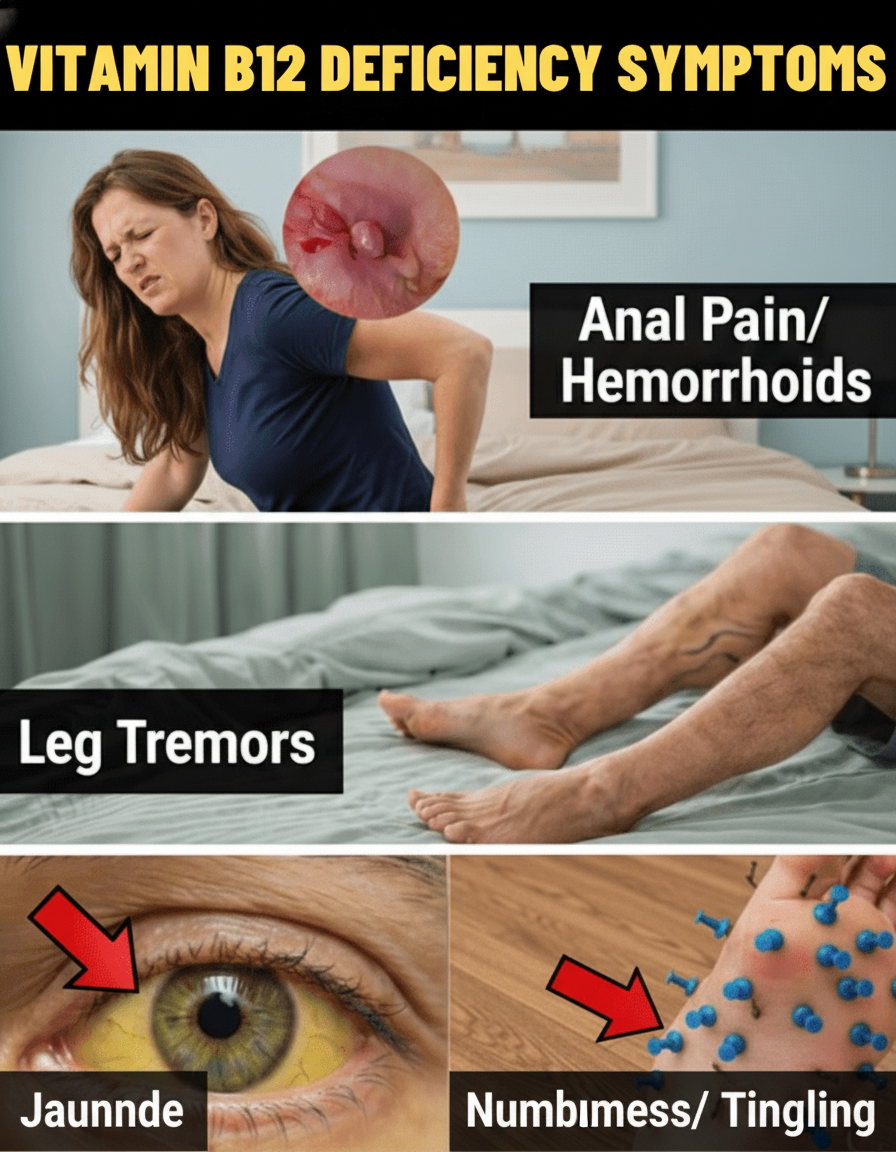
5. A Subtle Yellowish Skin Tint
You might observe a faint, pale lemon-yellow hue to your skin, particularly noticeable on your palms or face. This isn’t full-blown jaundice, but it can stem from a mild accumulation of bilirubin, a byproduct of red blood cell breakdown. This subtle discoloration is often tied to the body producing fewer healthy red blood cells due to B12 deficiency.
6. Unexplained Mood Swings or Heightened Irritability
One moment you might feel unexpectedly tearful watching a TV commercial, and the next you’re snapping at minor inconveniences in traffic. Vitamin B12 plays a vital role in the synthesis of mood-regulating neurotransmitters like serotonin and dopamine. Low B12 levels can contribute significantly to unexplained irritability, increased anxiety, or a persistent low mood.
7. Numbness or a “Padded” Sensation in Your Feet (Neuropathy)
Does walking sometimes feel as though you’re stepping on bubble wrap or thick, soft padding? This “stocking-glove” pattern of neuropathy, characterized by numbness or altered sensations, frequently begins in the feet. Peripheral nerves, which extend throughout the body, are particularly sensitive to shortages of vitamin B12, making this a common early symptom.
8. Visual Disturbances Like “Visual Snow” or Sparkles
Some individuals describe experiencing “visual snow”—a pervasive static-like flickering of tiny dots across their vision, even with their eyes closed—or seeing unexplained sparkling lights. While not the most common symptom, the optic nerve’s health is dependent on B12. Low levels can contribute to unusual visual changes and disturbances.
It’s important to note that these signs can overlap with symptoms of other health conditions. However, when several of these indicators appear concurrently, especially if you are over the age of 50, they warrant further investigation and discussion with a healthcare professional.
Real-Life Accounts of Noticing Changes
Numerous individuals have shared similar transformative experiences once their vitamin B12 levels were addressed. For instance, many older adults report significant improvements in their energy levels, greater mood stability, and a reduction in nerve tingling sensations after optimizing their B12 intake. A critical common theme emerges: standard blood tests can sometimes fail to detect functional shortages. In such cases, additional diagnostic markers, like methylmalonic acid (MMA) or homocysteine levels, can offer a much clearer and more comprehensive insight into an individual’s true B12 status.
Interpreting Your B12 Test Results After 50
Understanding standard laboratory ranges for vitamin B12 can often be confusing. Here’s a concise comparison based on widely accepted guidelines and contemporary research findings, specifically relevant for those over 50:
- Below 200 pg/mL: This range is almost universally considered indicative of a B12 deficiency. At these levels, neurological effects and other symptoms may already be progressing.
- 200–300 pg/mL: Often labeled “low-normal,” this range is deceptive. While within the broad normal spectrum, symptoms can still manifest, and a functional deficiency (meaning the body isn’t utilizing B12 effectively) remains a strong possibility.
- 300–500 pg/mL: Typically classified as “normal” by most labs. However, a growing number of experts suggest that for older adults, this range might not be optimal for maintaining peak brain and nerve health, advocating for levels closer to the higher end of this spectrum.