 By admin
 For years, the vibrant ruby-red hue of pomegranate juice has been associated with a myriad of health benefits, particularly concerning cardiovascular well-being. Among the most influential human studies validating this link is a landmark clinical trial published in Clinical Nutrition back in 2004. This research garnered significant attention, notably for its direct assessment of changes in carotid artery intima-media thickness (IMT), a well-established indicator of atherosclerosis progression.
This article provides a concise yet comprehensive overview of that pivotal study’s findings, their implications, and how they stand in today’s scientific landscape.
Understanding the Landmark 2004 Pomegranate Study
Study Design and Participant Profile
The 2004 study involved a modest cohort of 15 participants, all grappling with severe carotid artery stenosis (defined as ≥70% narrowing). These individuals were initially slated for carotid endarterectomy but remained on their existing medical therapies. A subset of 10 patients committed to consuming 50 mL daily of concentrated pomegranate juice — roughly equivalent to 240 mL of regular-strength juice — for an entire year. Remarkably, five of these participants extended their intake for up to three years.
The control group comprised patients who either opted out of the juice regimen or discontinued it early. It’s crucial to note that this was an open-label, non-randomized comparison, meaning no placebo was utilized. Participants were not required to alter their existing medications, dietary habits, or lifestyle during the study period.
Key Findings: Pomegranate’s Impact on Cardiovascular Markers
Remarkable Reductions in Carotid IMT
One of the most compelling findings was the significant reduction in Carotid IMT. The pomegranate group experienced an impressive average decrease of approximately 30% from their baseline IMT. In stark contrast, the control group saw an increase of about 9% in IMT. This substantial difference was not only statistically significant but also clinically profound, given that IMT progression is a known predictor of future stroke risk.
Significant Blood Pressure Decrease
Furthermore, participants consuming pomegranate juice witnessed a notable reduction in systolic blood pressure, averaging a drop of roughly 12% (approximately 21 mmHg). No significant change was observed in the control group’s blood pressure.
Dramatic Improvements in Oxidative Stress Markers
The study also revealed dramatic improvements in markers of oxidative stress:
- Serum paraoxonase-1 (PON1) activity: Surged by an remarkable +83% (PON1 plays a crucial role in protecting against LDL oxidation).
- Total antioxidant status: More than doubled.
- Antibodies against oxidized LDL: Decreased significantly.
- LDL susceptibility to oxidation: Markedly reduced.
Longer-Term Benefits (2-3 Years)
In the longer term, for those who continued the regimen for 2 to 3 years, the initial benefits in IMT and blood pressure largely stabilized, meaning no further substantial reductions were noted. However, lipid peroxidation continued its decline, strongly suggesting ongoing and sustained antioxidant protection from the pomegranate juice.
Why the 2004 Study’s Results Were So Groundbreaking
These findings were particularly groundbreaking and stood out for several compelling reasons:
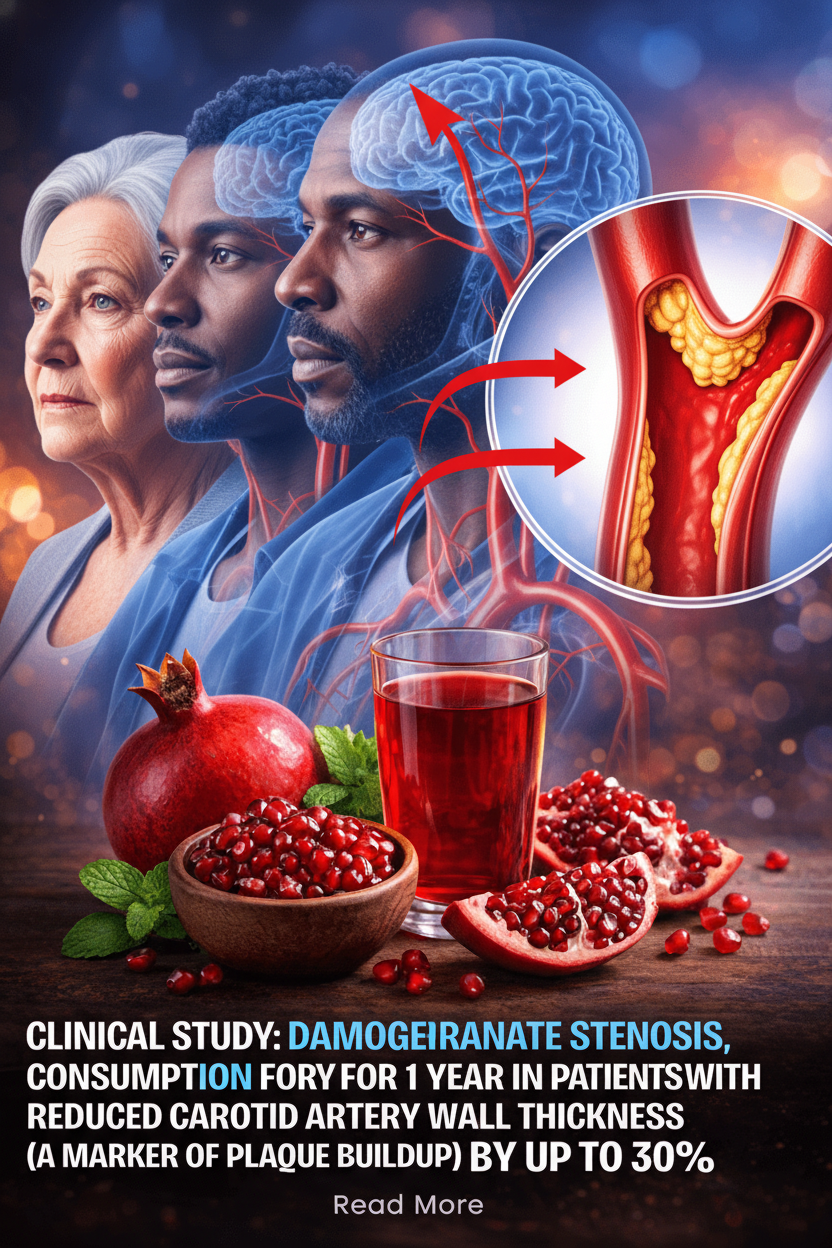
- Unprecedented IMT Regression: A 30% regression in IMT within a single year is an exceptionally large effect for a dietary intervention. Most pharmaceutical or lifestyle modifications typically yield changes in the range of 5–15% at best.
- Sole Intervention: The observed improvements were attributed solely to daily pomegranate juice consumption, as no other medications or significant lifestyle alterations were introduced during the study.
- Potent Antioxidant Effects: The antioxidant effects demonstrated were among the most powerful ever documented for a single food item in human subjects.
Balancing the View: Limitations and Modern Context (2025 Perspective)
While the 2004 study provided exciting insights into pomegranate’s potential for cardiovascular health, it’s essential to consider its limitations and place its findings within the broader scientific context of today (reflecting a 2025 perspective):
- Small Sample Size: The study involved a very small sample size, with only 10 participants in the active treatment group. This makes it an early proof-of-concept study rather than a definitive, large-scale trial.
- Lack of Randomization or Placebo: The open-label, non-randomized design means that potential placebo effects or selection bias cannot be entirely ruled out, impacting the strength of the conclusions.
- Specific Patient Population: The participants had advanced carotid stenosis, meaning the results may not be directly generalizable to the broader population seeking general prevention or those with less severe conditions.
- Subsequent Research: Larger, more recent trials and meta-analyses (from the 2010s to 2020s) have generally reported more modest effects on blood pressure (typically around a 4–5 mmHg reduction) and lipids. Results concerning endothelial function have also been mixed.
- Absence of Outcome Trials: Crucially, no large-scale outcome trials have yet definitively proven that pomegranate juice reduces the incidence of major cardiovascular events like heart attacks, strokes, or overall mortality rates in large populations.
Expert Consensus: Pomegranate’s Role in Heart Health Today
Despite these limitations, the current expert consensus from leading organizations like the American Heart Association, European Society of Cardiology, and various functional medicine panels remains positive. Pomegranate juice is widely recognized as a promising contributor to cardiovascular health, primarily due to its rich content of beneficial polyphenols, including punicalagins, ellagic acid, and anthocyanins.
Experts suggest it may offer modest benefits in lowering blood pressure, enhancing endothelial function, and mitigating oxidative stress. It is generally considered safe for most individuals and can serve as a valuable, supportive component of a heart-healthy dietary approach. However, it is consistently emphasized that pomegranate juice should not be viewed as a substitute for prescribed medications such as statins or blood pressure drugs, nor for fundamental lifestyle modifications.
Practical Guidance: Incorporating Pomegranate Juice into Your Diet
Daily Dosage from the Study
The study utilized a daily intake of 50 mL of concentrated pomegranate juice, which is roughly equivalent to 240 mL (or 1 cup) of regular-strength pomegranate juice per day.
Realistic Health Expectations
When considering adding pomegranate juice to your routine, it’s important to have realistic expectations:
- Blood Pressure: You might experience a modest drop in systolic blood pressure, potentially in the range of 3–8 mmHg, with individuals having higher baseline blood pressure often seeing more significant reductions.
- Inflammation/Oxidation: Improvements in markers related to inflammation and oxidative stress could become noticeable within 4–12 weeks.
- Overall Well-being: Many individuals report enhanced energy levels, reduced fatigue, and a subtle sensation of ‘cleaner’ circulation after consistently consuming the juice for 1–2 months.
Tips for Safe Consumption
To safely integrate pomegranate juice into your diet:
- Always opt for 100% pure pomegranate juice, ensuring no added sugars. Alternatively, enjoy fresh pomegranate seeds.
- A common daily intake ranges from 4–8 oz (120–240 mL).
- If blood sugar management is a concern, consider consuming the juice with meals.
The Bottom Line: Pomegranate Juice for Vascular Wellness
The seminal 2004 study continues to stand as one of the most compelling human demonstrations that a single whole food can significantly impact atherosclerotic progression and reduce oxidative stress markers, even in high-risk patients and without other concurrent interventions. While subsequent, larger trials have presented more conservative findings, pomegranate remains a leading contender among polyphenol-rich foods for supporting cardiovascular health.
For the majority of people, incorporating a daily glass of pure pomegranate juice is a low-risk, enjoyable habit that holds the potential to contribute positively to long-term vascular wellness.