 By admin
 When you bring home a bounty of fresh produce—crisp apples, vibrant berries, or zesty citrus—a quick rinse under the tap is often our go-to. Yet, a nagging concern about pesticide residues on conventionally grown fruits often lingers, particularly when preparing meals for loved ones.
While a simple water rinse does remove some surface dirt and loose residues, scientific studies indicate it frequently falls short of comprehensive cleaning. But what if a common kitchen staple could offer a significantly more effective solution? Research suggests that a humble baking soda solution can indeed outperform plain water—and even other popular methods—in reducing specific surface pesticide residues on your fruits.
In this comprehensive guide, we’ll delve into the scientific findings on using baking soda for produce washing, compare its efficacy against alternatives like vinegar and plain water, and provide practical, step-by-step instructions for incorporating this method into your home. Stay with us until the end for a surprising insight that might permanently alter your produce preparation routine.
Why Minimizing Pesticide Residues on Fruits Matters
Pesticides are vital tools for protecting crops from pests and diseases, ensuring bountiful harvests. However, trace amounts can persist on the skin of fruits even after they’ve been picked. Regulatory bodies, such as the USDA, diligently monitor these levels and generally deem them safe within established limits.
Despite these assurances, many individuals choose to minimize their exposure to these chemicals, especially for vulnerable populations like children or pregnant women. Concerns often revolve around the potential long-term effects of cumulative low-level contact over time. Consequently, effectively washing produce stands as a straightforward yet crucial habit to reduce surface residues.
It’s important to recognize that not all washing methods are created equal. Some techniques are far more adept at breaking down or lifting residues, paving the way for a cleaner, safer eating experience.
What Scientific Research Reveals About Baking Soda for Produce Washing
A pivotal 2017 study published in the prestigious Journal of Agricultural and Food Chemistry meticulously investigated the effectiveness of various washing agents on apples. The apples were intentionally treated with two common pesticides: thiabendazole (a fungicide known to penetrate the peel) and phosmet (an insecticide primarily found on the surface).
Researchers rigorously compared:
- A standard tap water rinse
- A bleach solution (similar to those used in commercial post-harvest washes)
- A 1% baking soda (sodium bicarbonate) solution
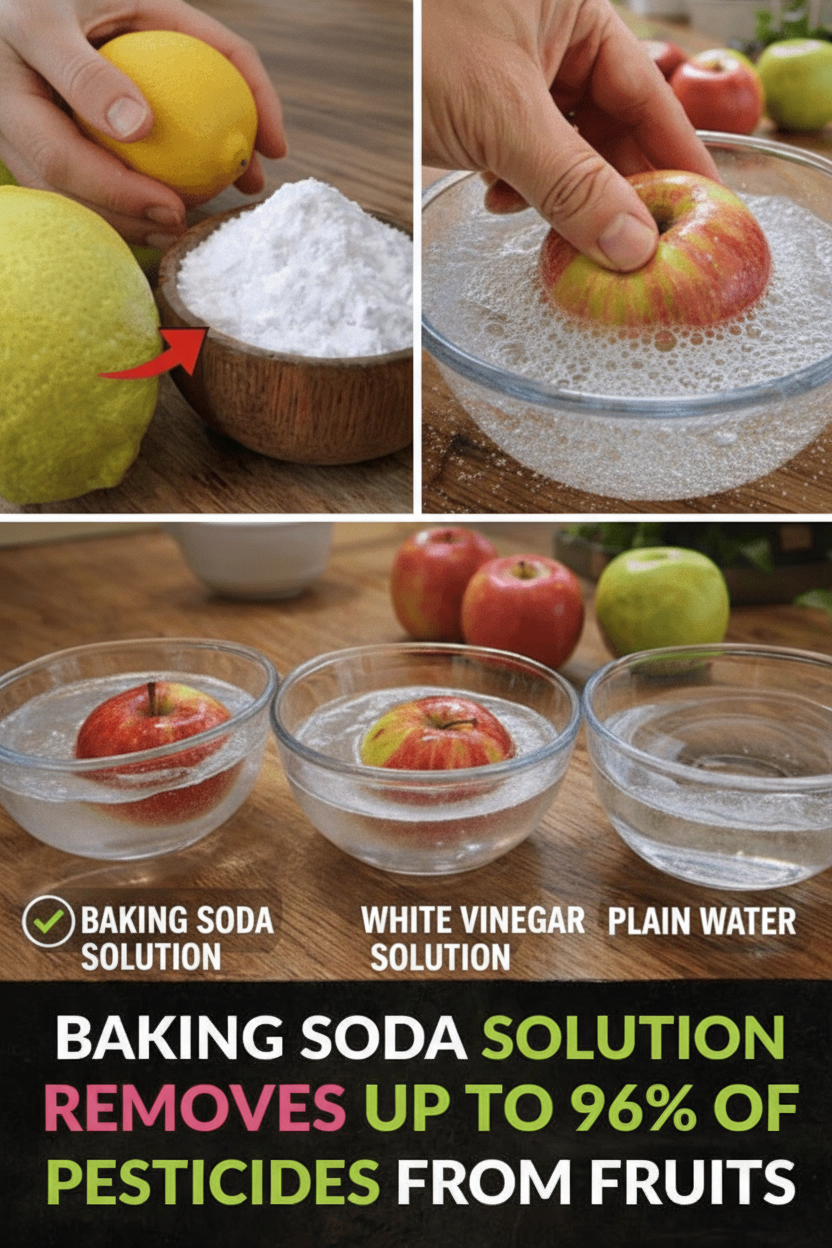
The findings were striking: the baking soda soak proved significantly more effective at removing surface residues than the other tested options. For phosmet, the baking soda method achieved an impressive removal rate of up to 96% after a 15-minute soak. Thiabendazole also saw substantial surface reduction (approximately 80-90% by some measures), though it’s worth noting that some of this pesticide had absorbed deeper into the peel and could not be fully eliminated by washing alone.
This alkaline solution appears to facilitate the degradation or loosening of specific pesticide molecules, making them easier to rinse away. Further independent reviews and follow-up experiments, including those conducted by trusted sources like Consumer Reports and America’s Test Kitchen, have consistently supported the conclusion that baking soda surpasses plain water for cleaning surface residues on a variety of produce items.
However, a crucial point remains: no home washing method can remove 100% of all pesticides, particularly those that have been absorbed into the fruit’s flesh. The primary benefit of washing lies in addressing what’s present on the outside.
Baking Soda vs. Vinegar vs. Plain Water: An Efficacy Showdown
Consumers frequently weigh the merits of natural cleaning agents like vinegar and baking soda. Here’s how these popular methods compare based on available research:
- Plain Tap Water Rinse: Offers moderate effectiveness, typically removing 20-60% of residues depending on the produce type and pesticide. A good scrub or vigorous rinse is recommended by the FDA as a foundational step for basic cleaning.
- Vinegar Solution (e.g., 1 part vinegar to 3 parts water): While beneficial for eliminating bacteria or removing waxes in certain scenarios, studies generally indicate that vinegar is less effective than baking soda at breaking down specific pesticide residues. Its acidic nature is not as conducive to degrading these compounds as baking soda’s alkalinity.
- Baking Soda Solution: Consistently outperforms alternatives in direct comparisons for surface pesticide removal, particularly on fruits like apples. Its alkaline properties are instrumental in helping to degrade or loosen specific chemical compounds, making it a superior choice for this particular task.
| Method | Effectiveness for Surface Pesticides | Recommended Soak Time | Key Notes |
|---|---|---|---|
| Plain Water Rinse | Moderate (20-60% removal) | Quick rinse (30-60 seconds) | Basic, no extra ingredients needed; FDA-recommended baseline. |
| Vinegar Soak | Moderate (less for pesticides) | 10-15 minutes | Effective for bacteria/wax, but less potent for pesticide degradation. |
| Baking Soda Soak | Higher (up to 96% for specific residues in studies) | 12-15 minutes | Demonstrated best performance in tests for surface pesticide removal due to alkalinity. |
It’s crucial to remember that the impressive 96% removal figure originated from specific lab conditions using particular pesticides on apples. Real-world results can vary based on the type of fruit, the specific pesticides used, and how recently they were applied.
Step-by-Step Guide: How to Wash Fruits with Baking Soda
Ready to enhance your produce cleaning routine? This method is remarkably simple, cost-effective, and utilizes an ingredient you likely already have in your pantry.
- Prepare the Solution: In a clean bowl or basin, mix 1 teaspoon of baking soda with 2 cups (approximately 500 ml) of water. For larger quantities of produce, scale up accordingly: use 1 tablespoon of baking soda per gallon of water.
- Soak the Fruits: Fully submerge your fruits in the baking soda solution. Ensure they are completely covered. For optimal results, allow them to soak for 12 to 15 minutes. Gently agitate the fruits occasionally to help loosen residues.
- Rinse Thoroughly: After soaking, remove the fruits from the solution and rinse them thoroughly under cold, running tap water. This step is vital to wash away both the baking soda solution and the loosened pesticide residues.
- Dry and Enjoy: Pat your fruits dry with a clean cloth or paper towel before consuming or storing them. Enjoy your cleaner, safer produce!