 By admin
 Unlocking the Secrets of Age-Related Memory Decline: New Molecular Insights and Potential Interventions
Experiencing occasional memory lapses – like misplacing keys or struggling to recall a name – is a common concern as we age. While often viewed as an inevitable consequence of getting older, pioneering research is now challenging this assumption. Scientists are uncovering that age-related memory decline might not be a broad, irreversible process, but rather a result of specific, addressable molecular alterations within the brain. Groundbreaking studies, particularly from Virginia Tech researchers, are shedding light on these precise mechanisms and exploring innovative gene-editing strategies that have shown promise in improving cognitive function in animal models.
This opens a fascinating door: what if understanding these intricate biological changes could redefine our approach to healthy cognitive aging? In this article, we’ll delve into two pivotal molecular mechanisms identified by Virginia Tech researchers and discuss how targeted gene-editing approaches have successfully enhanced memory performance in older rodents. Keep reading – you’ll also discover practical steps you can take today to support your brain health as scientific advancements continue to unfold.
Beyond ‘Just Getting Old’: Unraveling the Molecular Roots of Memory Decline
For many years, the scientific community largely attributed age-related memory loss to a general degradation or ‘wear and tear’ of brain cells. However, more recent and sophisticated research paints a much more specific picture. Emerging studies indicate that distinct molecular processes within crucial brain regions – such as the hippocampus (essential for the formation and retrieval of memories) and the amygdala (vital for the emotional components of memory) – undergo precise and targeted changes as organisms age.
These aren’t random cellular breakdowns. Instead, they represent specific alterations that disrupt the delicate balance of neuronal communication and weaken the synaptic connections necessary for sharp memory recall. The exciting breakthrough is that in animal models, scientists have successfully employed advanced tools to fine-tune these molecular processes, leading to measurable improvements in memory-related tasks. But the discoveries don’t stop there…
K63 Polyubiquitination: A Molecular Tagging System Out of Sync
One significant discovery involves a biological process known as K63 polyubiquitination. Imagine this as an intricate internal cellular tagging system that marks proteins, guiding their behavior and function – much like molecular ‘sticky notes’ directing brain molecules on where to go and what actions to perform. Researchers observed that in the hippocampus of older rodents, the levels of this K63 tagging system paradoxically increase with age. This imbalance can potentially disrupt the precise signaling required for robust memory formation and recall. Conversely, in the amygdala, the levels of K63 polyubiquitination actually decrease. Both of these age-related shifts appear to contribute to the overall challenges in memory performance.
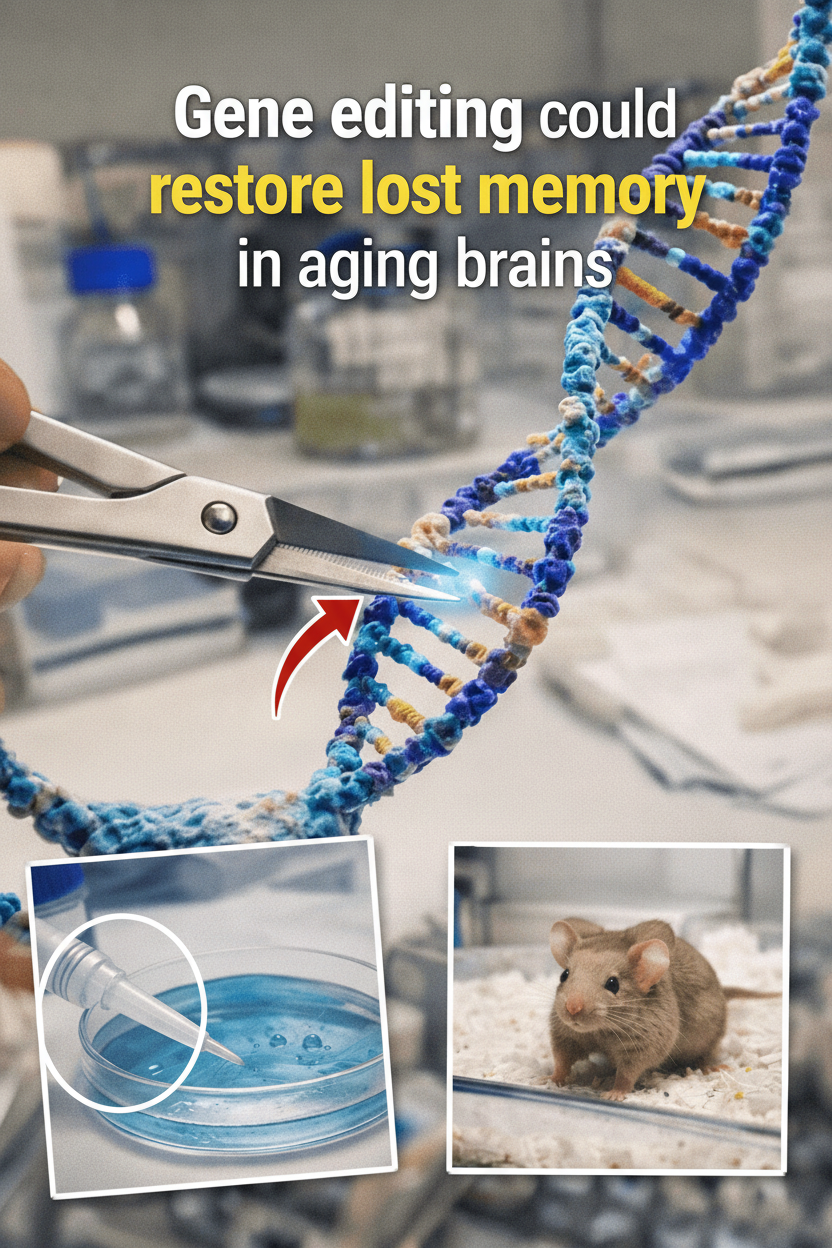
To address this imbalance, researchers utilized a specialized form of CRISPR-based gene editing – specifically CRISPR-dCas13, which allows for RNA-level adjustments. By carefully fine-tuning these K63 tags in older rats, they achieved remarkable results: improved performance in various memory-related tests, including those assessing contextual fear memory. Importantly, these same molecular adjustments had no discernible effect on younger or middle-aged animals that already exhibited normal memory function. This suggests that the therapeutic benefits are highly targeted to address age-specific deficits in the aging brain.
This breakthrough holds profound implications:
- It demonstrates that effective memory support hinges on maintaining balanced molecular signaling pathways.
- Even small, targeted molecular modifications can effectively restore cognitive function in aging brains, at least within laboratory models.
- These findings highlight that not all age-related changes are irreversible or permanent.
Reactivating the IGF2 Gene: Restoring a Vital Memory Supporter
Another compelling area of research focuses on the IGF2 gene. This gene is responsible for producing a crucial growth factor that plays a vital role in helping neurons form strong connections and actively supports various memory processes. As rodents age, the IGF2 gene frequently becomes ‘silenced’ within the hippocampus. This silencing occurs through a natural epigenetic process called DNA methylation, where chemical tags accumulate on the gene, essentially switching off its activity. The consequence of reduced IGF2 expression is a weakened foundation for synaptic plasticity – the brain’s fundamental ability to adapt, learn, and form new memories.
In a related study, scientists deployed CRISPR-dCas9 tools to precisely remove these silencing methylation tags. This intervention successfully increased active marks on the DNA, thereby reactivating IGF2 gene expression. The outcome was significant: older rats exhibited notably improved memory performance and enhanced long-term potentiation, a cellular mechanism widely recognized as crucial for learning and memory.
Key insights from this pioneering work include:
- Gene silencing via methylation is a significant contributor to age-related cognitive shifts.
- Targeted removal of these epigenetic tags can effectively restore gene function in specific brain areas.
- The cognitive benefits observed were specific to aged animals, with no impact on younger subjects.
These two distinct approaches – adjusting K63 polyubiquitination and reactivating the IGF2 gene – worked in complementary ways. This synergistic effect reinforces the understanding that age-related memory decline is not a singular issue but rather involves multiple, intricately layered molecular mechanisms.
The Future of Brain Health Research: Paving the Way for Human Applications
While these groundbreaking studies have been conducted in rodent models, their implications for human brain health research are profound. The ability to precisely identify and manipulate specific molecular pathways that contribute to age-related memory decline offers exciting new avenues for developing targeted therapies. These findings challenge the traditional view of cognitive aging, suggesting that memory decline may be a treatable condition rather than an inevitable fate.
Further research will undoubtedly focus on translating these discoveries into human applications, potentially leading to novel interventions that could significantly enhance cognitive function and quality of life for an aging global population. As science continues to advance, we can all take proactive steps to support our brain health today. Maintaining a balanced diet, engaging in regular physical activity, prioritizing sleep, and staying mentally active are all crucial practices that contribute to long-term cognitive well-being, complementing the incredible progress being made in neuroscience.