 By admin
 Understanding Tooth Discoloration: The Science Behind Yellowing Smiles
A less-than-bright smile is a widespread concern, often developing so subtly that its impact isn’t noticed until a photograph or reflection brings it into sharp focus. Daily routines, such as enjoying coffee, tea, or soft drinks, alongside the natural aging process, can gradually diminish the pearly white appearance of our teeth, potentially affecting self-confidence. Fortunately, achieving a lasting, radiant smile doesn’t require aggressive scrubbing or following questionable online trends. Instead, it relies on scientifically backed oral hygiene practices. By the conclusion of this article, you’ll discover why a seemingly harmless “natural” whitening hack could, in fact, be detrimental to your dental health.
Why Teeth Gradually Lose Their Brightness
It’s a common misconception that teeth are naturally pure white. In reality, their shade is determined by two primary layers: the protective outer enamel and the underlying dentin. Dentin inherently possesses a yellowish hue, and as the enamel progressively thins with age, this deeper, warmer tone becomes increasingly apparent. However, age is only one piece of the puzzle. Everyday lifestyle choices frequently exert a more significant influence on tooth discoloration than genetic predispositions. The foods and beverages consumed, along with daily habits, subtly yet profoundly impact your teeth’s appearance over time.
Everyday Factors Linked to Yellow Teeth
Dental research consistently identifies several common habits and factors contributing to tooth discoloration:
- Frequent consumption of pigmented beverages like coffee, tea, red wine, or dark sodas.
- Use of tobacco products, including smoking or chewing.
- Inconsistent or inadequate brushing and flossing routines.
- Regular intake of acidic foods and drinks that can weaken and erode enamel.
- The natural process of aging and cumulative wear on tooth enamel.
Crucially, many overlook that even nutritious foods, such as certain citrus fruits or berries, can contribute to staining if enamel isn’t adequately protected through diligent oral hygiene.
Tartar vs. Stains: The Critical Distinction for Effective Whitening
A primary reason many at-home whitening attempts fall short is a fundamental misunderstanding between two distinct issues: tartar and surface stains. Grasping this difference is essential for setting realistic expectations and choosing appropriate solutions.
What Is Tartar?
Tartar, scientifically known as dental calculus, forms when plaque hardens and calcifies on the tooth surface. Once it develops, it adheres tenaciously to the enamel. According to professional dental guidelines, neither brushing nor flossing can effectively remove established tartar. Its removal requires specialized tools and expertise, making professional dental cleaning the only safe and effective method.
What Are Surface Stains?
In contrast, surface stains reside on the outermost layer of the enamel. These typically result from exposure to chromogenic (color-producing) foods, drinks, or tobacco use. Such stains may gradually lighten or be prevented with consistent oral care and enamel-safe habits.
Here’s the vital insight: Most over-the-counter or DIY whitening methods are designed to address only surface stains. They are ineffective against tartar or any discoloration originating from within the dentin layer beneath the enamel.
The Lemon and Salt Myth: Why This DIY Method Gained Traction
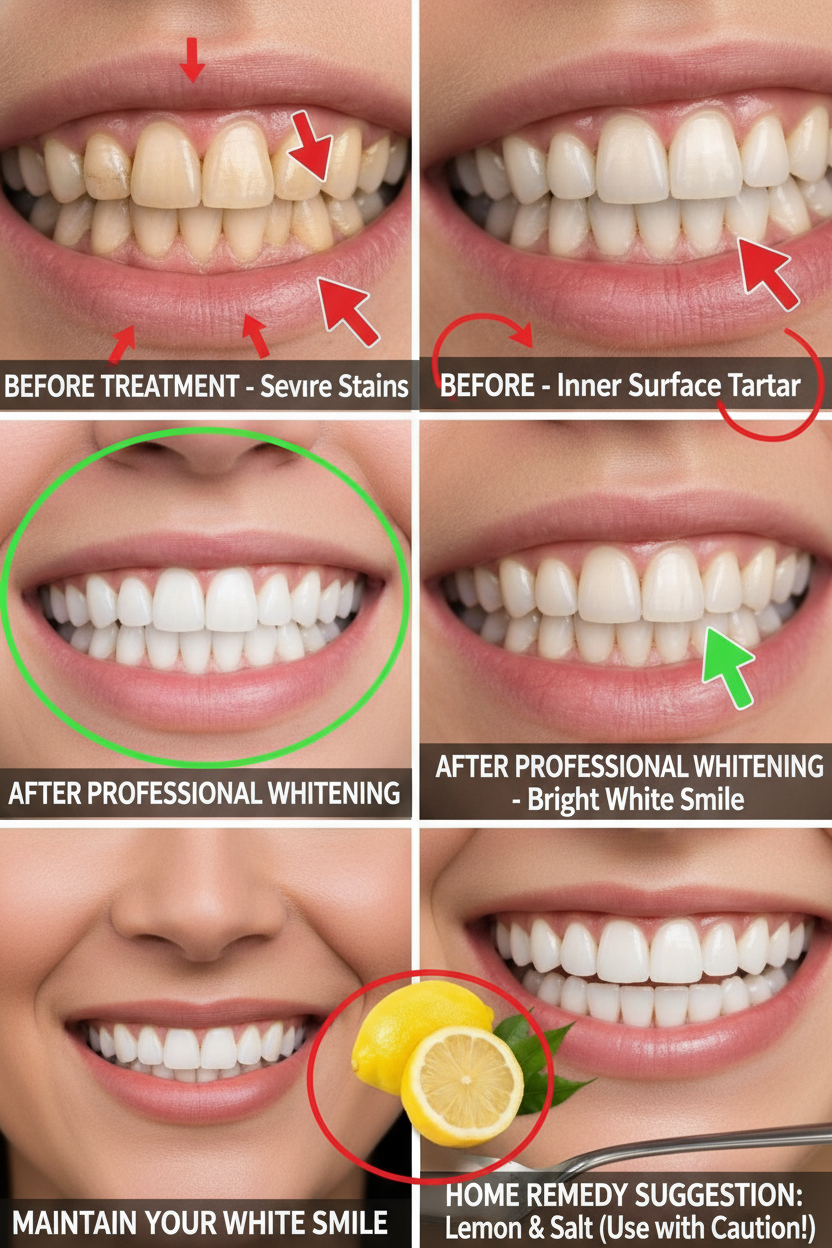
Among the most widely circulated “natural” whitening hacks online is the practice of rubbing a mixture of lemon juice and salt directly onto teeth. It’s often touted as a rapid, cost-effective way to eliminate yellow stains. On the surface, it might appear harmless, but scientific dental research paints a much more concerning picture.
Why People Are Drawn to Lemon and Salt
The allure of this method stems from several perceived benefits:
- Lemon juice is highly acidic, creating a sensation of powerful cleansing.
- Salt provides an abrasive texture, suggesting effective scrubbing action.
- Both ingredients are inexpensive and readily available in most households.
- The combination often yields an immediate, albeit superficial, visual effect that feels potent.
It is precisely this immediate sensation and perceived effectiveness that unfortunately leads to widespread misunderstanding.
What Dental Research Reveals About Lemon and Salt on Teeth
The reality is that lemon juice has an exceptionally low pH, making it intensely acidic. Acids are known to soften and demineralize tooth enamel, even with brief exposure. Salt, conversely, is an abrasive substance. When these two elements are combined and applied to teeth, they can indeed remove some surface buildup, creating a temporary illusion of brightness. However, this comes at a significant cost to your long-term dental health.
Potential Risks of This Method
Dental professionals and extensive research unequivocally warn that frequent use of lemon and salt on teeth can lead to severe and irreversible damage:
- Enamel Erosion: The acidic lemon juice weakens and dissolves the protective enamel layer.
- Increased Sensitivity: As enamel thins, teeth become more vulnerable and sensitive to hot, cold, or sweet stimuli.
- Greater Vulnerability to Future Staining: Eroded and roughened enamel surfaces can actually trap pigments more easily, leading to quicker and more stubborn future stains.
- Long-Term Discoloration: Paradoxically, this method can contribute to a darker appearance over time rather than improvement.
Here lies the most critical point: Once enamel is damaged and eroded, the naturally yellow dentin underneath becomes more exposed and visible. This makes teeth appear progressively darker and more yellow over time, directly counteracting the desired whitening effect.
Why “Instant Whitening” Often Backfires
Many viral whitening hacks capitalize on immediate visual changes, which can be profoundly misleading. The perceived quick fix often masks underlying damage:
- Enamel damage may not be immediately apparent to the naked eye.
- Increased tooth sensitivity or discomfort typically emerges days or even weeks after initial use.
- The long-term thinning of enamel significantly elevates the risk of permanent discoloration.
In essence, a method that seems to deliver instant results may, in fact, be slowly but surely sabotaging your smile, leading to worsened tooth color and compromised dental health in the long run.
Embracing Safer, Research-Backed Whitening Strategies
Achieving a brighter, healthier smile doesn’t require risky shortcuts. Instead, focus on dental-professional-approved methods and consistent oral care:
- Maintain Excellent Oral Hygiene: Brush twice daily with fluoride toothpaste and floss once a day to remove plaque and prevent surface stains.
- Regular Professional Cleanings: Schedule routine dental check-ups and cleanings to remove stubborn plaque and tartar that at-home methods cannot address.
- Consider Professional Whitening: Consult your dentist about safe and effective options like in-office treatments or custom-fitted take-home trays with professional-grade whitening agents.
- Limit Staining Foods & Drinks: Reduce consumption of coffee, tea, red wine, and dark sodas, or use a straw to minimize contact with teeth. Rinse your mouth with water after consuming acidic or staining items.
- Avoid Tobacco Products: Smoking and chewing tobacco are significant contributors to tooth discoloration and overall oral health issues.
Ultimately, a truly radiant smile is a reflection of consistent care and informed choices, safeguarding your enamel for a lifetime of confidence.