 By admin
 The unsettling sensation of ‘pins and needles’ – that familiar tingling or numbness when your hands fall asleep – can strike unexpectedly, prompting you to shake them vigorously to restore feeling. This phenomenon frequently occurs at night, interrupting peaceful sleep and sometimes raising concerns about your body’s well-being. The discomfort can persist, occasionally leading to a temporary weakness that impacts daily activities. However, the reassuring news is that in most instances, numb hands are a transient issue with clear, often easily manageable explanations. By understanding the underlying reasons why your hands go numb, you can actively reduce these episodes and enjoy more restful nights. 😴
The Primary Reason Your Hands Experience Numbness
The foremost cause of your hands falling asleep is straightforward: pressure exerted on a nerve. When you maintain a sleeping position that compresses nerves in your arm, wrist, or hand – such as resting your head on your arm or keeping your elbow tightly bent – the nerve signals are temporarily obstructed. This interruption manifests as the classic tingling sensation in your hands. Scientific research indicates that this type of temporary paresthesia is benign and quickly resolves once you adjust your posture. It’s essentially your body’s gentle nudge, signaling, “Time to move!” Many individuals notice their hands go numb more frequently at night precisely because sustained pressure on nerves is common during sleep.
Beyond Sleep: Daily Habits That Contribute to Numb Hands
While sleeping posture is a major factor, repetitive movements or suboptimal ergonomic practices during your waking hours can also increase the frequency of your hands falling asleep. For instance, prolonged periods of typing without proper wrist support can gradually irritate nerves. If you consistently experience numbness in the same fingers, it might indicate ongoing nerve compression. Studies suggest that nerve irritation stemming from everyday habits is a significant contributor to recurring episodes of hands going numb. The positive takeaway? Minor adjustments to your routine can often prevent your hands from experiencing this common discomfort so often.
⚠️ When Numb Hands Signal a More Serious Condition
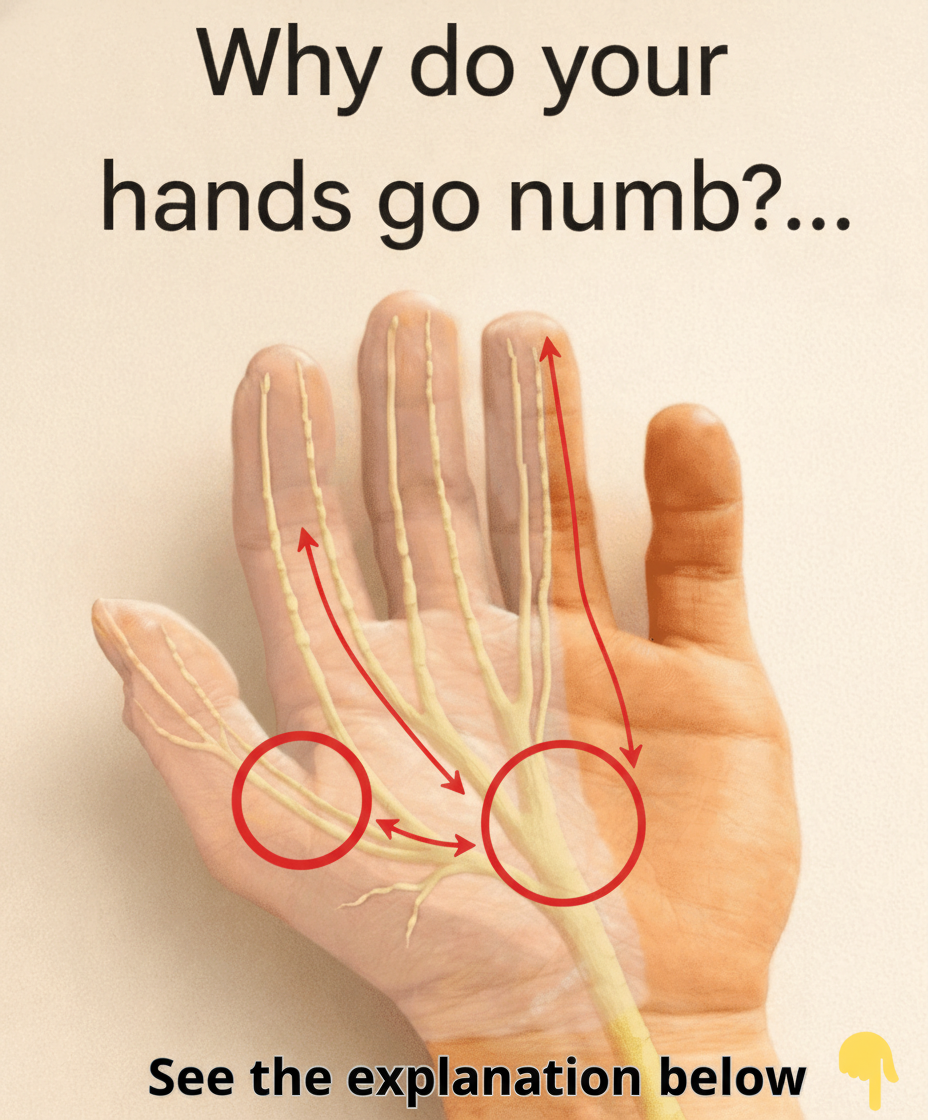
While occasional episodes of hands falling asleep are generally harmless, frequent or persistent numbness – especially when accompanied by pain, weakness, or muscle wasting – warrants medical attention. Conditions like carpal tunnel syndrome arise when the median nerve in your wrist becomes compressed, leading to tingling and numbness predominantly in the thumb, index, and middle fingers. Many individuals report their hands falling asleep at night as an early indicator of carpal tunnel. Other potential culprits include cubital tunnel syndrome (pressure on the ulnar nerve at the elbow) or issues with the cervical spine (neck) that interfere with nerve signals traveling to the hands. In rarer cases, systemic health problems such as diabetes or certain vitamin deficiencies can also contribute to sensations of hands going numb.
🌿 The Underestimated Impact of Nutrient Deficiencies
One critical factor often overlooked when hands regularly go numb is a vitamin B12 deficiency. Research consistently demonstrates that insufficient B12 levels can compromise the protective coverings of nerves, resulting in tingling and numbness in both the hands and feet. This is particularly prevalent among older adults or those with malabsorption issues. If your hands frequently fall asleep without an obvious cause like pressure, a simple blood test can determine your B12 levels. Correcting a deficiency can significantly alleviate symptoms for many people. Studies strongly link B12 insufficiency to symptoms of peripheral neuropathy, including recurrent episodes of hands falling asleep.
❌ Debunking Common Myths About Numb Hands
Myth 1: “It’s just a normal part of getting older.”
Aging alone does not automatically mean your hands should constantly go numb. Persistent symptoms often point to treatable underlying causes, not simply the passage of time.
Myth 2: “I should just ignore it; it will go away.”
Dismissing recurring numbness or tingling in your hands can delay the diagnosis and treatment of underlying issues, such as nerve compression or systemic conditions, potentially worsening the problem.
Myth 3: “Complete rest is the best solution for numb hands.”
While rest can be beneficial, complete immobility isn’t always the answer. Gentle movement, targeted stretches, and maintaining an active lifestyle often provide more relief and prevent recurrence when hands frequently go numb.
✅ Your Comprehensive 4-Step Plan to Reduce Numb Hand Episodes
Here’s a practical, actionable approach to help minimize how often your hands go numb:
Step 1: Optimize Your Sleeping Posture
Actively avoid positions that involve curling your wrists or sleeping directly on your arms. Utilize pillows to maintain a neutral alignment for your arms and wrists. If recommended by a healthcare professional, consider wearing a wrist brace at night. Many individuals find that a conscious adjustment to their sleeping habits dramatically reduces how often their hands fall asleep.
Step 2: Enhance Your Daily Ergonomics
Ensure your wrists remain straight and supported while typing or performing repetitive tasks – use a wrist rest or an ergonomic keyboard. Incorporate short breaks every 30–60 minutes to stretch your hands and wrists. These proactive habits can significantly prevent the nerve irritation that often leads to hands going numb later.
Step 3: Integrate Gentle Stretches and Movement
Perform simple wrist and finger stretches daily. For example, extend one arm with your palm facing up, and gently pull your fingers back towards your body with your other hand, holding the stretch for 15-30 seconds. Repeat with your palm facing down. Regular, gentle movement improves circulation and flexibility, reducing the likelihood of nerve compression.
Step 4: Consult a Healthcare Professional
If your hands frequently go numb, if the numbness is accompanied by pain, weakness, or other concerning symptoms, or if self-care measures don’t provide relief, it’s crucial to seek medical advice. A doctor can accurately diagnose the cause and recommend appropriate treatment, ensuring your long-term hand health and comfort.
”
}
“`