 By admin
 Rethink Your Fragrance Ritual: The Hidden Thyroid Risks of Perfume on Your Neck
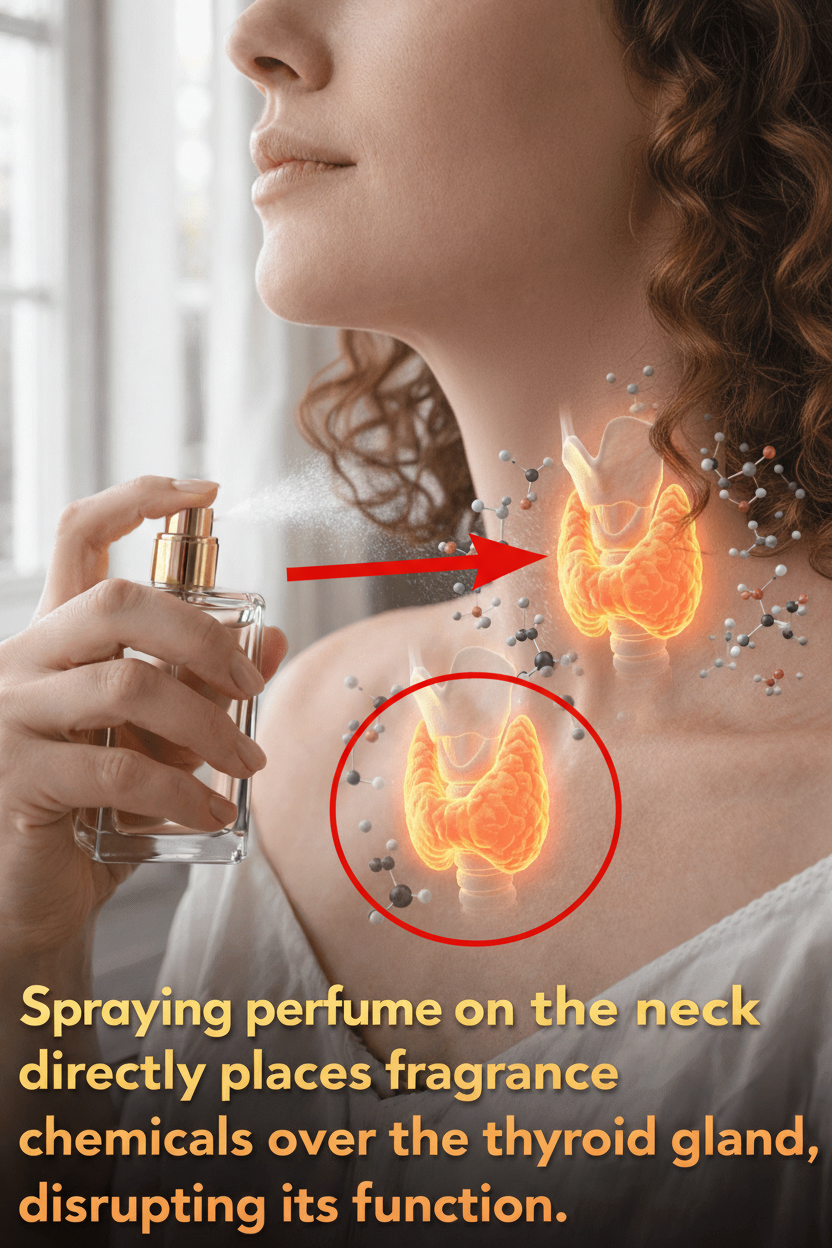
For many, a final spritz of fragrance on the neck or pulse points is an ingrained part of the morning ritual before stepping out the door. It’s a quick habit, often believed to ensure the scent lingers beautifully on warm skin, a tradition passed down through generations. However, directly beneath that delicate skin on the front of your neck lies a vital organ: your thyroid gland. This area’s thin, highly vascular nature makes it particularly permeable, significantly more absorbent than other common application spots like wrists or behind the ears.
Over extended periods, consistent direct application of fragrance to this sensitive zone can expose your thyroid to elevated cumulative levels of specific synthetic compounds found in many perfumes. For years, health researchers and endocrinologists have voiced concerns that numerous conventional fragrances contain endocrine-disrupting chemicals (EDCs). When absorbed regularly, these EDCs have the potential to interfere with crucial thyroid function, warranting a closer look at our daily routines.
Understanding Endocrine-Disrupting Chemicals (EDCs) in Your Fragrance
Many popular perfumes and colognes contain a cocktail of synthetic ingredients, some of which are known as Endocrine-Disrupting Chemicals (EDCs). These compounds can mimic or interfere with the body’s hormones, including those produced by the thyroid. Here are some of the primary offenders:
- Phthalates (often listed generically as “fragrance” or “parfum” on labels)
These chemicals are commonly used to make scents last longer. Numerous scientific investigations have linked phthalates to disturbances in thyroid hormone levels (specifically T3, T4, and TSH), particularly when exposure is chronic and prolonged. - Synthetic Musks (e.g., galaxolide, tonalide, and other polycyclic musks)
Prevalent in a wide array of mainstream fragrances, synthetic musks have a tendency to accumulate within the body’s fatty tissues. Laboratory and animal studies have demonstrated their capacity to disrupt thyroid signaling pathways and interfere with hormone metabolism. - Parabens (frequently used as preservatives in scented products)
Known for their estrogen-mimicking properties, parabens can subtly disrupt the intricate pathways involved in thyroid hormone regulation. - Specific Fragrance Allergens (such as benzyl salicylate and benzyl benzoate)
While often recognized for their allergenic potential, certain compounds in this category have also exhibited documented endocrine activity in various screening tests.
Why Your Thyroid is Uniquely Vulnerable
The thyroid gland is exceptionally sensitive to external influences, making it a particular concern for EDC exposure. Its heightened vulnerability stems from several key factors:
- High Vascularity: Per gram of tissue, the thyroid boasts one of the highest blood flows in the entire body, meaning any absorbed substances are rapidly transported to and through the gland.
- Systemic Impact: Thyroid hormones are crucial regulators, influencing nearly every cell and metabolic process from brain function to heart rate and energy levels.
- Cumulative Effects: Even minor, consistent disruptions to thyroid hormone signaling, though seemingly insignificant individually, can accumulate over years. This gradual interference may eventually manifest as noticeable symptoms like persistent fatigue, unexplained weight fluctuations, hair thinning, mood disturbances, or increased cold intolerance.
The Science of Skin Absorption: Why Location Truly Matters
The rate at which substances are absorbed through your skin is not uniform across your body; it varies significantly by anatomical location. This difference is critical when considering daily fragrance application:
- Neck & Décolleté: Characterized by thinner skin and a rich underlying blood supply, this area facilitates a considerably higher rate of chemical absorption.
- Wrists & Inner Arms: These regions possess thicker skin and a less dense vascular network, leading to comparatively lower absorption levels.
- Clothing: When applied to fabric, clothing acts as a physical barrier, partially preventing direct skin contact. Furthermore, the fragrance disperses more gradually from textiles.
Compelling research underscores this distinction. A 2021 study published in Environment International revealed that specific fragrance compounds applied to the neck achieved systemic circulation more rapidly and in greater concentrations compared to an identical amount applied to the forearm. For individuals who routinely apply fragrance to their neck over many years or even decades, the cumulative exposure to EDCs can become substantial, even if each individual application delivers only a minute quantity of these chemicals.
Smarter Scenting: 5 Ways to Enjoy Fragrance While Protecting Your Thyroid
Protecting your thyroid doesn’t mean giving up your favorite scents. By adopting a few simple adjustments to your fragrance routine, you can significantly reduce your exposure to potential EDCs:
- Apply to Clothing, Not Directly to Skin: Opt to spray your perfume on items like scarves, shirt collars, cuffs, or even the ends of your hair. The fragrance will still diffuse beautifully, and direct skin absorption is drastically minimized.
- Utilize Pulse Points with Thicker Skin: If you prefer skin application, choose areas that are less vascular than the neck, such as the inner wrists, behind the knees, or the inner elbows. These spots offer a safer alternative.
- Explore “Clean” or EWG-Verified Fragrances: Seek out brands that prioritize transparency and avoid common EDCs. Look for labels explicitly stating “phthalate-free,” “paraben-free,” and “synthetic-musk-free.” Well-regarded examples include brands like Henry Rose, Clean Reserve, and Abel.
- Opt for Solid Perfumes or Perfume Oils: These formulations typically contain lower alcohol concentrations, produce fewer aerosolized particles, and generally feature a reduced load of potentially harmful EDCs compared to traditional spray perfumes.
- Dilute Your Current Fragrance: For a lighter application, spray your perfume once into the air and gently walk through the fine mist. This method provides a subtle scent trail with minimal direct skin contact.
Making a Mindful Shift: The Bottom Line for Your Health
To be clear, applying perfume directly to your neck daily isn’t an immediate health emergency. However, this area represents one of the most highly absorbent sites for synthetic fragrance chemicals, prompting many health experts to advise minimizing application here, particularly for the sake of long-term thyroid and overall endocrine system well-being. The insidious nature of thyroid dysfunction means it often remains silent until its function is already significantly impaired.
Implementing minor adjustments to your daily routine—such as applying fragrance to clothing, choosing “cleaner” formulations, or simply avoiding the neck area—incurs no cost and can significantly reduce unnecessary exposure to potential disruptors. Your morning fragrance ritual offers a straightforward opportunity to enact a small yet profoundly protective change for your health.
Your Actionable Tip for Tomorrow
Starting tomorrow, try spritzing your favorite fragrance onto your shirt collar, the ends of your hair, or a scarf, rather than directly on your neck. Observe how beautifully the scent develops and lingers throughout the day, and notice the peace of mind that comes with making a conscious, protective choice for your long-term health.
Important Disclaimer
The information provided in this article is intended solely for general informational purposes and should not be considered as medical or endocrinological advice. Endocrine-disrupting chemicals represent just one of numerous potential factors that can impact thyroid health. Should you experience any symptoms suggestive of thyroid dysfunction, such as persistent fatigue, unexplained weight fluctuations, hair loss, intolerance to cold, or heart palpitations, it is crucial to consult a healthcare professional and have a comprehensive thyroid panel checked (including TSH, free T4, and free T3 levels).