 By admin
 Many individuals, particularly women, often notice subtle alterations in their breasts but tend to dismiss them, attributing changes to hormonal shifts, stress, or minor irritations. In our demanding daily lives, it’s easy to think, “This will likely resolve on its own.” However, sometimes these discreet physical shifts can signal a more serious underlying issue, such as early-stage breast cancer. Overlooking these signs could allow a highly treatable condition to progress.
The encouraging news is that detecting breast cancer at an early stage significantly enhances treatment success and survival rates. Awareness empowers you to seek timely medical advice. This comprehensive guide will illuminate 10 vital early warning signs that everyone—both women and men—should be familiar with. Stay with us until the conclusion for a straightforward action plan that could be pivotal in safeguarding your health.
The Indisputable Importance of Early Detection
Breast cancer frequently begins silently within the milk ducts or lobules, initially presenting without obvious symptoms. When identified early—before it extends beyond the breast tissue—the 5-year relative survival rate approaches 99%, as reported by the American Cancer Society. However, once the cancer spreads to lymph nodes or distant organs, the prognosis changes considerably.
Extensive research demonstrates that consistent screening and vigilance regarding bodily changes lead to earlier diagnoses, often allowing for simpler and more effective therapeutic interventions. Recent estimates projected approximately 316,950 new cases of invasive breast cancer in women in the U.S., alongside around 2,800 cases in men. Yet, the existence of over 4 million survivors stands as testament to the effectiveness of early awareness. Delays in diagnosis frequently arise from waiting for symptoms to disappear—understanding these signs helps break this dangerous cycle.
10 Early Warning Signs That May Indicate Breast Cancer
Here are the most critical changes to monitor. It’s important to remember that these signs can also stem from benign conditions, but any persistent or unusual alteration warrants a professional medical evaluation.
10. Unexplained Alterations in Breast Size or Shape
A sudden and noticeable difference in the size, contour, or position of one breast—unrelated to weight fluctuations, pregnancy, or menstrual cycles—can be a cause for concern. Pay attention to:
- Asymmetry that persists for more than two weeks.
- One breast feeling distinctly heavier or firmer than the other.
- Changes that do not align with your menstrual cycle.
Tip: Consider taking monthly photos in consistent lighting and poses to help you identify subtle shifts over time. But there’s more to know…
9. Dimpling or Texture Changes in Breast Skin
Skin that appears puckered, indented, or resembles an orange peel (medically termed ‘peau d’orange’) often signals underlying issues. This can occur as tumors may pull the skin inward or obstruct lymphatic vessels. To perform a self-check:
- Stand with your arms at your sides, then raise them overhead.
- Press your hands firmly on your hips to flex your chest muscles.
- Gently pinch the skin to observe if it appears tethered or dimpled.
New or worsening dimpling necessitates prompt medical attention.
8. Persistent Itching, Redness, or Irritation
Weeks of unexplained itching, redness, warmth, or swelling might indicate more than simple dermatitis. These symptoms can be indicative of inflammatory breast cancer—a rarer, aggressive form that is frequently misdiagnosed as a common infection. While these signs can mimic everyday skin issues, their persistence distinguishes them.
7. A Firm Lump or Thickened Area
The archetypal sign: a firm, irregular mass that feels fixed and doesn’t move easily within the breast tissue. Cancerous lumps typically present as:
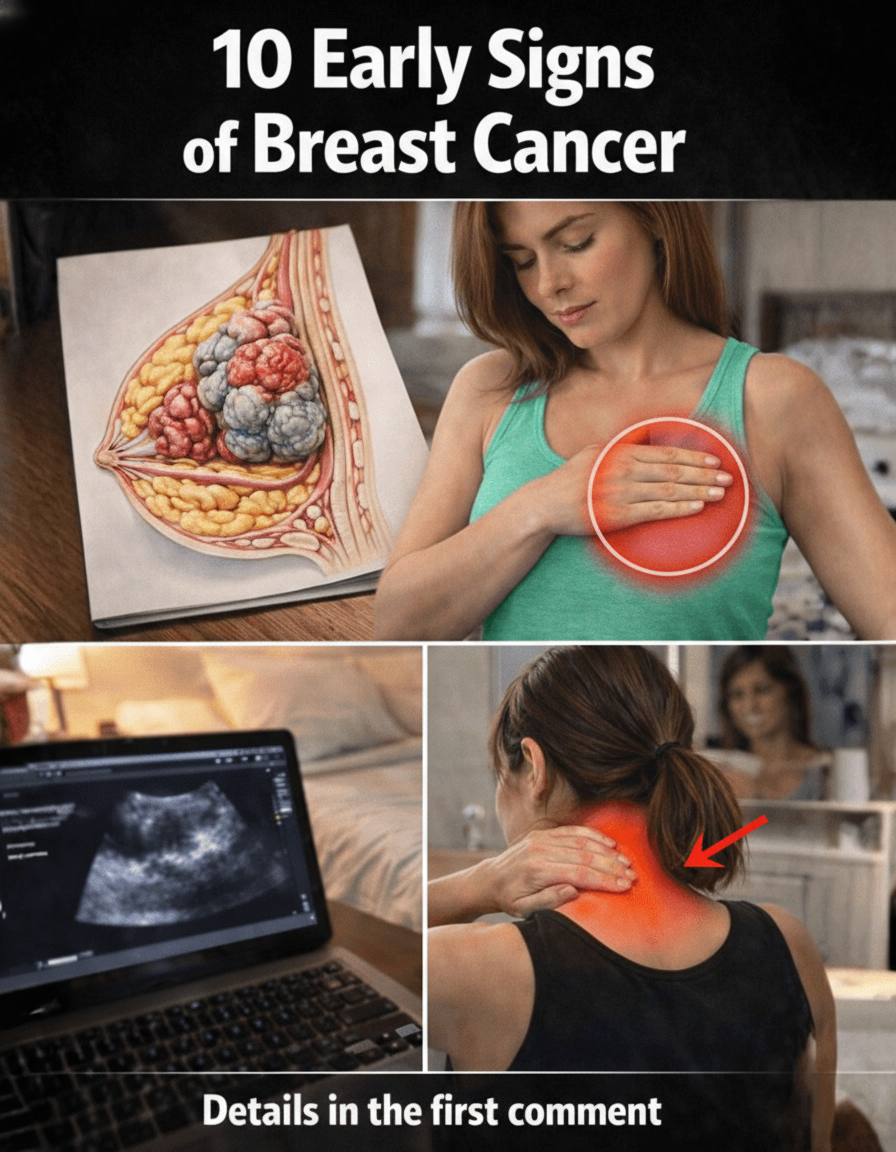
- Hard and uneven to the touch.
- Immobile and rooted in place.
- Often painless (though not exclusively).
Unlike fluid-filled cysts, any newly discovered lump requires professional evaluation—even if it causes no pain.
6. Persistent Breast or Nipple Pain
Most breast pain is cyclical and harmless. However, localized, ongoing discomfort in a single spot, unrelated to menstrual periods, should be noted. While pain alone rarely signifies cancer, when combined with other changes, it warrants a discussion with your doctor.
5. Swelling in the Breast or Armpit Without Obvious Reason
Unexplained swelling, a feeling of fullness in the breast, or enlarged lymph nodes in the armpit can manifest even before a distinct lump is palpable. This might suggest cancer affecting nearby tissues or lymph nodes.
4. Nipple Turning Inward (New Inversion)
If a nipple that previously pointed outward suddenly retracts or inverts, it is a critical warning sign. While some individuals naturally have inverted nipples, any new or recent change in nipple direction is not normal and should be investigated.
3. Redness, Scaling, or Thickening of the Nipple or Areola
Crusting, flaking, peeling, or persistent redness around the nipple or areola could be a symptom of Paget’s disease of the breast, which is frequently associated with an underlying breast cancer. It is often mistaken for eczema and typically does not respond to topical creams.
2. Unusual Nipple Discharge
Spontaneous nipple discharge (not related to breastfeeding or compression) is concerning, particularly if it is:
- Bloody (this is the highest alert).
- Clear, yellow, or other colors, especially if originating from only one breast.
Unilateral discharge, in particular, requires thorough investigation.
1. Swollen Lymph Nodes Near the Armpit or Collarbone
Firm, painless, and persistent lymph nodes located under the arm (axillary nodes) or near the collarbone (supraclavicular nodes) may indicate that cancer has spread locally. These nodes often feel hard and do not recede over time.
Your Breast Health Action Plan: Proactive Steps for Today
Empower yourself by integrating these practical habits into your routine:
- Perform monthly breast self-exams: The ideal time is 5-7 days after the start of your menstrual period, when breasts are typically less tender. For post-menopausal women, choose a consistent day each month.
- Schedule regular clinical breast exams: Have a healthcare professional examine your breasts during your annual physical.
- Follow screening mammogram guidelines: Discuss with your doctor when and how often you should begin routine mammograms, based on your age, family history, and personal risk factors.
- Know your body: Become familiar with the normal look and feel of your breasts so you can quickly identify any new or unusual changes.
- Don’t hesitate to seek medical advice: If you notice any of these warning signs, or any other changes that concern you, contact your doctor promptly. Early diagnosis can be life-saving.