 By admin
 Revolutionary Breakthrough: A Gel That Could Naturally Restore Tooth Enamel
Have you ever experienced that unwelcome jolt of pain from a cold drink hitting a sensitive tooth? Or perhaps noticed your teeth gradually losing their shine and developing a yellowish tint? This often signals the erosion of tooth enamel – the incredibly hard, protective outer layer of your teeth. Unfortunately, once this vital shield is worn away by acids, aggressive brushing, or the daily grind, it doesn’t naturally regenerate. This leaves countless individuals grappling with heightened sensitivity, aesthetic concerns, and an increased vulnerability to further dental problems.
However, the landscape of dental health is on the cusp of a significant transformation. Researchers are diligently exploring innovative solutions to bolster enamel integrity, and a recent study emanating from the University of Nottingham has captured global attention for its groundbreaking potential. Imagine a future where a simple, easy-to-apply gel could replicate nature’s own intricate process to rebuild this crucial protective layer. Stay tuned, because the intricate details of this scientific leap might just redefine our approach to daily oral care.
Understanding Tooth Enamel and Its Indispensable Role
Tooth enamel stands as the most resilient substance within the human body. Its primary function is to safeguard the softer, more sensitive dentin beneath from physical damage, bacterial invasion, and the corrosive effects of acids found in our diet. The critical challenge arises because, unlike other tissues, enamel lacks living cells and therefore cannot repair or regrow itself once compromised. This inherent limitation is why issues such as dental sensitivity and cavities become more prevalent as we age.
Compelling research underscores the widespread impact of enamel erosion, affecting a substantial portion of the population – with some studies indicating nearly half of children and up to 80% of adults exhibit some degree of wear. While conventional strategies primarily focus on prevention, such as diligent use of fluoride toothpaste and minimizing acidic food consumption, these methods are largely incapable of fully restoring lost enamel structure.
A Groundbreaking Discovery from University of Nottingham Researchers
In an exciting development, scientists at the University of Nottingham, collaborating with an international research consortium, have engineered a novel protein-based gel. This innovative material has demonstrated remarkable promise in laboratory settings for its capacity to facilitate enamel restoration. Published in the esteemed journal Nature Communications in 2025, the study meticulously details a bio-inspired approach utilizing elastin-like recombinamers (ELRs). These are specially designed proteins crafted to mimic the natural scaffolding proteins, such as amelogenin, which play a crucial role in guiding enamel formation during early tooth development.
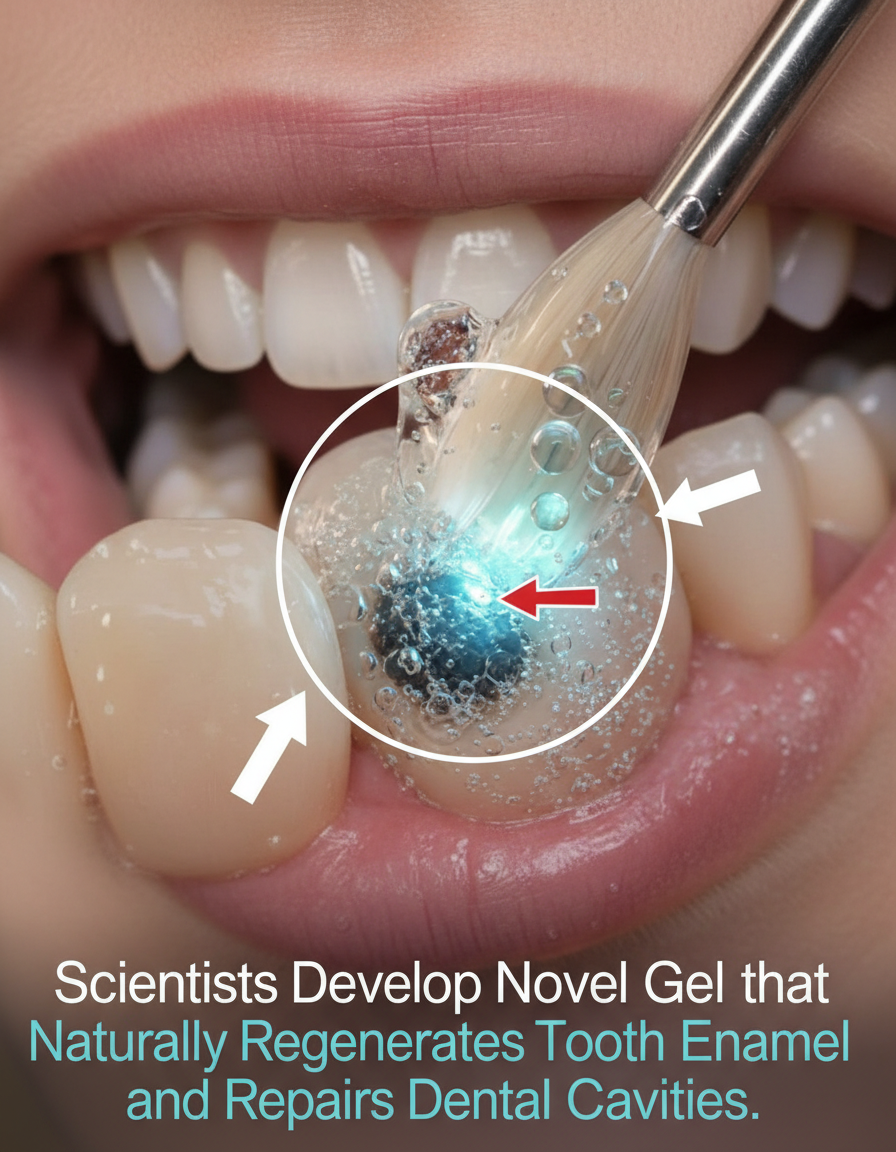
When applied to areas of demineralized or eroded enamel – and even exposed dentin – the gel ingeniously establishes a structural framework. This framework actively attracts calcium and phosphate ions, naturally present in saliva. This targeted action fosters the organized growth of new hydroxyapatite crystals, which are the fundamental building blocks of natural enamel. Crucially, this process encourages crystal formation in a manner that meticulously aligns with the tooth’s existing biological architecture.
Furthermore, initial laboratory findings, including rigorous tests conducted on extracted human teeth, showcased impressive results. The newly reformed layer exhibited mechanical properties, structural organization, and resilience strikingly similar to healthy, natural enamel. It successfully withstood simulated conditions designed to mimic daily challenges like brushing, chewing forces, and exposure to acidic environments.
Simplifying the Gel’s Mechanism of Action
The operational principle of this pioneering gel draws direct inspiration from the elegant process of enamel formation in infants. During this natural biological phase, specific proteins create a temporary matrix that precisely guides mineral crystals into their correct positions. Over time, this transient matrix dissolves, leaving behind the incredibly strong and durable enamel. This new gel leverages ELRs to ingeniously recreate a similar, temporary matrix:
- Upon application, it forms a thin, protective layer on the tooth surface.
- The specialized proteins within the gel then self-assemble, creating a microscopic scaffold.
- Minerals from the surrounding environment, particularly from saliva, are attracted to this scaffold, where they deposit and meticulously build new crystal structures.
The culmination of this process is the formation of a more integrated, enamel-like coating. Researchers have also highlighted practical advantages of the gel: it is entirely fluoride-free and designed for straightforward application, akin to a quick varnish treatment administered by a dental professional. In laboratory models, significant crystal regrowth was observed within a timeframe of days to weeks, with the newly formed material exhibiting mechanical characteristics remarkably close to those of healthy, native enamel.
Distinguishing Features of This Innovative Approach
Current dental interventions for enamel-related issues often involve remineralization pastes, protective sealants, or, for more advanced damage, restorative fillings. While these options offer valuable support, they typically fall short of fully replicating the intricate structure of natural enamel. This revolutionary gel stands apart due to several key differentiators:
- It actively promotes organized crystal growth, moving beyond mere surface patching to encourage a more biomimetic repair.
- Laboratory tests suggest a superior integration with the existing tooth structure, promising greater longevity and efficacy.
- It holds the potential to both repair damaged areas and significantly strengthen healthy enamel, thereby proactively preventing future wear and tear.
It is important to note that this breakthrough remains within the research phase, having been primarily tested in controlled laboratory environments using extracted teeth. The crucial next step will involve human clinical trials, which are essential to definitively confirm its safety, long-term effectiveness, and practical application in real-world scenarios.
Everyday Strategies to Preserve Your Enamel Health Today
While we eagerly await the potential availability of innovations like this restorative gel in dental practices, you can proactively implement practical measures right now to protect and reinforce your existing tooth enamel. Adopting a consistent and mindful oral hygiene routine is paramount:
- Brush gently twice daily using a soft-bristled toothbrush and fluoride toothpaste. Avoid aggressive scrubbing, which can actually contribute to enamel wear.
- After consuming acidic foods or beverages, wait approximately 30 minutes before brushing. This allows your enamel sufficient time to naturally reharden, reducing the risk of erosion from brushing.
- Consider using a straw when drinking sugary or acidic beverages. This minimizes direct contact of these erosive substances with your tooth surfaces.