 By admin
 10 Critical Breast Cancer Warning Signs You Must Not Overlook
Breast cancer continues to be one of the most prevalent cancers affecting women globally, with projections indicating a significant number of new invasive cases each year. For many individuals, the disease begins discreetly, presenting subtle alterations that are often misinterpreted as typical signs of aging, hormonal shifts, or minor irritations. Yet, these seemingly minor changes can herald something far more serious, and recognizing them early dramatically improves treatment outcomes through prompt medical evaluation. It’s understandable to feel hesitant or even embarrassed to seek help, often dismissing concerns with the thought, “it’s probably nothing.” However, knowledge is power.
In this comprehensive guide, we will explore 10 crucial warning signs of breast cancer, substantiated by reputable medical organizations such as the American Cancer Society and Breastcancer.org. Stay with us until the end for actionable steps you can integrate into your routine to proactively manage your breast health.
Why Awareness Matters More Than Ever
Statistics reveal a sobering reality: approximately 1 in 8 women will receive a breast cancer diagnosis at some point in their lives. When detected in its early, localized stages, the five-year relative survival rate impressively exceeds 99%. Conversely, any delay in noticing and addressing changes can allow the disease to advance. Certain aggressive conditions, like inflammatory breast cancer (IBC), can progress rapidly, sometimes even between scheduled screenings, underscoring the vital role of self-awareness alongside professional medical check-ups.
Research consistently highlights that understanding the normal appearance and feel of your breasts empowers you to identify unusual changes more swiftly. Many breast cancer survivors express a common regret: wishing they had acted sooner on subtle signals their bodies were sending. The encouraging news? You can begin cultivating that crucial awareness today.
10 Key Warning Signs of Breast Cancer
Below are the most frequently reported indicators from leading health organizations. It’s important to remember that these changes do not invariably signify cancer — many have benign causes. Nevertheless, any new or persistent symptom warrants immediate attention from a healthcare provider.
-
10. Changes in Breast Size or Shape
A noticeable alteration in the size or contour of one breast, where it appears larger, smaller, or has an unusual shape compared to the other, is a potential indicator. This asymmetry might not be linked to your menstrual cycle and could signify underlying tissue changes or a developing growth. Many individuals who have experienced breast cancer recall these changes beginning subtly, such as one breast feeling distinctly heavier. Any enduring or new discrepancies that persist should always prompt a medical consultation, aligning with established guidelines for breast cancer awareness.
-
9. Skin Texture Changes (Dimpling or Orange-Peel Appearance)
Observe your breast skin for any unusual changes in texture, such as puckering, dimpling, or an appearance similar to an orange peel, medically termed “peau d’orange.” This phenomenon occurs when underlying tissues are pulled inward or when lymph drainage is obstructed. In aggressive variants like inflammatory breast cancer (IBC), these changes can manifest rapidly and encompass a significant portion of the breast. Take a moment to gently palpate your breasts; do you detect any areas of uneven or unusual texture?
-
8. Persistent Itching, Irritation, or Rash
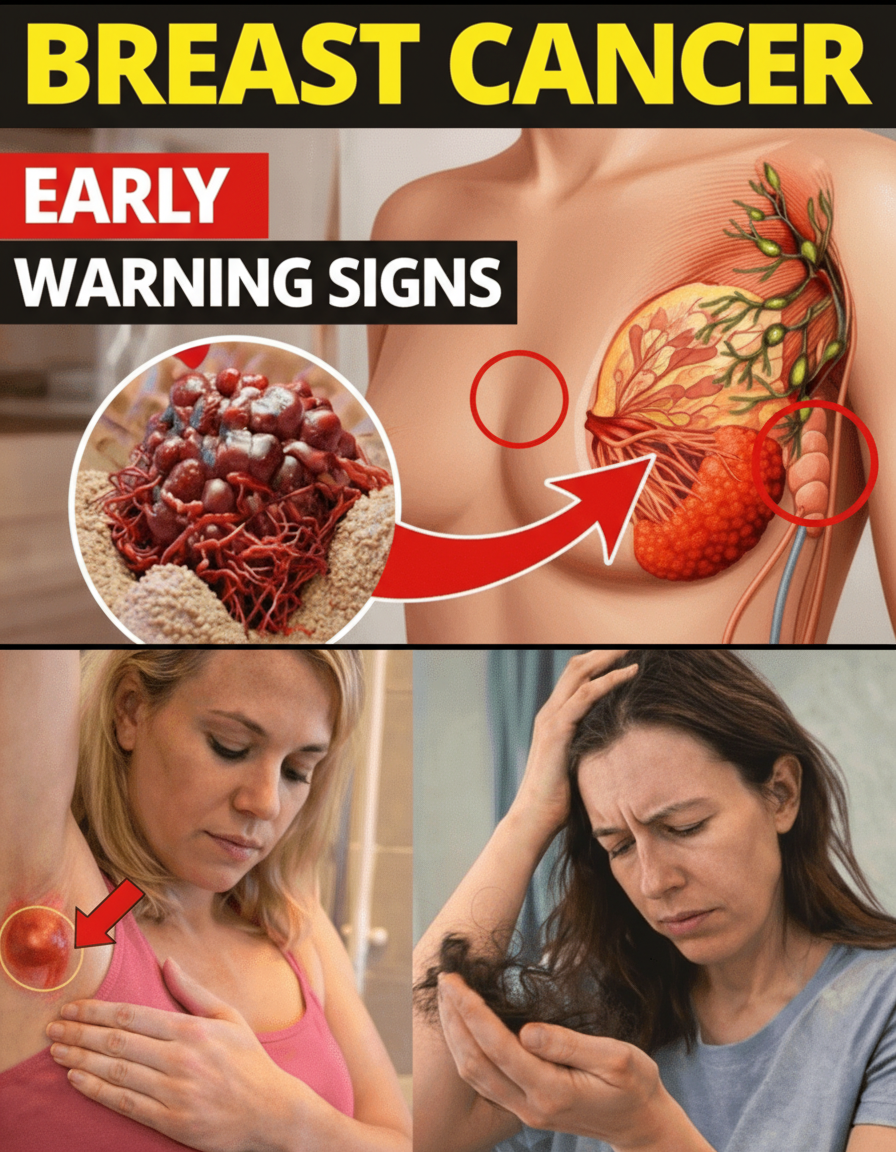
Ongoing itching, redness, or a rash-like appearance on the breast that fails to respond to topical creams or antibiotics can be a cause for concern. In some instances, it may mimic a common infection but actually originates from blocked lymph vessels. This symptom is particularly relevant in cases of IBC or Paget’s disease of the nipple. Many describe this sensation as burning or tightness — if it lingers, do not disregard it.
-
7. A Hard, Immovable Lump or Thickened Area
A firm, irregular mass that feels fixed in place and doesn’t easily move is a classic warning sign. While some lumps may be painless, others can cause discomfort if they press on surrounding tissues. Although rare, men can also develop breast cancer, so this awareness applies universally. During your self-checks, diligently feel for any hardened spots or areas of unusual thickening.
-
6. Breast or Nipple Pain That Doesn’t Go Away
Consistent, localized pain or tenderness in the breast or nipple, unrelated to your menstrual cycle, stands apart from typical hormonal discomfort. Tumors pressing on tissues or inflammatory processes can be the root cause of such pain, which tends to be more pronounced in aggressive forms like IBC. If this discomfort interferes with your sleep or daily activities, it warrants a discussion with your doctor.
-
5. Swelling in All or Part of the Breast
Sudden puffiness, enlargement, or a sensation of heaviness in one breast — even without a clearly defined lump — can occur when tissues become inflamed or lymphatic drainage is impeded. Often accompanied by warmth or redness, this is a hallmark symptom of IBC. Survivors frequently recall their breast feeling unusually full or swollen almost overnight.
-
4. Nipple Retraction or Inversion
A nipple that suddenly begins to pull inward or flatten, especially if it was previously everted or normal, may signal underlying changes that are drawing on the milk ducts. This shift, whether gradual or abrupt, is associated with certain invasive types of breast cancer. Regularly check both nipples in a mirror for any comparative differences or new alterations.
-
3. Red, Dry, Flaky, or Thickened Nipple or Breast Skin
Scaling, crusting, or eczema-like changes around the nipple or areola can be indicative of Paget’s disease, a rare form of breast cancer that originates in the nipple and can spread to the areola. If you notice these skin changes and they do not resolve with standard treatments or persist over time, it is crucial to consult a healthcare professional for an accurate diagnosis.