 By admin
 Revitalize Your Legs: 5 Natural Strategies for Optimal Circulation and Comfort
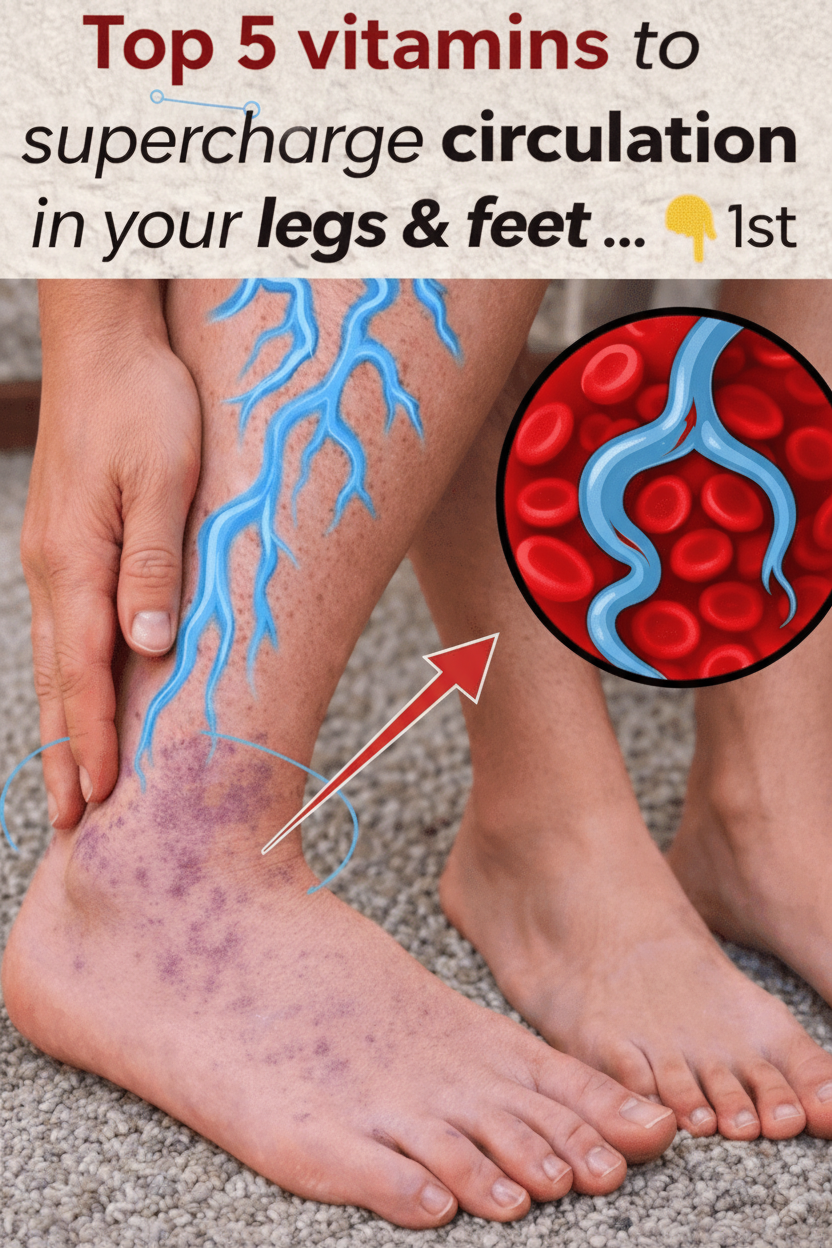
Experiencing discomfort like heavy legs, persistent cold feet, ankle swelling, restless nights, tingling, numbness, or noticeable varicose veins? These symptoms of suboptimal leg and foot circulation are remarkably common, especially for individuals over 40-50. While severe underlying medical conditions such as peripheral artery disease, deep vein thrombosis, heart failure, or diabetes-related complications necessitate immediate professional medical assessment, many mild to moderate circulatory challenges can be significantly improved through consistent adoption of natural, evidence-backed practices. This article presents five highly effective and widely recommended natural strategies that numerous individuals have found to alleviate discomfort, reduce swelling, and enhance overall leg comfort within a few weeks.
1. Elevate Your Legs & Perform Ankle Pumps (Harnessing Gravity & Muscle Power)
Why it works fastest:
This combination leverages gravity to facilitate the drainage of accumulated fluids from your lower extremities. Simultaneously, ankle pumps engage your calf muscles, which act as a vital “muscle pump” – a potent natural system for propelling blood and lymphatic fluid efficiently back towards the heart.
How to do it:
Position yourself lying down or seated comfortably, ensuring your feet are elevated above heart level using pillows or by leaning them against a wall. Maintain this position for 15–30 minutes, two to three times daily (ideally in the morning, after work, and before bedtime). During elevation, perform ankle flexes and points 20–30 times, followed by circling your ankles in both clockwise and counter-clockwise directions. Repeat these movements for 3–5 sets.
Most common result:
Many users report a noticeable decrease in ankle and foot swelling by morning, often experiencing significantly lighter legs within 3–7 days of consistent practice.
2. Indulge in a Warm Rosemary or Ginger Oil Leg Massage (Your Nightly Circulation Ritual)
Why it works:
Rosemary and ginger are rich in bioactive compounds, such as 1,8-cineole and gingerol, respectively. These compounds are renowned for their ability to enhance localized blood flow, mitigate mild inflammation within veins, and promote relaxation of the smooth muscles in blood vessel walls, thereby supporting healthy circulation.
How to do it:
Prepare your massage oil by combining 100 ml of carrier oil (such as olive or jojoba) with either 15–20 drops of rosemary essential oil, or 1–2 tablespoons of freshly grated ginger (which can be infused for 2–4 weeks, or gently warmed for 2–3 hours). Warm a small quantity of this oil in your hands, then gently massage your legs with upward strokes, moving from your ankles towards your heart, for 5–10 minutes each night. You can leave the oil on (consider wearing old socks to protect bedding) or wipe away any excess in the morning.
Most common result:
Expect to feel immediate warmth in your feet and legs during the massage. Within 7–14 days, many individuals notice a significant reduction in leg heaviness and morning swelling.
3. Experience Contrast Showers or Alternating Foot Baths (A Dynamic Vascular Workout)
Why it works:
The rapid transition between warm and cold water stimulates your blood vessels to constrict and dilate rhythmically. This ‘pumping’ action effectively strengthens vein tone, enhances microcirculation, and significantly helps in reducing fluid retention and swelling.
How to do it:
For a shower, begin with 1 minute of warm water, then switch to 30 seconds of cold water. Repeat this sequence 3–5 times, always concluding with cold. Alternatively, for a foot bath, prepare two basins: one with warm water and one with cold. Immerse your feet in the warm basin for 3 minutes, then immediately switch to the cold basin for 30 seconds. Repeat this cycle 3–5 times. Aim to perform this routine for 5–10 minutes daily, ideally in the evening.
Most common result:
Expect an immediate ‘de-puffing’ effect on your ankles and feet. Many report their legs feeling noticeably lighter and more energized the following morning.
4. Optimize Hydration and Potassium Intake (For Natural Fluid Balance)
Why it works:
Insufficient hydration leads to thicker blood, making it more challenging for your veins to efficiently return it towards the heart. Potassium, on the other hand, plays a crucial role in counteracting sodium retention in the body, which in turn minimizes fluid leakage into surrounding tissues and helps maintain healthy fluid balance.
How to do it:
Aim to consume 2–2.5 liters of water daily, distributing your intake evenly throughout the day. Incorporate potassium-rich foods into your diet, such as a banana in the morning, kiwi, avocado, spinach, and sweet potato. As an optional boost, consider starting your day with warm lemon water, as its citrate content can further support circulation.
Most common result:
Users often observe reduced ankle and foot swelling in the mornings, alongside an overall sensation of lighter legs within 7–14 days.
5. Embrace Gentle Calf Raises & Regular Walking (Your Natural Muscle Pump Activators)
Why it works:
Your strong calf muscles are often referred to as your “second heart.” With every step you take, these muscles contract, effectively squeezing the veins in your legs and propelling blood upwards towards the heart. Conversely, weakened calf muscles can lead to inefficient venous return, contributing to symptoms like swelling and a feeling of heaviness in the legs.
How to do it:
For calf raises, support yourself by holding onto a wall or chair, then slowly rise onto your toes, holding for 1–2 seconds before lowering back down gradually. Perform 15–25 repetitions for 2–3 sets daily. Complement this with daily walking: aim for 20–40 minutes (which can be divided into two shorter walks), always wearing supportive footwear. As your strength improves, challenge yourself by progressing to single-leg calf raises.
Most common result:
Consistent practice leads to stronger calves and a noticeable reduction in evening swelling and leg heaviness, typically observed within 2–4 weeks.
Your Optimized Daily Routine for Rapid Leg Comfort
To integrate these practices seamlessly and achieve the quickest results, consider this structured daily routine:
Morning Boost:
- Dedicate 5 minutes to ankle pumps and gentle calf raises, either in bed or standing.
- Start your day with warm lemon water and a potassium-rich breakfast, such as banana or kiwi.
Midday Refresh:
- Take a 10–15 minute walk.
- If feasible, elevate your legs for 5–10 minutes.
Evening Wind-Down:
- Enjoy a contrast shower or an alternating foot bath.
- Perform a rosemary or ginger oil massage for 5–10 minutes.
- Elevate your legs for 15–30 minutes before heading to bed.
With consistent adherence, most individuals observe:
- Noticeably lighter legs by morning within 7–14 days.
- A significant reduction in swelling and restless leg sensations after 3–6 weeks.
- Enhanced ease and endurance for standing or walking over extended periods.
Crucial Red Flags: When to Seek Immediate Medical Attention
While natural methods can greatly assist, certain symptoms demand prompt medical evaluation. Consult a doctor immediately if you experience any of the following:
- Sudden, unilateral (one-sided) leg swelling, accompanied by pain, redness, or warmth, as this could indicate a deep vein thrombosis (DVT) – a medical emergency.
- Leg swelling combined with shortness of breath or chest pain, which might signal a pulmonary embolism.
- Persistent open sores or ulcers on your legs that are slow to heal, suggesting severe venous insufficiency.
- Intense pain coupled with a fever, potentially indicating an infection.
The Bottom Line
Embracing these five straightforward yet powerful habits—daily leg elevation combined with ankle pumps, regular warm herbal oil massages, revitalizing contrast showers, optimal hydration paired with potassium-rich foods, and consistent gentle calf raises alongside walking—can profoundly transform your leg and foot health. By integrating these natural strategies into your routine, you can effectively enhance circulation, alleviate discomfort, and enjoy lighter, more comfortable legs and feet, paving the way for improved overall well-being.