 By admin
 Safe Datura Identification: A Comprehensive Guide for Your Garden and Neighborhood
Spending time outdoors offers numerous benefits, yet encountering unknown flora can often spark apprehension, particularly when these plants bear a striking resemblance to innocuous garden varieties or common weeds. This ambiguity naturally fosters concern regarding potential hazards from inadvertent contact, especially for inquisitive children and pets exploring their surroundings. Fortunately, by acquiring precise knowledge about specific plants such as Datura, you can proactively cultivate a safer environment within and around your home. Continue reading to discover an insightful daily practice that can effortlessly integrate plant awareness into your household’s routine.
Understanding Datura Plants
Datura, a fascinating yet potentially hazardous genus belonging to the nightshade family (Solanaceae), encompasses several species prevalent in diverse habitats throughout the United States and globally. These resilient plants typically flourish in disturbed land—such as along roadsides, within untended gardens, or in vacant plots—demonstrating a strong preference for warm climates. Beyond their common locales, understanding their physical characteristics is paramount for safe identification. Botanical studies reveal that Datura species are either annual or perennial herbaceous plants, capable of reaching heights of up to five feet. They feature robust, branching stems that may exhibit a distinctive purple hue or a noticeable hairiness. Early recognition of these plants is crucial for fostering a vigilant approach to your outdoor spaces, as their unique attributes demand close attention, which we will detail further.
Key Identification Features of Datura
To accurately identify Datura, begin by carefully observing its distinct structural elements.
Leaves and Stems
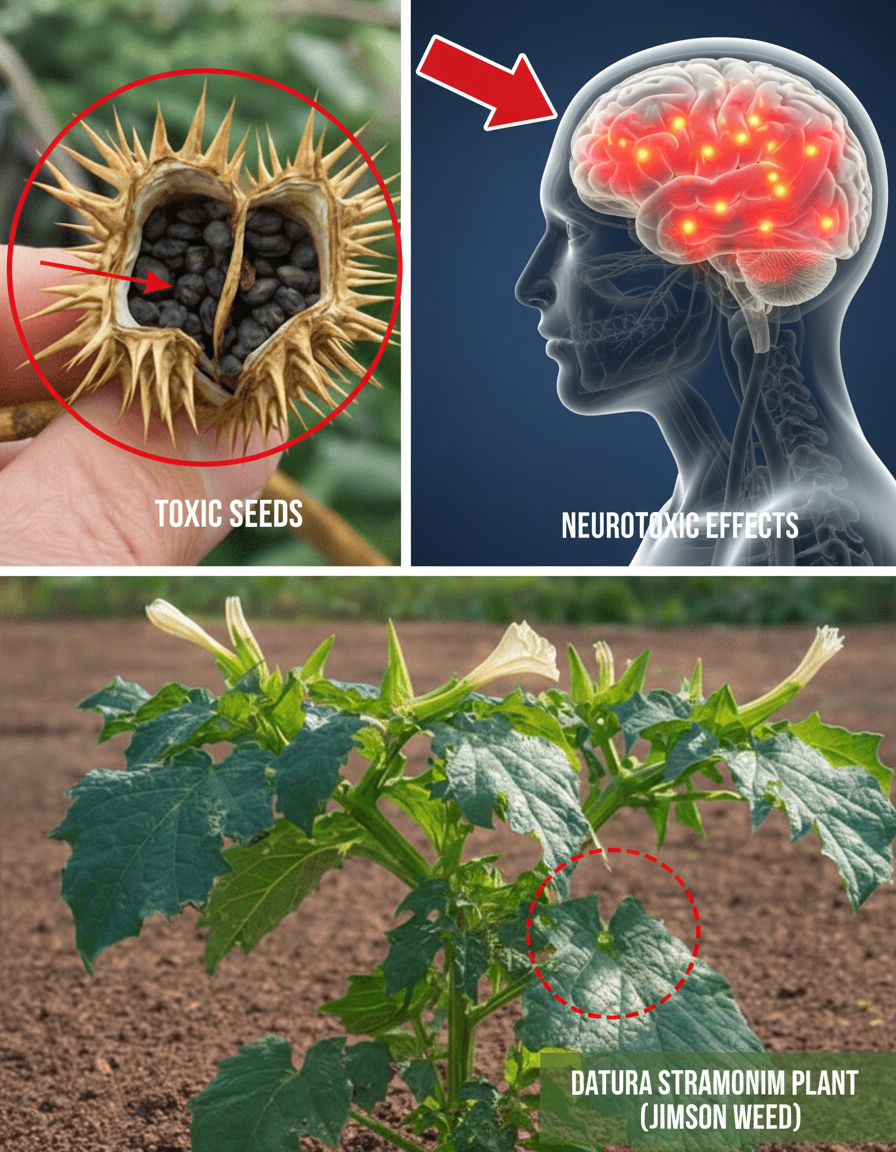
Datura foliage is notably substantial, typically measuring between 3 to 8 inches in length. Their shape varies from an elongated oval, reminiscent of a football, to a more rounded, egg-like form, often presenting wavy or serrated margins. These leaves usually display a deep green color and possess a coarse texture. A striking characteristic to note is the unpleasant, pungent aroma released when the leaves are disturbed or crushed, frequently likened to a combination of damp canine fur and rancid peanut butter. The plant’s stems are robust, ranging in color from a light green to a purplish shade, and may exhibit a hairy surface depending on the species. Furthermore, exercise caution with the plant’s sap, as it is known to cause irritation upon contact with sensitive skin.
Flowers
Datura flowers represent one of its most distinctive attributes, manifesting as grand, trumpet-shaped blossoms that can either droop gracefully or stand boldly upright. Their coloration typically spans shades of white, pink, or purple, accented by sharply pointed lobes. These captivating vespertine blooms unfurl their petals in the evening, emitting a sweet, alluring scent designed to attract nocturnal pollinators. Studies indicate these impressive flowers can extend up to 8 inches in length, rendering them particularly conspicuous as twilight descends. A notable aspect of their lifecycle is their prolonged blooming period, frequently extending from the warmth of summer well into the cooler days of fall.
Fruits and Seeds
The fruits of the Datura plant are distinctive, appearing as spherical capsules densely covered with sharp spines, which gives rise to its common moniker, “thornapple.” Upon reaching maturity, these capsules naturally divide into four distinct segments, dispersing a multitude of small, kidney-shaped seeds. Initially, these spiky seed pods are vibrant green, gradually transitioning to a brown hue as they desiccate. It is imperative to exercise extreme caution at this stage: while the seeds might bear a superficial resemblance to miniature tomatoes, they are highly toxic and must never be handled without protective measures.
Comparison with Look-Alikes
To prevent misidentification, it is beneficial to differentiate Datura from other plants that share similar characteristics. Below is a comparative table highlighting key distinctions:
| Feature | Datura | Morning Glory (Look-Alike) | Brugmansia (Related) |
|---|---|---|---|
| Flower Shape | Hanging trumpets with pointed lobes | Upright, funnel-shaped | Large, pendulous trumpets |
| Leaf Edges | Jagged, tooth-like | Smooth or slightly wavy | Broad, often wavy |
| Fruit | Spiky thornapple capsule | Smooth pod | Smooth or slightly spiny |
| Smell | Heavy, unpleasant when crushed | Mild or none | Sweet, pleasant |
| Stem | Purple-tinged, hairy | Green, smooth | Woody, tree-like |
This detailed comparison, derived from comprehensive botanical observations, underscores the unique attributes that set Datura apart from its common look-alikes and related species.
Potential Health Considerations with Datura
It is critical to understand that every component of the Datura plant contains potent tropane alkaloids, including atropine, scopolamine, and hyoscyamine. Extensive research confirms that these compounds can have significant effects on the human body if ingested or absorbed through contact. Medical literature frequently cites symptoms of exposure, which may encompass dry mouth, dilated pupils leading to blurred vision, and an accelerated heart rate. The Centers for Disease Control and Prevention (CDC) has documented numerous instances of accidental Datura exposures, underscoring the vital importance of public awareness. However, a fundamental principle applies: comprehensive knowledge significantly mitigates potential risks. Direct skin contact with Datura can provoke irritation in sensitive individuals, thus the use of protective gloves is strongly recommended when handling the plant. Furthermore, data compiled by poison control centers worldwide consistently reveals that the majority of incidents stem from inadvertent or unintentional contact, reinforcing the need for vigilance.
Actionable Tips for Safe Identification
To ensure your safety while identifying Datura, adhere to the following methodical steps:
- Observe from a Safe Distance: Begin your identification process by visually scanning for the characteristic trumpet-shaped flowers and distinctive spiny seed pods. Crucially, refrain from any direct physical contact with the plant.
- Note the Growth Environment: Datura plants exhibit a strong preference for sunny, disturbed ground, making them commonly found in areas such as cultivated gardens, along roadsides, or in neglected vacant lots. Understanding their preferred habitat can aid in preliminary identification.
- Cautiously Check for Odor: If you suspect the presence of Datura, gently wave your hand a short distance above the leaves. Should a foul or unpleasant odor be detectable, it serves as a significant indicator. Always avoid direct touching or crushing of the foliage.
- Utilize Comparison Tools: Employ a reputable plant identification application on your smartphone or consult a botanical field guide to cross-reference the plant’s features against verified images and descriptions of Datura.
- Document for Expert Review: Capture clear photographs of the plant from various angles, focusing on its leaves, flowers, and fruits. These images can be invaluable for later reference or for seeking confirmation from horticultural experts or local extension services.
Cultivating Daily Plant Awareness
Beyond these specific identification tips, fostering a general habit of plant awareness can significantly enhance safety for everyone in your household. Make it a routine to gently observe and discuss the plants in your garden and neighborhood during daily walks or outdoor play. Encourage children to ask questions about plant characteristics, colors, and textures, teaching them to appreciate nature while also instilling the crucial rule: “Look, but don’t touch unfamiliar plants.” This simple, consistent practice transforms plant identification from a chore into an engaging, educational activity, making your outdoor spaces safer and more enjoyable for the entire family.