 By admin
 DIY Glow-Up: A Safe Guide to Egg, Baby Oil, and Olive Oil Face Masks for Luminous Skin
Struggling with a complexion that feels dull, tight, or perpetually “tired-looking” despite your regular skincare efforts? It can be disheartening when that coveted healthy glow remains elusive. Social media often showcases alluring DIY concoctions, like the popular egg and baby oil mask, promising instant radiance. However, these quick fixes frequently gloss over potential pitfalls such as clogged pores or skin irritation. The reassuring news is that you can safely explore this simple, kitchen-based facial treatment. The key lies in understanding its suitability for your skin type, mastering the crucial patch test, and ensuring correct rinsing techniques. Plus, there’s a little-known “timing secret” that can dramatically enhance your results, a detail often overlooked by many.
Why This DIY Trend Captures Attention (and What the Pictures Often Omit)
The allure of an “egg and baby oil on face” hack, often depicted with a cautionary undertone regarding potential breakouts or texture issues, is surprisingly grounded in reality. While baby oil, primarily mineral oil, imparts a luxurious, silky feel and significantly minimizes transepidermal water loss, it can indeed lead to congestion for individuals prone to clogged pores. Egg, particularly the egg white, offers a temporary tightening sensation as it dries on the skin. Olive oil, renowned for its emollient properties, can impart softness to certain skin types but might feel overly rich or heavy for others. Yet, there’s more to understand about that coveted post-mask “glow”…
The radiant finish observed after applying a homemade face mask can stem from two distinct sources:
- Genuine skin hydration and nourishment, resulting in a comfortable feel and visibly smoother texture.
- Mere surface luminosity, where the skin appears glossy but might later feel greasy due to trapped oil and sweat.
Discerning between these two types of radiance is crucial for avoiding the frustrating cycle of achieving an immediate “glow now” only to contend with “bumps later.”
Is This Mask Right for You? Identifying Suitable Skin Types and When to Exercise Caution
This particular DIY facial treatment might be particularly beneficial for:
- Individuals with normal to dry skin types experiencing tightness or a rough texture.
- Those seeking a quick, temporary cosmetic boost and a radiant complexion before a special occasion.
- Skin that generally responds well to richer, more emollient products without frequently developing clogged pores.
However, it’s advisable to avoid or significantly modify this mask if you experience any of the following:
- Skin that is prone to acne or easily becomes congested.
- Highly sensitive skin, a history of eczema flare-ups, or frequent rashes.
- Any open wounds, recent sunburn, or existing active irritation.
- A known egg allergy, as even topical contact can provoke reactions in some individuals.
Now, for a crucial insight often overlooked…
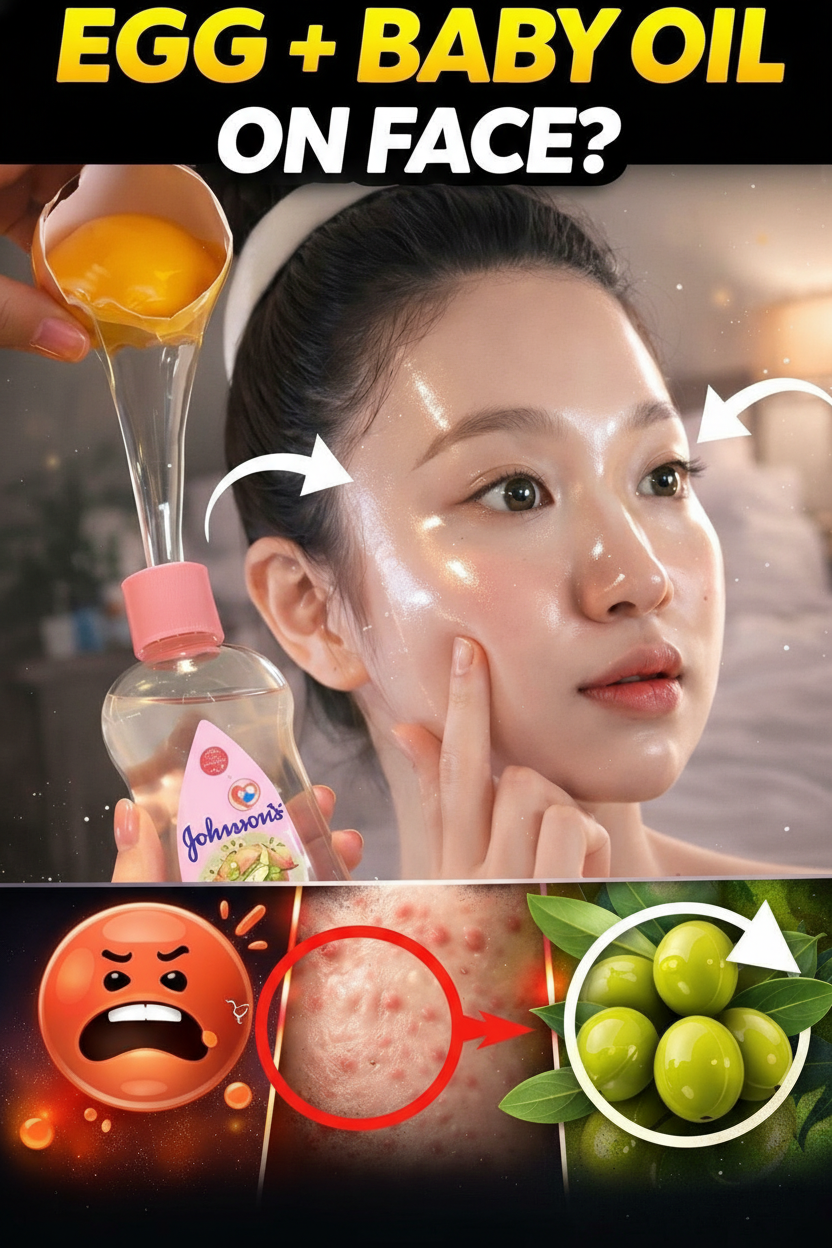
Many of the negative “breakout stories” associated with homemade masks typically arise not from the ingredients themselves, but from improper usage—specifically, leaving the mixture on for too long, failing to rinse it off completely, or applying it with excessive frequency.
Understanding the Key Ingredients: A Simple Breakdown
Egg: Whole Egg Versus Egg White for Your Skin
Egg white, upon drying, delivers a noticeable yet temporary tightening sensation to the skin. In contrast, a whole egg incorporates the nourishing fats present in the yolk, resulting in a richer, more deeply moisturizing effect. Important Safety Note: Raw eggs can harbor bacteria like Salmonella. While the risk of infection through intact skin is generally low, it is always prudent to exercise caution and strictly avoid using raw egg if your skin barrier is compromised in any way (e.g., cuts, abrasions).
Baby Oil: The Role of Mineral Oil in Skincare
Primarily functioning as an occlusive agent, baby oil (typically mineral oil-based) forms a protective barrier on the skin’s surface. This barrier effectively minimizes transepidermal water loss, contributing to a softer, more supple feel. While many appreciate its smoothing properties, some individuals report a greasy sensation or pore congestion, particularly in oilier areas like the T-zone.
Olive Oil: Benefits and Considerations for Facial Application
Extra virgin olive oil is rich in beneficial fatty acids and potent antioxidants, which can significantly contribute to skin softness and overall health. However, its dense texture may prove too heavy for certain complexions and might not be the best choice for those whose pores are easily clogged.
However, there’s a more refined and effective approach to this DIY mask…
Rather than formulating a thick, potentially heavy mask, consider utilizing these ingredients as a brief-contact “softening rinse-off treatment,” incorporating minimal quantities of oil for optimal results.
At a Glance: What Each Ingredient Brings to Your Skin
| Ingredient | Primary Skin Sensation | Ideal For | Potential Drawback |
|---|---|---|---|
| Egg white | Firming, smooth “film” | Oily zones, brief applications | Over-drying/tightness, irritation with excessive use |
| Whole egg | Luxurious, deeply conditioning | Parched/balanced skin types | Rich texture, more challenging to rinse |
| Baby oil | Silky, luminous, moisture-sealing | Arid areas, facial contours | Oily residue, risk of pore blockage |
| Olive oil | Supple, opulent, moisturizing | Dehydrated skin, flaky patches | Can be weighty; may lead to blockages for some |
Crafting Your “Safer Glow” Formula: Small Batch, Single Use Recommendations
Objective: To create a mild, brief-contact facial treatment designed for easy, thorough rinsing.
Formula A: For Normal to Dry Skin Types (Maximizing Radiance)
- 1 teaspoon of whole egg (gently whisked)
- 2–3 drops of baby oil
- 2–3 drops of olive oil
Formula B: For Combination Skin (Minimizing Oiliness)
- 1 teaspoon of egg white (lightly frothed)
- 1–2 drops of baby oil or 1–2 drops of olive oil (select just one)
Formula C: For Skin Prone to Congestion (Adapt, Don’t Force)
- 1 teaspoon of egg white
- Omit baby oil entirely