 By admin
 8 Vital Clues: Your Body Might Be Crying Out for More Vitamin B12
Many individuals, especially those aged 40 and above, often find themselves grappling with creeping exhaustion, unexplained shifts in mood, or peculiar physical sensations that emerge without warning. These symptoms tend to develop gradually, frequently dismissed as typical signs of aging or the cumulative stress of daily life. However, scientific research indicates that suboptimal or low vitamin B12 levels impact a substantial segment of the adult population, with projections suggesting up to 20% of individuals over 60 might be affected. The challenge lies in the subtle onset of these indicators, which can easily be overlooked, yet they frequently point to an issue that is surprisingly straightforward to address through informed dietary choices and increased awareness. What if recognizing these less obvious hints could be your key to reclaiming your vitality and feeling more like yourself? Continue reading to delve into eight surprising, science-backed signs, alongside practical strategies to support healthy vitamin B12 levels.
The Essential Role of Vitamin B12 in Your Health and Well-Being
Vitamin B12, scientifically known as cobalamin, is indispensable for numerous critical bodily functions. It plays a pivotal role in the synthesis of red blood cells, ensuring robust nerve function, and maintaining optimal brain health. Furthermore, cobalamin is instrumental in converting the food we consume into usable energy and is crucial for preserving the protective myelin sheath that insulates our nerves. When levels of this vital nutrient decline, the body begins to struggle in ways that are not always immediately apparent. Studies from reputable institutions such as the National Institutes of Health and Harvard Health underscore how a deficiency can manifest as profound fatigue, significant neurological alterations, and other effects that can easily be mistaken for different common health concerns. Factors like modern dietary patterns, certain medications, or challenges with nutrient absorption can all contribute to inadequate B12 levels, making this an increasingly pertinent concern for many adults today. But there’s more to uncover—let’s explore the specific signs that frequently go unnoticed.
8 Overlooked Signs Your Body May Need More Vitamin B12
Sign #1: Persistent, Unrelenting Fatigue
Do you wake up feeling utterly drained, even after a full night’s rest, as if the day’s demands have already exhausted you? Do even simple tasks leave you yawning or craving extra breaks? This pervasive tiredness is distinct because it persists despite adequate sleep or even caffeine intake. Scientific studies link insufficient B12 to impaired red blood cell production, which, in turn, restricts oxygen delivery to your tissues and muscles. Personal accounts, particularly from those in their 50s, often describe addressing their B12 intake as a significant turning point in overcoming this type of fatigue. If constant exhaustion ranks high on your daily experience, this particular clue warrants serious consideration.
Sign #2: Unexplained Mood Swings and Irritability
One day you might feel perfectly composed, yet the next you find yourself easily agitated by minor inconveniences or experiencing an uncharacteristic dip in mood. Such emotional fluctuations can strain relationships and leave you questioning their origin. Research indicates that B12 is crucial for the synthesis of brain chemicals (neurotransmitters) that govern mood regulation. When B12 levels are low, this delicate balance can falter, leading to heightened irritability or feelings of sadness. Many individuals report experiencing more stable moods after consciously incorporating B12-rich foods or supplements into their routine. As a quick self-assessment: On a scale of 1 to 5, how consistent and stable has your mood been recently?
Sign #3: Pale or Slightly Yellowish Skin Tone
Have you noticed your complexion appears unusually washed out, or perhaps developed a subtle yellowish tint that even makeup struggles to conceal? Friends or family might comment that you look unwell or tired. This phenomenon occurs because low B12 levels can impact the lifespan of red blood cells. When these cells break down prematurely, they can release pigments that impart a subtle yellow (jaundice-like) hue to the skin. Correcting B12 intake often helps the skin gradually revert to a healthier, more vibrant appearance over time.
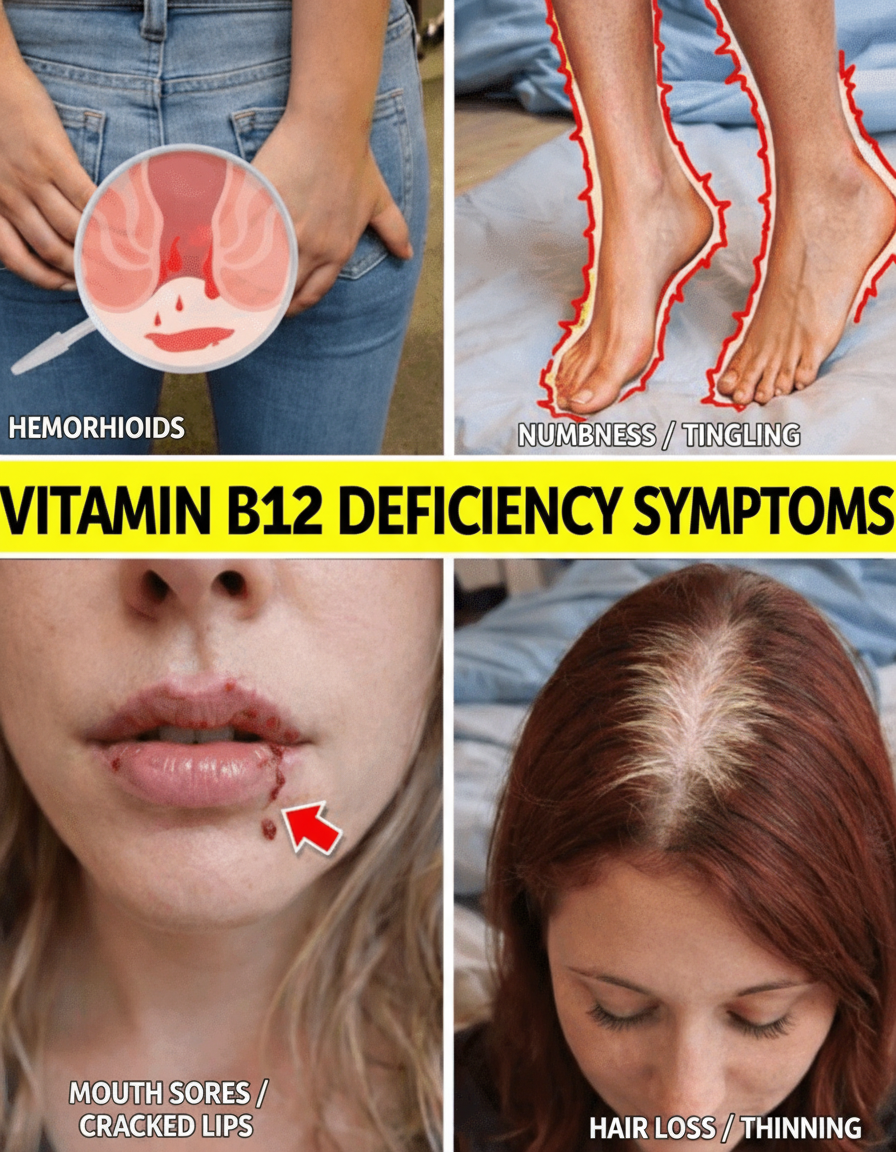
Sign #4: Sore, Red, or Inflamed Tongue and Mouth Discomfort
If your tongue feels tender, appears unusually smooth, shiny, or swollen, making spicy or hot foods uncomfortable, or if you frequently develop mouth sores, these could be indicators. Medically termed glossitis, this symptom arises from B12’s vital role in tissue maintenance and regeneration. Clinical studies consistently confirm glossitis as a classic sign of B12 deficiency. Improvements in these oral symptoms typically follow when B12 levels are effectively restored.
Sign #5: Tingling or Numbness in Hands and Feet
Experiencing a persistent pins-and-needles sensation, or numbness, particularly in your extremities like hands and feet, can be alarming. It might feel as though your nerves are malfunctioning. This occurs because vitamin B12 is essential for maintaining the myelin sheath, the protective covering around nerve fibers. A deficiency can lead to peripheral neuropathy, manifesting in these uncomfortable tingling or numb sensations. Many individuals suffering from these symptoms report significant relief once their B12 requirements are adequately met.
Sign #6: Unexpected Heart Palpitations or Racing Beats
Do you sometimes feel your heart fluttering or racing, even when you are at rest, causing undue anxiety? This symptom can be linked to the strain placed on the cardiovascular system due to anemia, which often results from low B12 and impacts the body’s oxygen supply. For those affected, ensuring consistent B12 intake frequently helps in normalizing heart rhythm and reducing these worrisome palpitations.
Sign #7: Brain Fog or Memory Lapses
Are you frequently forgetting names, losing your train of thought mid-sentence, or experiencing a general mental sluggishness more often than before? Vitamin B12 is crucial for optimal nerve signaling and overall cognitive function. Research consistently associates low B12 levels with these ‘foggy’ mental moments and minor memory impairments. Clearer thinking and improved cognitive sharpness often return with consistent support for B12 levels.
Sign #8: General Weakness or Balance Challenges
If your muscles feel progressively weaker, or your balance isn’t as steady as it once was—perhaps you notice it when standing for extended periods or walking—this could be a significant clue. This symptom arises from the combined impact of B12 deficiency on both energy production and nerve health. Addressing the underlying B12 deficiency frequently leads to a gradual restoration of strength and improved stability.