 By admin
 Beyond the Obvious: 9 Critical Early Warning Signs of Cervical Cancer Every Woman Needs to Recognize
In the intricate journey of women’s health, we often possess an innate awareness when something feels amiss. Yet, this sharp perception is frequently overshadowed by a tendency to rationalize subtle bodily changes—attributing them to stress, hormonal shifts, or the natural progression of aging. Perhaps it’s an unusual spot between menstrual cycles, or a persistent dull ache in the lower back that lingers for days. We often push through, dismissing these ‘minor’ discomforts as merely ‘part of being a woman.’ This habit of downplaying symptoms, however, can lead to critical red flags being missed until they demand undeniable attention. Your body communicates in nuanced ways, and learning to interpret these subtle signals can be one of the most vital life skills you cultivate. Among these, there’s a particular set of symptoms often mistaken for common, benign conditions, and delays in seeking medical advice can carry serious implications.
The Silent Gateway of Cervical Health
The cervix, often referred to as a ‘silent gateway,’ typically shows no overt signs in its initial stages of cellular change. Most precancerous developments and very early-stage cervical cancers are asymptomatic. This is precisely why healthcare professionals globally emphasize the paramount importance of routine screenings, such as Pap smears and HPV tests, as your primary defense mechanism. Nevertheless, as abnormal cells proliferate and begin to impact surrounding tissues, they can trigger physical manifestations. These signs are unfortunately frequently misidentified as less serious issues, like yeast infections, urinary tract infections (UTIs), or simply ‘menstrual woes.’
1. Unexpected Bleeding Between Periods
One of the most common and crucial early indicators is any form of abnormal vaginal bleeding outside your regular menstrual cycle. This includes spotting when you’re not expecting your period, or a noticeable change in your cycle’s intensity or duration, becoming unusually heavier or longer. Any bleeding that deviates from your personal ‘normal’ menstrual pattern warrants immediate medical evaluation. This also extends to bleeding that occurs after a pelvic examination or even after douching, as delicate, abnormal cervical tissues can be easily irritated and prone to bleeding.
Why It Happens: The development of a tumor on the cervix’s surface can lead to the formation of new, fragile blood vessels that are highly susceptible to rupture and bleeding.
2. Post-Menopausal Spotting
For women who have navigated through menopause, any instance of vaginal bleeding is considered a significant red flag. Whether it manifests as a full-fledged period or merely a faint pink stain on tissue paper, this symptom should never be dismissed. While many might instinctively assume it’s a ‘hormonal anomaly,’ medical experts consistently advise that post-menopausal bleeding is among the most critical indicators of various gynecological cancers, including both cervical and endometrial cancers.
3. Unusual or Foul-Smelling Vaginal Discharge
While vaginal discharge is a normal physiological process, any marked alteration in its consistency, color, or odor can serve as a subtle warning of cervical changes. Pay close attention to discharge that is:
- Watery or Pale: Often one of the initial forms of abnormal discharge to be noticed.
- Tinged with Blood: Appearing pinkish or brownish, particularly between menstrual periods.
- Foul-Smelling: As cancerous cells die and are shed, they can generate a distinct, unpleasant odor that persists despite standard hygiene practices.
4. Pain or Bleeding After Intimacy
Experiencing pain during or after sexual intercourse, medically known as dyspareunia, is a symptom frequently overlooked by women, often attributed to factors like insufficient lubrication or other benign causes. However, if this discomfort is a new occurrence or becomes persistent, it could signal the presence of a growth on the cervix. Similarly, bleeding immediately following intercourse is a classic sign. The physical contact during intimacy can easily irritate any abnormal cervical growths, leading to spotting or bleeding.
5. Persistent Pelvic or Lower Back Pain
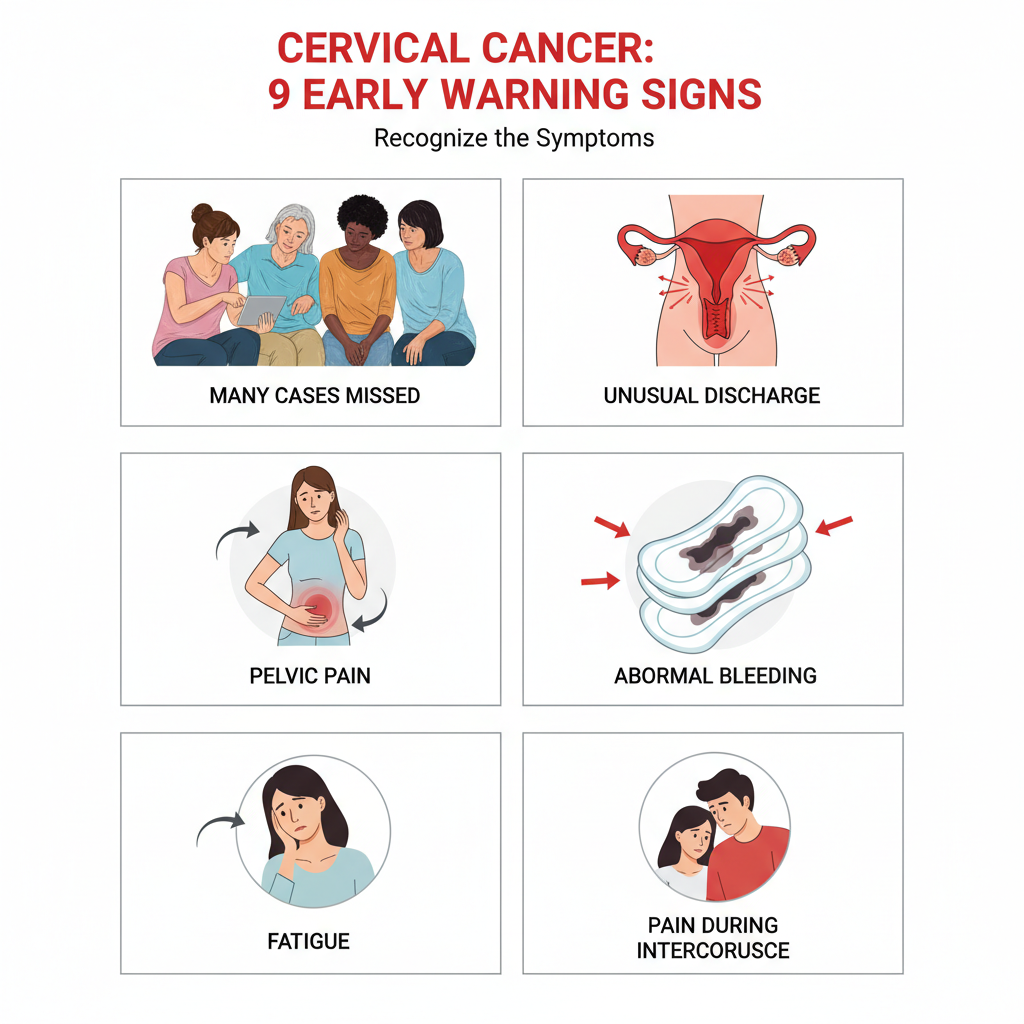
While occasional backaches are common, a persistent, dull, or nagging pain in the lower back or pelvic region that isn’t linked to your menstrual cycle or a muscle strain demands attention. This discomfort can be more than just a minor ache.
| Type of Pain | Description |
|---|---|
| Pelvic Pain | A sensation of pressure, heaviness, or a deep ache situated below the belly button. |
| Lower Back | A continuous ache that might extend downwards into the legs. |
| Leg Pain/Swelling | Swelling or pain specifically in one leg (often an indicator as the tumor progresses and presses on nerves or vessels). |
6. Frequent Urination Without a UTI
If you find yourself needing to urinate unusually often, perhaps every 30 minutes, or experiencing a constant sensation of pressure on your bladder, your initial thought might understandably be a urinary tract infection (UTI). However, if a doctor rules out an infection and this bladder pressure or urgency persists, it’s crucial to investigate further. This phenomenon occurs because a growing mass on the cervix can begin to exert pressure on the bladder, thereby reducing its capacity and creating a continuous feeling of urgency.
7. Unexplained Fatigue and Anemia
A persistent, overwhelming sense of fatigue that isn’t relieved by rest, coupled with no clear explanation, can be a subtle sign. Cervical cancer, especially as it progresses, can cause chronic blood loss through abnormal bleeding. This ongoing blood loss can lead to anemia, a condition where your body lacks healthy red blood cells, resulting in profound tiredness, weakness, and a general lack of energy. Furthermore, the body expends significant energy fighting cancer cells, contributing to this pervasive fatigue.
8. Unexplained Weight Loss
While many factors can contribute to weight fluctuations, significant and unexplained weight loss without any changes in diet or exercise habits should be taken seriously. Cancer cells consume a considerable amount of the body’s energy and nutrients, leading to metabolic shifts. This can result in a loss of appetite and unintentional weight reduction, even when a person is eating normally or trying to maintain their weight.
9. Swelling in One Leg
As a cervical tumor grows, it can sometimes expand to press on nearby nerves, blood vessels, or lymphatic channels in the pelvic area. This compression can impede the normal circulation of fluids, leading to swelling (edema) in one leg. While often associated with more advanced stages, unilateral leg swelling can sometimes be an earlier indicator, especially if accompanied by pain or discomfort in that leg, and should prompt medical investigation.
Listen to Your Body: A Call to Action
Understanding these subtle early warning signs of cervical cancer is not meant to incite panic, but rather to empower you with knowledge. Your body provides invaluable clues, and recognizing these ‘whispers’ can make a profound difference. Regular gynecological check-ups, including Pap smears and HPV tests, remain your strongest defense. However, never hesitate to consult a healthcare professional if you experience any of these persistent or unusual symptoms. Early detection significantly improves treatment outcomes and saves lives. Listen to your body; it’s communicating for your health.