 By admin
 As women navigate different life stages, our bodies naturally undergo various transformations. While many of these changes are benign, some subtle shifts in breast health can signal something more significant. Dismissing these indicators could mean missing a vital opportunity for early intervention, a period when prompt awareness and decisive action can dramatically improve health outcomes. The excellent news is that by familiarizing yourself with key indicators, you gain the power to proactively manage your well-being. Stay with us, as by the end of this guide, we’ll uncover a simple yet impactful habit that research suggests can significantly enhance your routine breast checks.
What Exactly Is Breast Cancer?
Breast cancer originates when cells within the breast tissue begin to grow and divide uncontrollably. This abnormal proliferation can lead to the formation of a tumor, which may be detectable through imaging tests like X-rays or felt as a distinct lump during a physical examination. While it can affect anyone, breast cancer is predominantly diagnosed in women.
Several types of breast cancer exist, with some of the most common including ductal carcinoma, which starts in the milk ducts, and lobular carcinoma, which develops in the lobules responsible for milk production. It’s crucial to understand that not all breast changes are indicative of cancer. Many alterations, such as cysts or fibroadenomas, are benign (non-cancerous) growths. Gaining a foundational understanding of these distinctions helps alleviate undue fear and encourages a proactive approach to breast health.
According to leading health organizations like the American Cancer Society, breast cancer ranks as the second most prevalent cancer among women in the United States, surpassed only by skin cancer. This statistic profoundly underscores the critical importance of staying informed and vigilant about breast health.
Why Early Detection and Awareness Are Crucial
Early awareness is undeniably a cornerstone of effective breast cancer management, often leading to earlier diagnosis. This, in turn, typically translates to simpler, less invasive treatment options and significantly improved long-term prognoses. When potential changes are recognized promptly, it facilitates timely consultations with healthcare professionals, allowing for swift diagnostic procedures.
While many cases are fortunately identified through routine screening mammograms before any noticeable symptoms emerge, personal vigilance plays an equally vital role. Studies consistently show that women who are attentive to their bodies and perform regular self-checks are more likely to report unusual changes at an earlier stage. The Centers for Disease Control and Prevention (CDC) emphasizes that consistent mammography screenings can detect abnormalities before symptoms even develop, potentially saving countless lives. This highlights the immense value of integrating personal self-awareness with professional medical screenings.
Key Early Signs of Breast Cancer to Monitor
Being aware of potential signs is about knowing when to seek professional medical advice, not for self-diagnosis. Here are some critical changes to observe, based on insights from reputable health sources:
A New or Unusual Lump or Mass
One of the most frequently reported indicators is the discovery of a new lump or thickening in the breast or underarm area. This mass might feel firm and have an irregular shape, although some can be soft or tender to the touch. It’s essential to remember that not all lumps signify cancer; many are benign. However, any newly discovered lump warrants immediate medical evaluation. The American Cancer Society advises that a painless, hard mass with uneven edges is more likely to be a cause for concern, but reiterates that any new lump should be thoroughly examined by a healthcare provider. Learn more about early signs you shouldn’t ignore.
Unexplained Swelling or Thickening of Breast Tissue
You might notice a specific area of the breast feeling unusually thick or swollen, even if a distinct lump isn’t palpable. This change could affect a localized region or the entire breast. Such alterations can sometimes be attributed to fluid retention or subtle shifts in tissue composition. The CDC explicitly lists unexplained thickening as a warning sign that should not be dismissed. Furthermore, this swelling can occasionally extend to the lymph nodes situated under the arm, signaling a need for medical review.
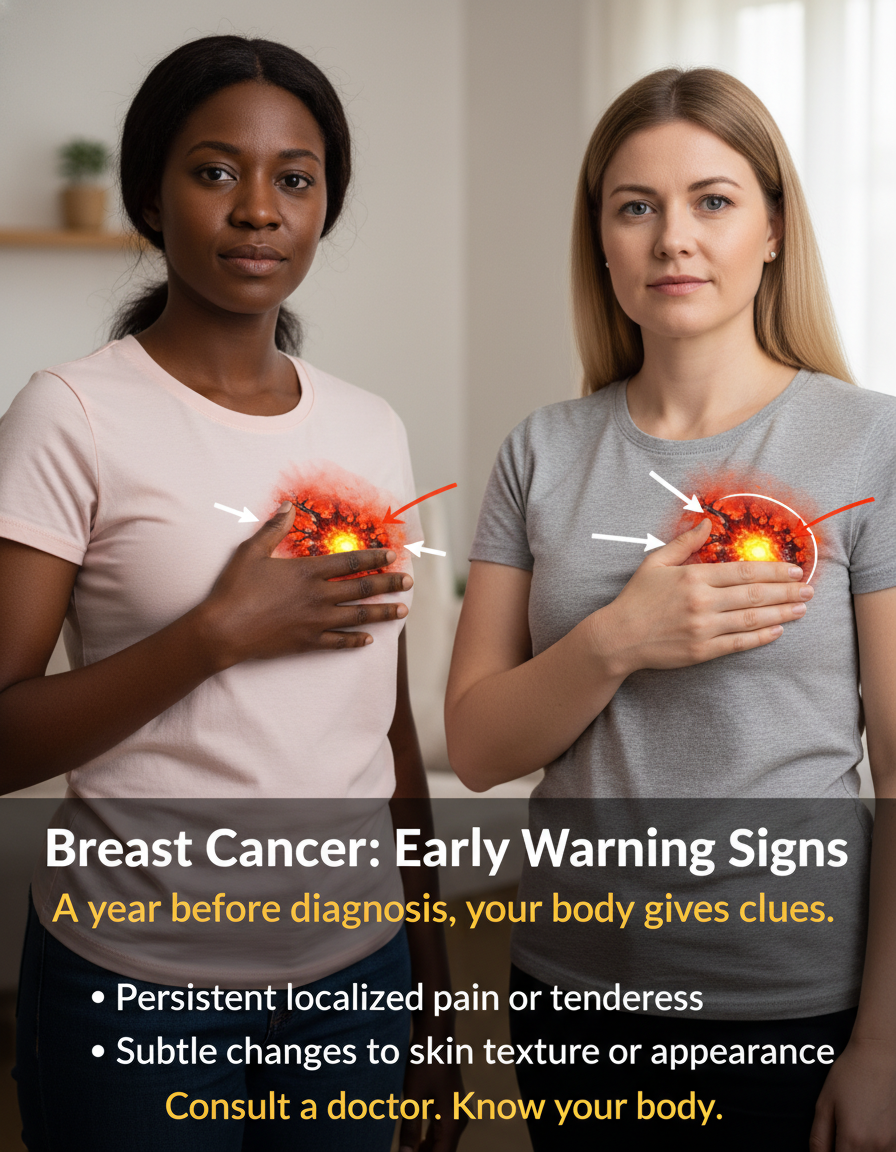
Skin Changes, Including Dimpling or Redness
Pay attention to any changes in the skin’s appearance on your breast. This could manifest as dimpling, where the skin appears puckered or indented, often likened to an orange peel texture. Other signs include persistent redness, scaling, or flakiness around the nipple or across the breast. These surface alterations can often point to underlying issues affecting the skin’s integrity. Health experts at the American Cancer Society identify dimpling as a potential red flag. Interestingly, redness can sometimes be mistaken for a common infection, making it easy to overlook its true significance. Discover more about breast cancer symptoms.
Nipple Changes or Unusual Discharge
Observe any alterations to your nipple, such as it suddenly turning inward (nipple retraction) or experiencing discharge that is not breast milk, particularly if it’s bloody, clear, or otherwise unusual. Pain in the nipple area may also accompany these changes. The CDC strongly advises that any nipple discharge, especially if it’s spontaneous, persistent, or unilateral (from one breast), should prompt an immediate consultation with a doctor.
Noticeable Changes in Breast Size or Shape
Any unexplained shift in the size, contour, or overall shape of one or both breasts warrants attention. This might be a subtle difference, such as a new asymmetry that wasn’t present before. Research indicates that these changes can develop gradually, emphasizing the importance of consistent self-checks and familiarity with your normal breast appearance.
Persistent Breast Pain or Discomfort
While breast cancer isn’t always associated with pain, persistent discomfort or localized pain in any area of the breast that doesn’t resolve should always be discussed with a healthcare provider. The American Cancer Society acknowledges that pain can indeed be a symptom in some breast cancer cases, making it a valid reason to seek medical evaluation.
The Surprising Habit That Boosts Your Breast Health Vigilance
Beyond routine mammograms and occasional self-checks, there’s a simple, yet highly effective habit that can significantly enhance your ability to detect changes early: consistent, mindful monthly breast self-awareness, coupled with documentation. Instead of just a quick check, dedicate a specific time each month to thoroughly examine your breasts. More importantly, consider keeping a simple log or journal of your observations. Note down how your breasts normally feel, any subtle changes you observe (even if you think they’re minor), and when you performed your last check. This consistent tracking allows you to build a detailed personal baseline, making it much easier to identify deviations over time and provide valuable information to your doctor. This proactive documentation transforms a passive check into an active, informed health practice, empowering you to be your own best advocate.
Taking Charge of Your Breast Health
Understanding the early signs of breast cancer is a powerful step towards safeguarding your health. Remember, vigilance combined with regular professional screenings offers the best protection. If you notice any of these signs or any other concerning changes in your breasts, do not hesitate to contact your doctor. Early detection saves lives, and your proactive approach is the most crucial tool in your breast health journey.