 By admin
 10 Critical Breast Cancer Warning Signs Everyone Should Know for Early Detection
It’s common for individuals to experience occasional breast changes, often linked to hormonal shifts, stress, or the natural aging process. These subtle alterations can be easily dismissed, with the hope that they will simply resolve on their own. However, certain changes can signal something more serious, such as the early stages of breast cancer, where prompt attention can profoundly impact treatment outcomes. The encouraging news is that identifying these signs early opens the door to a wider range of treatment options and significantly better prognoses. There’s a vital insight about truly listening to your body that many overlook, and we’ll explore that further towards the end of this guide.
Breast cancer, while predominantly affecting women, can also occur in men. According to estimates from the American Cancer Society for 2025, approximately 316,950 new cases of invasive breast cancer are projected among women in the United States, alongside around 2,800 cases in men. The remarkable aspect of early detection is highlighted by data from the National Cancer Institute’s SEER program, which indicates a nearly 100% 5-year relative survival rate when the cancer is found early and remains localized to the breast. Consistent research underscores that heightened awareness of one’s normal body state and the proactive recognition of unusual changes are pivotal for early diagnosis. Yet, many individuals delay seeking medical advice, assuming symptoms will spontaneously disappear. Empowering yourself with knowledge is the first step towards timely action.
Why Understanding Breast Changes is Paramount
Breast cancer frequently develops without immediate noticeable symptoms. A significant number of cases are first identified through routine screening procedures, even before any physical signs manifest. This is precisely why combining regular self-awareness with scheduled medical check-ups and screenings forms a powerful defense strategy. When changes do emerge, however, recognizing them without delay can be life-saving. Leading health organizations, including the American Cancer Society, consistently emphasize that detecting breast cancer in its early stages dramatically improves long-term survival rates compared to diagnoses made at later stages.
It’s also important to remember that men can develop breast cancer, though it is considerably rarer. The warning signs are largely similar, making breast health awareness a universal concern. While the vast majority of breast changes are benign—often attributed to conditions like cysts or infections—it is always prudent to have any new or persistent changes evaluated by a healthcare professional. Never hesitate to seek expert medical advice.
10 Essential Warning Signs to Monitor
To empower yourself with knowledge for early detection, familiarize yourself with these common breast cancer warning signs. While many of these changes can be benign, their persistence or occurrence in combination warrants immediate medical evaluation.
1. A New, Persistent Lump or Thickened Area in the Breast or Underarm
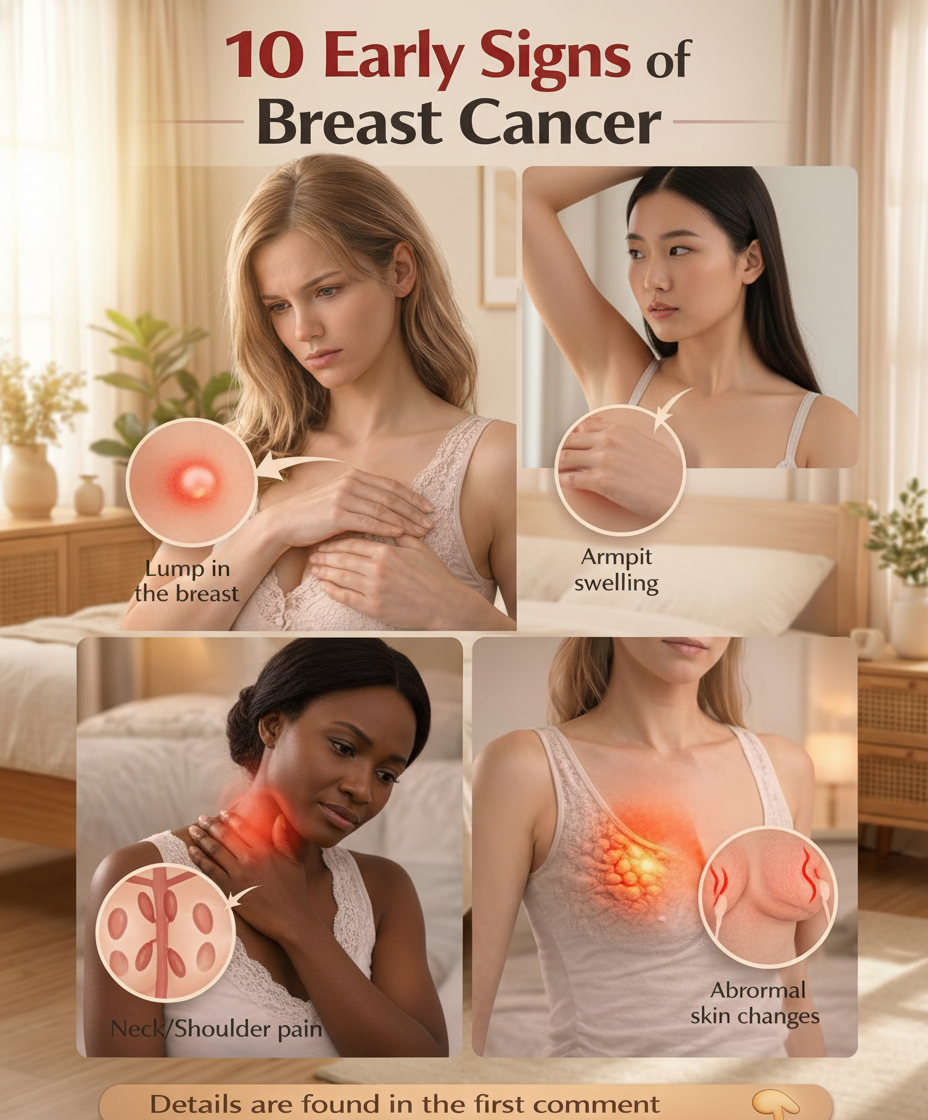
One of the most recognized indicators is a firm, irregular lump that feels distinct from the surrounding breast tissue. This lump might be painless and feel fixed in place. However, not all concerning lumps are hard; some can feel soft, tender, or movable. Any new lump that persists for more than a few weeks should be promptly examined by a doctor. Tip: Regularly performing breast self-exams helps you become familiar with the normal feel of your breasts, making it easier to notice new changes.
2. Unexplained Changes in Breast Size, Shape, or Overall Contour
Pay attention to any unexplained swelling or shrinkage in one breast that is not linked to menstrual cycles or general weight fluctuations. This could manifest as a new feeling of heaviness or a noticeable asymmetry that wasn’t previously present.
3. Skin Changes Such as Dimpling, Puckering, or an Orange-Peel Texture
Observe if the skin on your breast appears indented, puckered, or takes on a textured appearance similar to an orange peel, medically known as peau d’orange. This occurs when underlying changes affect the skin’s surface. How to spot it: Stand in front of a mirror with your arms at your sides, then raise them above your head. Next, press your hands firmly on your hips to flex your chest muscles, observing any alterations.
4. Nipple Inversion or Retraction
A nipple that suddenly begins to turn inward or retracts when it previously pointed outward is a significant sign. This alteration can sometimes develop gradually over time.
5. Redness, Scaling, Thickening, or Flaking of the Nipple or Areola
Be aware of any flaky, crusty, reddened, or thickened skin around the nipple or areola, especially if accompanied by itching or a burning sensation. These symptoms could potentially indicate a rarer form of breast cancer, such as Paget’s disease of the breast, which is often associated with underlying cancerous changes.
6. Unusual Nipple Discharge
Any discharge from a single nipple that is clear, bloody, or otherwise unusual, particularly if it occurs spontaneously (without squeezing), requires medical assessment. While discharge during breastfeeding is normal, any other spontaneous nipple discharge warrants investigation.
7. Persistent Redness, Warmth, or Swelling Affecting Much of the Breast
Rapid onset of redness and swelling across a significant portion of the breast, sometimes without a distinct lump, can be a sign of inflammatory breast cancer. This is a less common but aggressive type of breast cancer that can sometimes be mistaken for a breast infection.
8. Ongoing Itching, Irritation, or an Unexplained Rash on the Breast
Persistent itching that doesn’t resolve, especially if accompanied by redness, warmth, or a rash that doesn’t respond to typical remedies, should not be ignored. Do not assume it is merely dry skin or a minor irritation; its persistence is key.
9. Persistent Pain in a Specific Area of the Breast or Nipple
While most breast pain is benign and often cyclical, constant or localized pain in one specific area of the breast or nipple, unrelated to your menstrual cycle, should be brought to your doctor’s attention.
10. Swollen Lymph Nodes in the Armpit or Near the Collarbone
Noticeable swelling or lumps in the lymph nodes located in your armpit or above your collarbone can be a sign that breast cancer has spread. These areas are common sites for lymph nodes to become enlarged when cancer is present.