 By admin
 That persistent, unwelcome odor emanating from the back of your throat can feel like an inescapable shadow, even after diligently brushing, flossing, and rinsing. You might find yourself discreetly checking your breath throughout the day, questioning why your confidence wavers despite your meticulous oral hygiene efforts. This frustrating predicament often leaves individuals feeling isolated and self-conscious, seeking a solution beyond what conventional dental products offer. However, for many, the root cause isn’t visible on the teeth; it’s discreetly nestled within the tiny, intricate folds of the throat, where a quiet process transforms everyday debris into a significant oral health concern. There’s a particular, simple evening habit that can effectively interrupt this cycle, yet it’s frequently overlooked because people are searching in the wrong places for answers.
What Exactly Are Those Mysterious White Lumps?
If you’ve ever experienced coughing up a small, firm, yellowish-white particle that carries a strikingly pungent smell, you’ve likely encountered a tonsil stone, medically termed a tonsillolith. These formations are not indicative of a serious infection but rather a consequence of your body’s natural anatomy inadvertently hindering your quest for fresh breath. Your tonsils aren’t smooth surfaces; instead, they are characterized by numerous indentations and channels known as crypts. Envision these crypts as minuscule pockets that can occasionally act as traps for various passing materials. When food particles, dead skin cells, and mucus become lodged within these pockets, they don’t simply remain inert. They become a fertile breeding ground for the anaerobic bacteria naturally present in your mouth. Over time, minerals from your saliva—particularly calcium—begin to solidify this organic mixture into a calcified lump.
Why Conventional Oral Hygiene Struggles to Eliminate the Odor
The intense halitosis (bad breath) associated with tonsil stones is deeply rooted in biochemistry. The bacteria entrapped within the porous structure of these stones produce volatile sulfur compounds (VSCs). These are the very same malodorous gases responsible for the distinctive smell of rotten eggs. Because tonsil stones are embedded within the throat tissue, this unpleasant scent is released each time you swallow or speak, making the problem constant. What’s even more frustrating is that even powerful mouthwashes typically only reach the surface of the stone, leaving the internal ‘odor factory’ deep within the tonsil crypt completely undisturbed. This explains why the offensive smell often reappears mere minutes after completing your morning oral hygiene routine.
Subtle Indicators You Might Have “Hidden” Tonsil Stones
Not everyone can easily spot white or yellow spots when examining their throat in a mirror. Sometimes, tonsil stones are deeply entrenched within the tonsillar tissue, manifesting through symptoms that might seem unrelated to typical oral health issues. Consider these potential signs:
- The “Popcorn Kernel” Sensation: A persistent feeling as if something is lodged in the very back of your throat, which you cannot dislodge by swallowing.
- Referred Ear Pain: Due to the shared nerve pathways between the throat and ears, a tonsil stone pressing on a sensitive area can trigger a dull, aching sensation in the ear.
- Metallic Taste: An unusual, ‘off’ flavor that lingers in your mouth even after eating or drinking, often described as metallic.
- Chronic Throat Clearing: A reflexive and frequent need to clear your throat, driven by the sensation of a perceived blockage or irritation.
Understanding the Risk Factors: Who Is Susceptible?
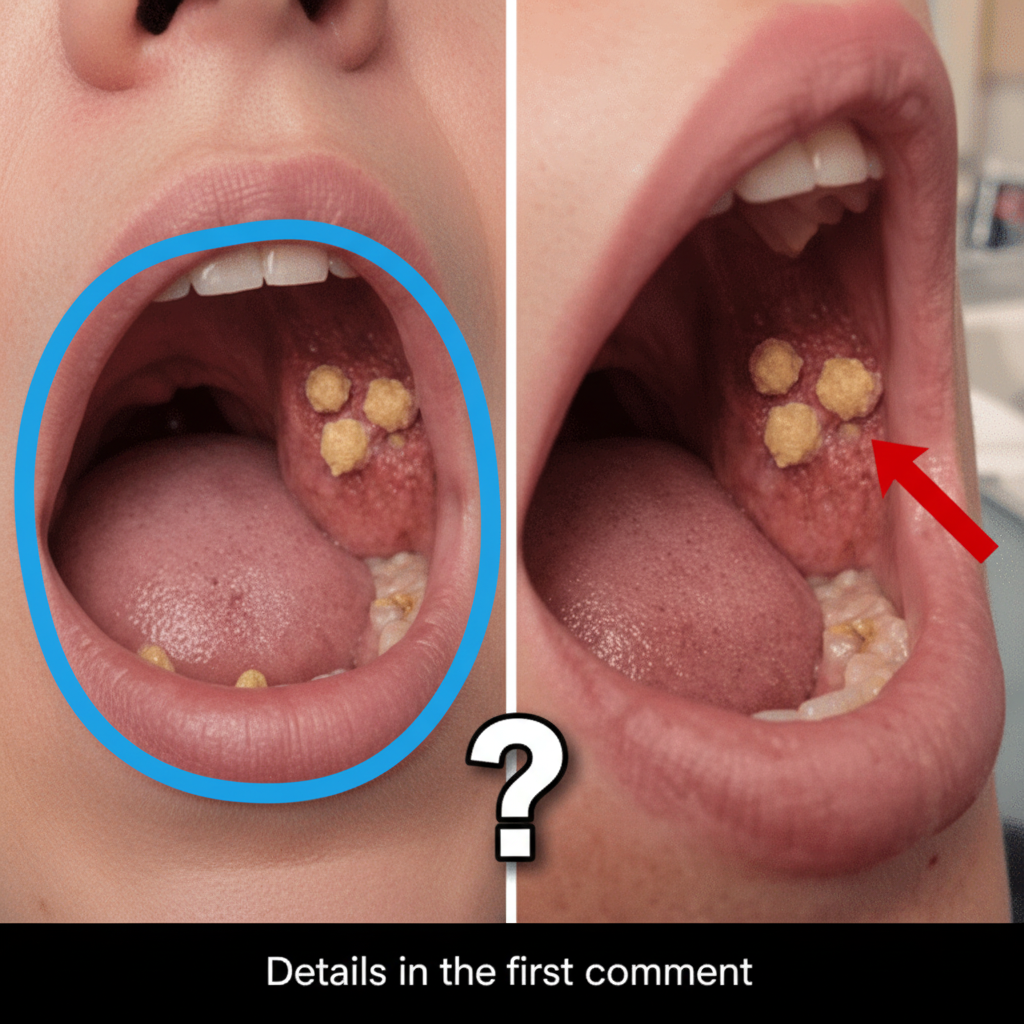
Studies suggest that between 10% and 25% of the general population may experience tonsil stones at some point in their lives. However, certain physiological factors can create an environment in your throat that is more conducive to stone formation. Individuals with “cryptic tonsils”—tonsils characterized by naturally deeper and more numerous folds—are at a higher risk because these anatomical features provide more ample space for debris to accumulate and calcify. Similarly, those who suffer from chronic sinus problems or frequent post-nasal drip provide a consistent supply of mucus, which acts as a binding agent, facilitating the formation of tonsil stones.
Comparing Effective Management Strategies
Understanding the various approaches to managing tonsil stones can help in choosing the best strategy for your needs:
| Method | Effectiveness on Odor | Ease of Use | Long-term Prevention |
|---|---|---|---|
| Basic Brushing | Low (Surface only) | Very Easy | Minimal |
| Salt Water Gargle | Medium-High | Easy | High (Flushes crypts) |
| Water Flossing | High (Mechanical removal) | Moderate | High |
| Manual Removal | High (Immediate) | Difficult/Risky | Low |
The Simple Evening Routine to Reclaim Your Fresh Breath
The key to breaking the cycle of tonsil stone formation and persistent bad breath isn’t more aggressive scrubbing; it’s consistent, targeted flushing. To effectively manage existing tonsil stones and proactively prevent new ones from calcifying, many experts recommend a straightforward, three-step daily approach, ideally performed in the evening.
1. The Strategic Salt Water Rinse
This method stands out as the most effective and low-cost tool in your arsenal against tonsil stones. To prepare, simply mix half a teaspoon of common table salt into a glass of warm water, ensuring the salt is fully dissolved. The efficacy lies in the technique: tilt your head well back and gargle vigorously. The goal is to ensure the saline solution reaches deep into the very back of your throat and swirls around the tonsil crypts. The salt itself plays a crucial role by helping to draw out bacteria, reduce inflammation, and dislodge loose debris, creating an environment less hospitable for stone formation.