 By admin
 9 Everyday Habits to Naturally Boost Knee Strength, Comfort, and Mobility
Persistent knee discomfort can transform simple, routine actions like walking, climbing stairs, or prolonged standing into frustrating obstacles. This can gradually erode your confidence and independence. Over time, even mild stiffness might cause you to hesitate before engaging in activities you once cherished, creating a quiet yet significant burden on your daily life. While many people attribute these issues solely to aging or a demanding lifestyle, often, small, overlooked habits play a far more substantial role than anticipated.
The encouraging news is that adopting sustainable, gentle lifestyle adjustments can significantly enhance joint comfort and mobility. And stay tuned, because there’s one surprisingly simple habit revealed near the end that most individuals rarely consider!
Understanding the Basics of Knee Support and Mobility
The knee joint, a marvel of biomechanical engineering, is among the most intricate in your body. Its smooth function and stability rely on a meticulously coordinated system comprising cartilage, ligaments, muscles, and synovial (joint) fluid. Cartilage acts as a vital cushion, absorbing shock between bones, while robust ligaments firmly hold the joint components together. Surrounding muscles, particularly the powerful quadriceps and hamstrings, are crucial for absorbing impact and maintaining proper alignment.
Extensive research consistently highlights that maintaining balanced muscle strength and joint flexibility is key to distributing pressure more evenly across the knees. While this doesn’t guarantee absolute freedom from all discomfort, it undeniably supports smoother movement and promotes long-term mobility. Beyond anatomical structure, your daily choices—from posture to physical activity and nutrition—profoundly influence how your knees feel over time. Let’s explore practical, sustainable habits that can actively support optimal knee function.
1. Maintain a Balanced Body Weight for Optimal Joint Support
Excess body weight places undue stress on your knee joints, amplifying the mechanical load during everyday activities. Even modest reductions in body weight can significantly alleviate this mechanical stress over time. The fundamental principle isn’t about extreme dieting; it’s about fostering consistent, healthy habits. Consider focusing on:
- Prioritizing nutrient-dense vegetables: Aim to fill half your plate with a variety of colorful vegetables.
- Selecting lean protein sources: Incorporate options like fish, beans, eggs, or poultry to support muscle health.
- Hydrating effectively: Swap sugary beverages for water or soothing herbal teas.
To support your journey, integrate simple weekly tracking habits:
- Weigh yourself once weekly, ideally at the same time each day.
- Keep a basic food journal to monitor your intake and identify patterns.
- Set small, achievable goals, such as adding one piece of fruit to your daily diet.
Here’s the interesting part: gradual, sustainable changes are not only easier to maintain but also far more effective in supporting long-term joint comfort and overall well-being.
2. Choose Low-Impact Activities for Everyday Movement
The impact of physical activity on your knees varies significantly. Low-impact exercises enable you to maintain an active lifestyle without subjecting your joints to excessive stress. Gentle yet effective options include:
- Walking on smooth, even surfaces.
- Swimming or engaging in water aerobics, which provide buoyancy and reduce joint load.
- Cycling, either on a stationary bike or an outdoor bicycle.
These activities are excellent for stimulating circulation and facilitating the movement of synovial fluid, which is essential for nourishing cartilage. For beginners, a simple routine might involve:
- A 5-minute warm-up, perhaps light marching in place.
- 20–30 minutes of walking or cycling at a comfortable pace.
- Finishing with gentle stretching exercises.
The truth is, consistent gentle movement is a cornerstone for both enhancing joint comfort and boosting overall energy levels throughout your day.
3. Strengthen the Muscles That Support Your Knees
Robust musculature surrounding your knees functions as a natural support system and shock absorber for your joints. When the quadriceps (front thigh), hamstrings (back thigh), and calf muscles are strong and balanced, your knees often feel significantly more stable and resilient. Begin with simple bodyweight exercises:
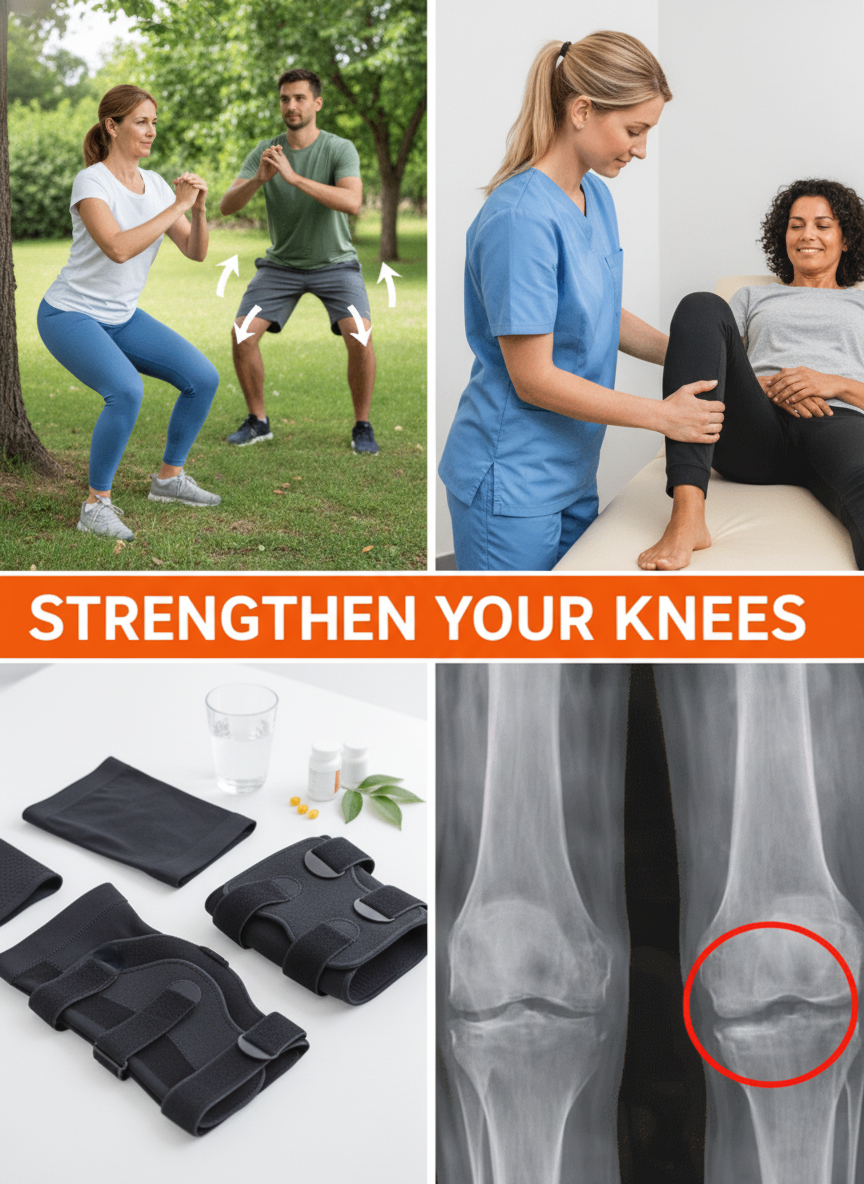
- Basic Supported Squat: Stand with your feet shoulder-width apart. Slowly lower your body as if you’re sitting into a chair, ensuring your knees remain aligned over your toes. Gently rise back to the starting position and repeat 8–10 times.
But wait—there’s more to building lasting strength. Gradually incorporating resistance bands or light weights can further enhance muscle development safely over time. Remember, consistent effort trumps sporadic intensity when it comes to building enduring strength and joint support.
4. Stretch Regularly to Maintain Flexibility
Muscular tightness surrounding the knee can compromise joint alignment and restrict your range of motion. Regular stretching is vital for promoting flexibility and maintaining the full functional range of movement in your knee. Focus on key muscle groups:
- Hamstrings
- Calves
- Hip flexors
An easy and effective stretch is the seated hamstring stretch:
- Sit on the floor with one leg extended straight out.
- Gently reach toward your toes, feeling a stretch along the back of your thigh.
- Hold this position for 20–30 seconds.
- Switch to the other side and repeat.
Here’s a helpful tip: integrate stretching into your downtime, such as while watching TV or listening to music, to transform it into an enjoyable, integrated part of your daily routine.
5. Add Nutrient-Rich Foods That Support Joint Function
The subtle yet profound influence of nutrition on joint health cannot be overstated. Certain nutrients are specifically recognized for their role in collagen synthesis, reducing inflammation, and promoting overall joint wellness. General nutritional research suggests that antioxidant-rich foods are known to bolster the body’s intrinsic repair mechanisms and mitigate oxidative stress. Consider making these additions to your diet:
- Citrus fruits: Excellent sources of Vitamin C, crucial for collagen production.
- Fatty fish: Rich in omega-3 fatty acids, known for their anti-inflammatory properties.
- Leafy greens: Packed with antioxidants and essential vitamins.
- Nuts and seeds: Provide healthy fats and various micronutrients.
A vibrant, colorful plate often signifies a wide array of nutrients that collectively support comprehensive body function—including the intricate workings of your joints. And that’s not all. Staying