 By admin
 We all know water is essential, but many overlook just how critical proper hydration is for maintaining overall health. Your body, roughly 60% water, relies on this vital resource for every system to function correctly – from digestion and circulation to energy levels, skin health, and mental clarity. While thirst is the most obvious signal, there are several subtle cues your body might be sending, indicating it needs more water even before you feel parched. Let’s explore 8 surprising signs that your body is craving hydration and why it’s crucial to listen to these messages.
1. Dry Mouth and Throat
A persistent dry mouth is one of the most common indicators that your body needs more water. When dehydrated, your salivary glands struggle to produce enough saliva, leading to a dry, uncomfortable, and often sticky feeling. Saliva is vital for digestion, oral hygiene, and neutralizing acids. To combat this, drink water regularly throughout the day. Sipping herbal teas or chewing sugar-free gum can also help stimulate saliva production.
2. Fatigue and Low Energy
Feeling unusually tired, sluggish, or lethargic? Dehydration might be the culprit. Water is crucial for efficient bodily functions, and a lack of it can impede energy production. Dehydration reduces the flow of nutrients and oxygen to your cells, slowing your metabolism and forcing your body to work harder to perform basic functions. Stay energized by drinking water and consuming water-rich foods like fruits and vegetables. Carrying a water bottle is a great reminder!
3. Dark Yellow Urine
The color of your urine offers a clear, immediate insight into your hydration status. If your urine is dark yellow or amber, it’s a strong sign your body is conserving water because it’s not getting enough. This means your kidneys are working harder to retain fluid, leading to more concentrated urine with higher levels of waste products. Ideally, your urine should be light yellow or clear. Drink more water until you achieve this lighter color.
4. Headaches
Headaches are a surprisingly common symptom of dehydration. When your body lacks sufficient water, it can lead to reduced blood flow and oxygen to the brain. Dehydration can cause brain tissue to temporarily shrink, pulling away from the skull, which can result in pain and tension. Additionally, fluid imbalances can affect electrolytes, further contributing to headaches. Drink water as soon as you feel a headache coming on, and aim for consistent hydration to prevent them.
5. Dry Skin and Lips
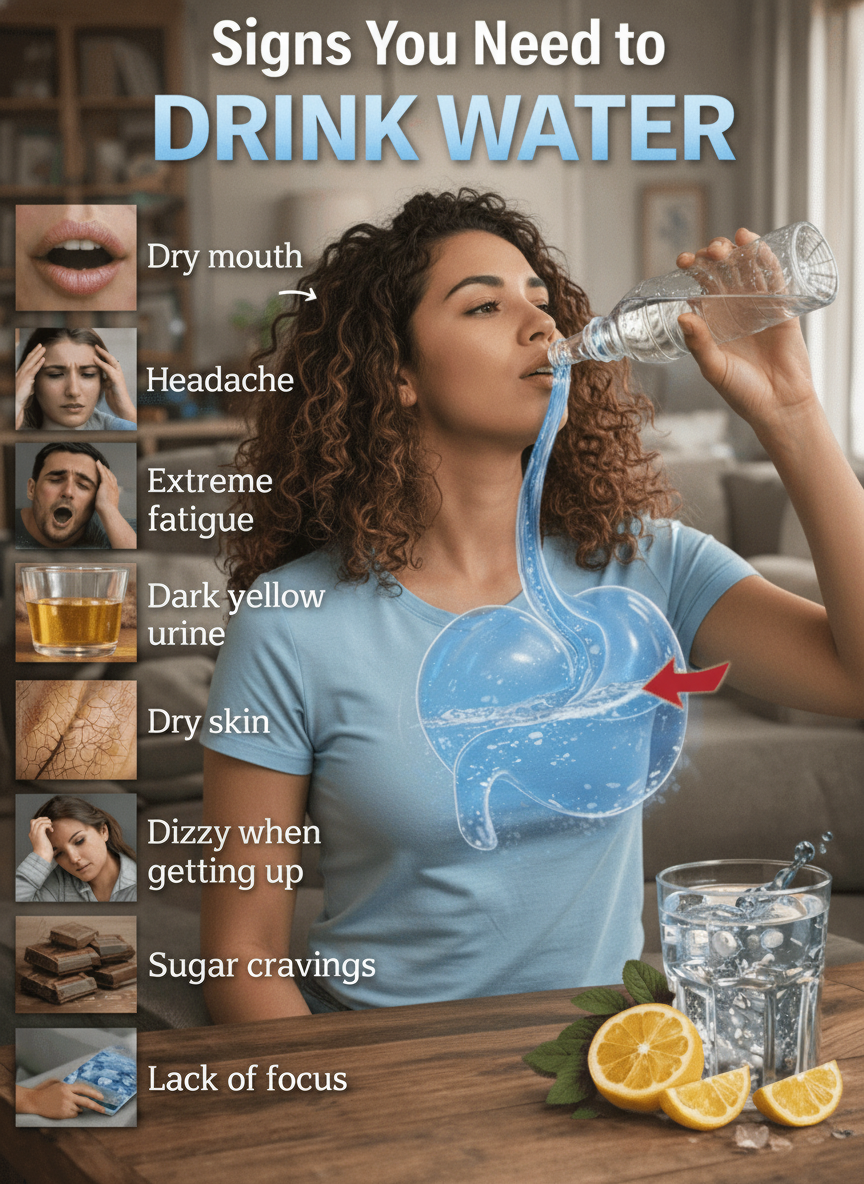
Your skin and lips are often the first to show signs of internal dryness. Dehydrated skin can appear dull, flaky, and rough, while lips become cracked and chapped. Water is fundamental for maintaining skin elasticity and hydration. When your body is dehydrated, your skin loses its natural moisture, making it more susceptible to irritation. Hydrate your skin from the inside out by drinking plenty of water, and protect it externally with a good moisturizer or lip balm.
6. Dizziness or Lightheadedness
Experiencing dizziness or lightheadedness, particularly when standing up quickly, can be a serious sign of dehydration. A lack of water leads to decreased blood volume, which can cause a sudden drop in blood pressure. This reduction in blood flow means less oxygen and essential nutrients reach your brain, resulting in feelings of dizziness, confusion, or even fainting. If you feel lightheaded, sit down, drink water slowly, and rest.
7. Cravings for Sugary or Salty Foods
Sometimes, your body can confuse thirst signals with hunger, leading to cravings for sugary or salty foods. When you’re dehydrated, your body might misinterpret its need for water as a need for quick energy (sugar) or electrolytes (salt). Before reaching for a snack, try drinking a glass of water. Often, these cravings will subside once your body receives the hydration it truly needs.
8. Constipation
Water plays a crucial role in maintaining a healthy digestive system and ensuring regular bowel movements. When your body lacks sufficient water, it pulls fluid from your intestines, leading to harder, drier stools that are difficult to pass. This can result in constipation and general digestive discomfort. Increasing your water intake, alongside a fiber-rich diet, is essential for promoting regularity and supporting gut health.
Don’t wait for extreme thirst to strike. By recognizing these subtle, often overlooked signs, you can proactively address your body’s need for water. Prioritizing hydration is a simple yet powerful way to support your energy levels, mental clarity, physical comfort, and overall well-being. Make drinking enough water a consistent habit for optimal health.