 By admin
 8 Surprising Clues Your Body Needs More Vitamin B12
Experiencing persistent exhaustion, even after a seemingly restful night? This deep-seated weariness, which often lingers day after day, can be incredibly frustrating and significantly impact your daily life. While many factors contribute to fatigue, a deficiency in a crucial nutrient might be the silent culprit, leading to a cascade of subtle yet disruptive health issues that sap your energy and focus. The good news? Recognizing these early warnings can empower you to take proactive steps towards better health. Continue reading, as we’ll unveil a crucial insight that could transform your approach to well-being.
Understanding Vitamin B12 and Its Vital Role
Vitamin B12, scientifically known as cobalamin, is indispensable for numerous bodily functions. It plays a pivotal role in maintaining the health of your nervous system and is fundamental for the production of healthy red blood cells. Naturally abundant in animal-derived foods such as meat, eggs, and dairy, optimal absorption can sometimes be a challenge for certain individuals due to various underlying conditions. Leading health organizations, including the Cleveland Clinic, emphasize how this vitamin underpins robust energy levels and sharp cognitive function. When levels are insufficient, your body often begins to send out discreet alerts that are easy to overlook. Let’s delve into some of the more unexpected ways a B12 shortage can manifest.
Sign 1: Persistent Tingling or Numbness in Hands and Feet
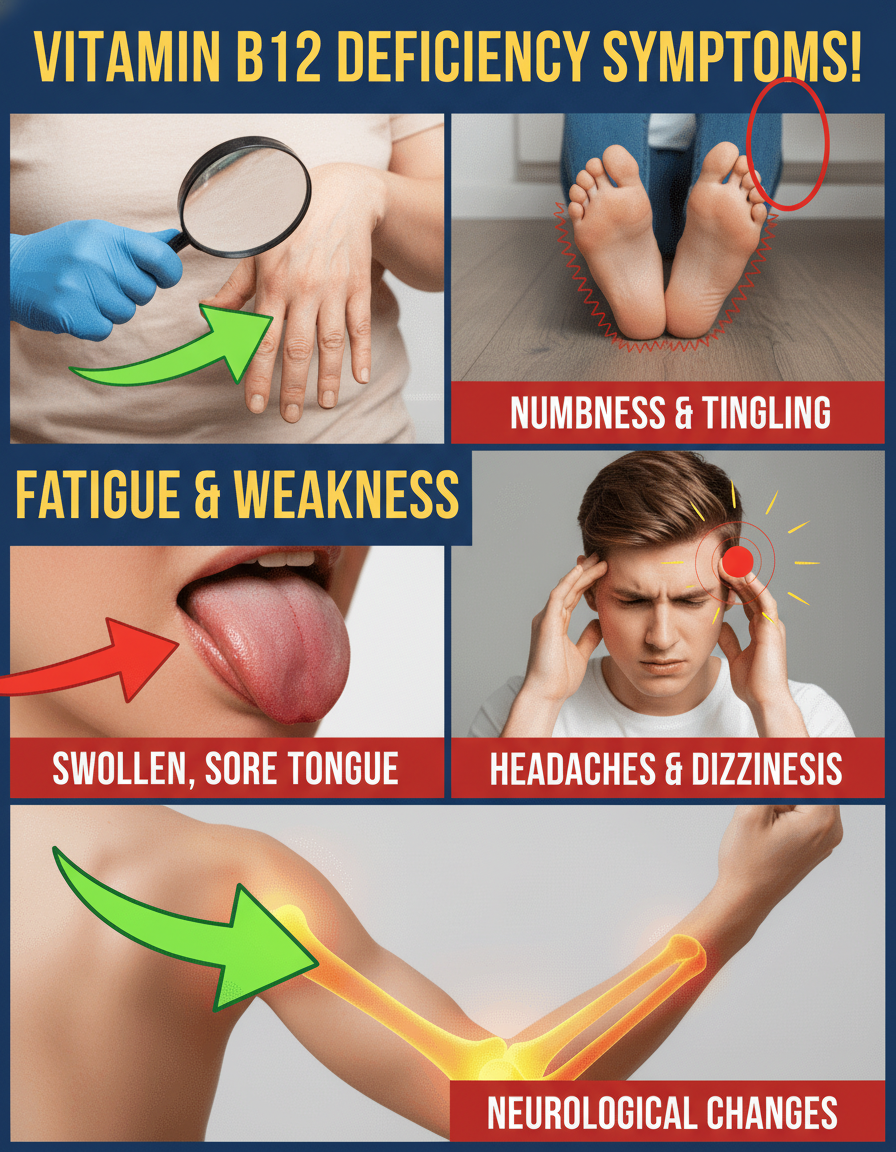
Do you frequently experience an inexplicable pins-and-needles sensation or numbness in your extremities? This peculiar feeling, known as paresthesia, can be a significant neurological indicator of inadequate B12 levels. As highlighted by publications like the Harvard Health Blog, Vitamin B12 is crucial for the synthesis and maintenance of myelin, the protective sheath surrounding your nerves. A lack of B12 can compromise this vital insulation, disrupting nerve signal transmission and leading to these unusual sensations. Patients often describe it as a “glove-and-stocking” pattern, typically starting in the fingers or toes and gradually ascending. It’s important to note that this symptom can sometimes mimic other conditions, making early recognition and medical consultation crucial.
Sign 2: Unrelenting Fatigue That Rest Fails to Alleviate
While occasional tiredness is a universal experience, a profound and pervasive weariness that persists despite adequate rest might signal a deeper issue, such as a B12 deficiency. The UK’s National Health Service (NHS) explains that this type of fatigue often stems from B12’s role in red blood cell production. These cells are responsible for transporting oxygen throughout your body. Insufficient B12 can lead to fewer or dysfunctional red blood cells, resulting in diminished oxygen delivery and leaving you feeling utterly drained. Many individuals describe it as a ‘heavy’ sensation in their limbs or an overwhelming compulsion to nap frequently. Observing this alongside other symptoms can help paint a clearer diagnostic picture.
Sign 3: Brain Fog and Struggles with Concentration
Are you finding it increasingly difficult to focus, recall information, or maintain mental clarity? This unsettling cognitive haze is another distinctive symptom that research frequently links to a shortage of B12. Medical News Today has reported on how B12 supports optimal brain health, and its deficiency can precipitate fuzzy thinking, memory lapses, or even noticeable shifts in mood. You might notice yourself forgetting names, losing your train of thought mid-sentence, or simply feeling mentally sluggish. If left unaddressed, these cognitive challenges can significantly impact professional performance and daily activities.
Sign 4: Unusual Pallor or Jaundiced Skin Tone
Have you or others noticed your skin appearing unusually pale, or perhaps developing a subtle yellowish tint? This visual cue can be directly connected to how B12 influences the formation of blood cells. A WebMD slideshow on B12 deficiency signs indicates that inadequate B12 can lead to megaloblastic anemia, a condition where red blood cells are abnormally large and fewer in number. This reduction in healthy red blood cells can result in the skin changes mentioned. While not always dramatic, a careful observation of your complexion in mirrors or photographs might reveal a subtle but significant shift. Often, this physical symptom goes unnoticed until more pronounced health issues emerge.
Sign 5: Glossitis or a Smooth, Sore Tongue
Your oral health can also provide telling clues. If your tongue appears swollen, unusually smooth, or takes on a noticeably red hue, it could be a sign of glossitis, a condition frequently associated with B12 deficiency. Organizations like the Pernicious Anaemia Society detail how a lack of B12 impairs cell regeneration within the mouth, leading to these characteristic changes. You might also experience a burning sensation on your tongue or an alteration in your sense of taste. Crucially, these oral symptoms can make eating uncomfortable, potentially exacerbating nutritional challenges.
Sign 6: Heart Palpitations or an Irregular Heartbeat
Do you experience your heart fluttering, pounding, or racing unexpectedly? This cardiovascular anomaly is sometimes an overlooked symptom of low B12 levels. The NHS lists palpitations as a potential sign, often attributed to the heart working harder to compensate for anemia – a common consequence of B12 deficiency – by pumping more blood. These sensations can manifest as skipped beats or a noticeable throbbing, particularly when at rest. Interestingly, these symptoms can be intermittent, making them challenging to pinpoint without proper medical assessment.
Sign 7: Vision Problems or Blurred Sight
While not commonly associated with vitamin deficiencies, impaired or blurred vision can indeed be linked to insufficient B12. Medical News Today and other health resources explain that prolonged B12 deficiency can impact the optic nerve, leading to various visual disturbances. This can include blurred vision, double vision, or even light sensitivity. The optic nerve plays a critical role in transmitting visual information to the brain, and its health is dependent on adequate B12 levels. Any sudden or persistent changes in vision warrant immediate medical attention.
Sign 8: Unexplained Mood Swings or Increased Anxiety/Depression
Experiencing unusual shifts in mood, heightened anxiety, or feelings of depression without an apparent cause? These psychological symptoms can also be subtle indicators of a B12 deficiency. Vitamin B12 is essential for the synthesis of neurotransmitters like serotonin and dopamine, which are crucial for mood regulation. A shortage can disrupt these delicate chemical balances in the brain, potentially leading to emotional instability, irritability, increased anxiety, or even symptoms akin to depression. This often overlooked connection underscores B12’s profound impact on mental well-being.
The Crucial Takeaway: Don’t Self-Diagnose, Seek Expert Advice
Recognizing these unusual signs is the first step, but it’s vital to remember that many of these symptoms can overlap with other health conditions. Therefore, self-diagnosis is not recommended. The surprising tip? Early and accurate diagnosis by a healthcare professional is paramount. If you suspect a B12 deficiency based on these symptoms, consult your doctor for proper testing and guidance. A simple blood test can confirm your B12 levels, and if a deficiency is identified, your doctor can recommend appropriate dietary changes, supplements, or injections. Proactive management of your Vitamin B12 intake is key to preventing long-term health complications and maintaining optimal vitality.