 By admin
 8 Subtle Yet Serious Signs of Vitamin B12 Deficiency You Shouldn’t Ignore
Do you often find yourself battling inexplicable fatigue, even after a full night’s rest, or experiencing peculiar sensations like tingling in your limbs? While it’s easy to dismiss such symptoms as mere stress or the inevitable march of age, they could be subtle indicators of a widespread issue: inadequate vitamin B12 levels. This vital nutrient, also known as cobalamin, is indispensable for numerous bodily processes, including the formation of healthy red blood cells, optimal nerve function, and efficient energy metabolism. When your body’s B12 reserves dwindle, the repercussions can emerge slowly, often presenting as a perplexing array of seemingly unrelated health complaints. Leading health organizations, such as the Cleveland Clinic and Mayo Clinic, emphasize that vitamin B12 deficiency frequently progresses insidiously, manifesting as a spectrum of understated yet persistent challenges that can significantly impact daily well-being. The key lies in early detection; identifying these less obvious signs can empower you to take proactive steps to bolster your nutrient intake. Stick with us, and by the end, we’ll explore actionable strategies for naturally enhancing your B12 levels.
Why Vitamin B12’s Role is More Critical Than You Imagine
Often referred to as cobalamin, vitamin B12 stands out among essential nutrients primarily due to its prevalence in animal-derived foods. This characteristic makes maintaining optimal B12 levels a particular challenge for vegetarians, vegans, the elderly, and individuals grappling with specific digestive disorders that impair absorption. Scientific studies consistently demonstrate that an insufficient supply of B12 impedes the body’s capacity to generate robust red blood cells, which are crucial for transporting oxygen throughout all tissues. Consequently, a chronic deficiency can lead to persistent fatigue and a host of other health problems. Beyond its role in blood health, B12 is equally vital for neurological well-being, actively participating in the maintenance of the myelin sheath – the protective layer surrounding nerve fibers. Yet, the impact of low B12 extends even further, manifesting in symptoms that can initially seem quite odd or disconnected from a nutritional deficiency.
1. Persistent Tingling, Numbness, or “Pins and Needles” Sensations
Among the initial and often perplexing indicators of insufficient B12 is the sensation commonly described as “pins and needles,” clinically termed paresthesia. This peculiar feeling frequently originates in the extremities, making your hands and feet feel as though they’ve inexplicably fallen asleep. Research strongly suggests that this occurs because a deficiency in vitamin B12 can compromise the integrity of the myelin sheath, the crucial protective insulation around nerve fibers. Such damage interferes with proper nerve signal transmission. If you’ve been inclined to dismiss sporadic numbness, attributing it to prolonged sitting or an awkward sleeping position, it’s prudent to observe if these sensations become more frequent, intense, or enduring.
2. Unexplained Dizziness and Problems with Balance
Do you frequently experience lightheadedness upon standing rapidly, or an unsettling sense of vertigo even when sedentary? These episodes can be directly linked to diminished oxygen transport throughout the body, a consequence of having fewer healthy red blood cells due to B12 deficiency. Authoritative health studies highlight that in more severe instances, a lack of B12 can significantly impair balance and coordination, leading to a feeling of instability during routine activities. While it’s common to ascribe such symptoms to dehydration or fluctuations in blood pressure, the essential role of vitamin B12 in supporting these physiological processes should not be overlooked.
3. Debilitating and Persistent Fatigue
Chronic, unrelenting tiredness stands as one of the most frequently cited complaints associated with low vitamin B12. You might find yourself sleeping for ample hours, yet still struggling to navigate your day with a pervasive sense of depletion, as though your internal energy reserves are perpetually empty. Health experts clarify that insufficient B12 hinders efficient oxygen delivery, resulting in muscles and vital organs receiving inadequate fuel. This form of exhaustion is particularly frustrating because conventional rest often provides little relief; many individuals describe it as a profound, bone-deep weariness that permeates every aspect of their existence.
4. Cognitive Impairment: Brain Fog and Memory Difficulties
Experiencing challenges with concentration, frequently forgetting minor details, or a general sensation of mental haziness? Such cognitive shifts are a recognized consequence of low B12 levels, given the nutrient’s pivotal role in nurturing brain health and facilitating optimal nerve signaling. Scientific investigations consistently connect B12 deficiency with issues such as diminished focus, impaired mental clarity, and mild memory deficits. Initially, these symptoms might be subtle – perhaps misplacing everyday items more often or struggling to recall familiar names – but without intervention, they can progressively intensify.
5. A Swollen, Sore, or Unusually Smooth Tongue (Glossitis)
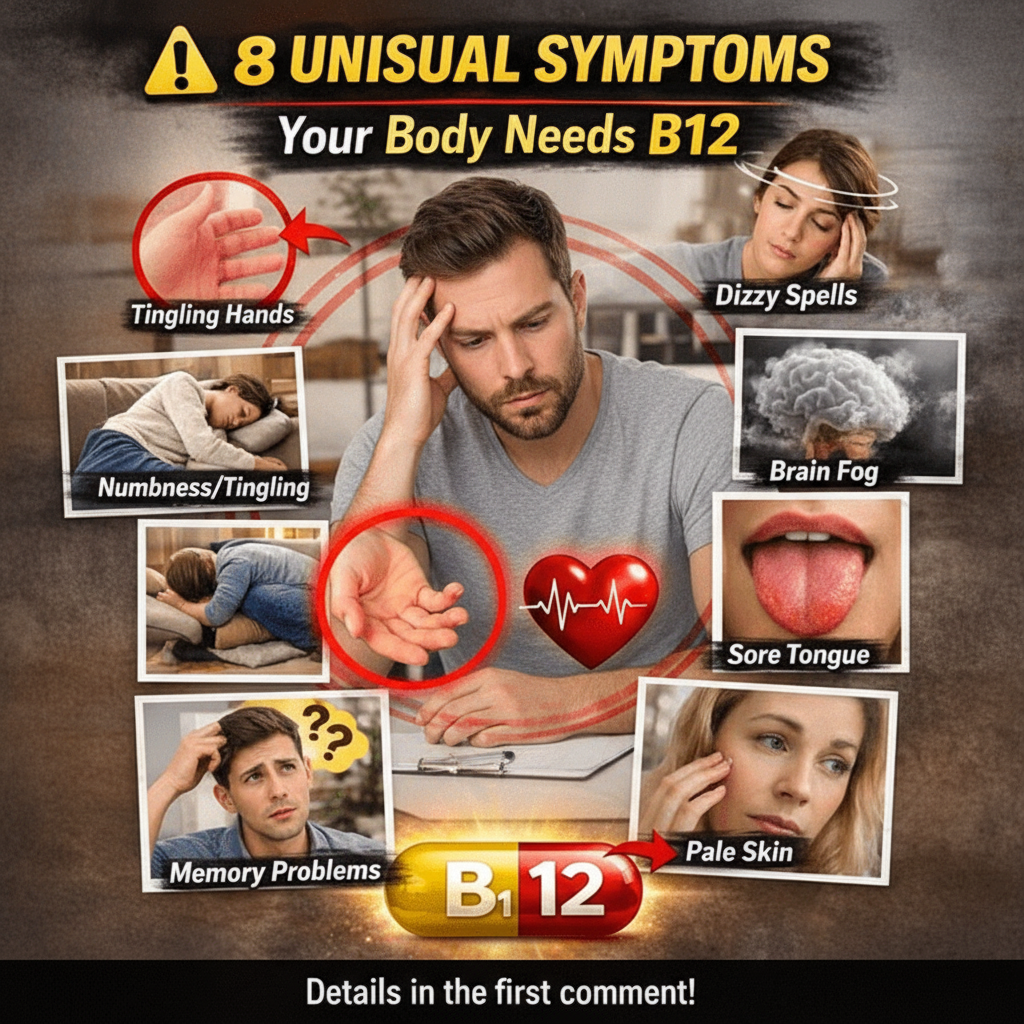
Observe your tongue: does it appear unusually red, feel tender, or seem remarkably smooth? This condition, known medically as glossitis, signifies inflammation of the tongue and is a classic, though frequently disregarded, indicator of vitamin B12 deficiency. Reputable health sources, including WebMD, detail how insufficient B12 can result in a sore, “beefy-red” tongue, occasionally accompanied by painful mouth ulcers. This symptom can render the consumption of certain foods, especially spicy ones, quite uncomfortable and serves as a distinct physical clue that, once identified, is difficult to overlook.
6. Unexplained Pallor or a Faint Yellowish Skin Tone
Have you observed that your complexion appears unusually pale, or perhaps developed a subtle, yellowish hue? These visual changes can be a direct consequence of B12 deficiency impacting the healthy production of red blood cells, leading to symptoms reminiscent of anemia. Medical and health resources explain that this pallor (or a mild icteric, yellowish tint in some individuals) arises from an accumulation of bilirubin, a byproduct created when red blood cells degrade at an accelerated rate. While often more discernible in lighter skin tones, this physical sign warrants careful attention.
7. Unexplained Mood Swings, Irritability, or Low Mood
Are you experiencing inexplicable feelings of sadness, heightened irritability, or uncharacteristic anxiety, seemingly without a clear trigger? The psychological ramifications of low vitamin B12 are extensively documented, with a deficiency often contributing to noticeable mood fluctuations or persistent low mood. Research indicates that B12 plays a crucial role in regulating neurotransmitter function, meaning that insufficient levels can significantly compromise emotional stability and overall mental well-being. Many individuals report a general sense of feeling “off” mentally long before any overt physical symptoms become apparent.
8. Shortness of Breath and Heart Palpitations
If you find yourself experiencing breathlessness even during mild physical exertion, or notice your heart racing or skipping beats (palpitations) without a clear cause, these could be critical signs. A significant vitamin B12 deficiency often leads to anemia, where the body lacks sufficient healthy red blood cells to transport adequate oxygen. To compensate for this oxygen deficit, your heart has to work much harder, pumping faster and more forcefully, which can manifest as both shortness of breath and an awareness of your own heartbeat. These symptoms underscore the severe impact of B12 on cardiovascular and respiratory health.
What to Do if You Recognize These Signs
Recognizing these often-overlooked signs of vitamin B12 deficiency is the first crucial step toward addressing a potentially significant health issue. While many of these symptoms can overlap with other conditions, their persistent or worsening presence warrants professional medical attention. Consulting a healthcare provider for proper diagnosis, typically through a blood test, is essential. If a deficiency is confirmed, your doctor can recommend appropriate interventions, which may include dietary adjustments, supplements, or injections, to restore optimal B12 levels and alleviate your symptoms.
Don’t dismiss these signals from your body. Early diagnosis and treatment of B12 deficiency can prevent more severe complications and significantly improve your quality of life. Take charge of your health and seek expert advice if these signs resonate with your experience.