 By admin
 8 Critical Early Warning Signs of a Brain Tumor You Can’t Afford to Miss: Why Timely Detection Matters
Imagine starting your day with a headache that persists, or later finding yourself struggling to recall where you left your car keys, perhaps feeling inexplicably irritable. These minor alterations often seem like typical responses to a hectic life, easily dismissed as stress or simple forgetfulness. Yet, what if these seemingly innocuous shifts are actually crucial early indicators of a brain tumor, frequently overlooked until the condition becomes more advanced and challenging to manage?
The insidious nature of early brain tumor symptoms lies in their uncanny resemblance to common ailments like fatigue, stress, or minor discomforts, making them deceptively easy to disregard. As these subtle cues go unaddressed, anxiety and uncertainty can escalate. However, there’s a vital upside: promptly recognizing these initial signs and seeking medical advice can pave the way for earlier diagnosis and a broader spectrum of treatment possibilities. Continue reading to explore the eight most frequently missed clues – and understand the overarching pattern that truly warrants attention.
Why Early Warning Signs of a Brain Tumor Are So Frequently Overlooked 🧠
Initially, brain tumors, whether cancerous or non-cancerous, often develop subtly and without dramatic symptoms. The specific manifestations depend significantly on the tumor’s position within the brain, its overall size, and its rate of expansion. Tumors that grow slowly might only produce minor, gradual changes over several months, whereas rapidly developing tumors could lead to more pronounced issues much sooner.
It’s incredibly common for individuals to attribute these nascent brain tumor symptoms to everyday factors such as chronic stress, insufficient sleep, or the natural process of aging. Esteemed organizations like the Mayo Clinic and the American Brain Tumor Association highlight that this common delay in seeking medical evaluation is precisely because these initial symptoms are so familiar and seemingly benign – until their severity steadily increases. Crucially, identifying these early indicators of a brain tumor should not provoke panic. Instead, it empowers you with the invaluable opportunity for prompt medical assessment and intervention. Let’s delve into the eight signs that are most commonly dismissed.
8 Early Warning Signs of a Brain Tumor That Are Often Ignored
8. Persistent or Evolving Headache Patterns ⚠️
A headache that consistently emerges in the mornings, intensifies when you recline or stoop, or fails to respond adequately to typical pain relievers warrants serious attention. Many individuals might simply dismiss this as a common tension headache or sinus issue. However, such novel or altered headache patterns can be pivotal early indications of a brain tumor, often stemming from elevated intracranial pressure. Should the pain progressively worsen in intensity or frequency, it becomes a significant red flag.
7. Unexplained Nausea or Vomiting 🤢
Experiencing persistent queasiness or episodes of vomiting, particularly upon waking, without any clear cause like a stomach virus or dietary indiscretion, can be unsettling. It’s common practice to attribute such symptoms to dietary issues, motion sickness, or general anxiety. Nevertheless, nausea and vomiting associated with early brain tumor symptoms frequently arise from the same increased pressure within the brain. When these symptoms manifest concurrently with headaches and lack any identifiable gastrointestinal origin, their significance as a diagnostic clue amplifies considerably.
6. Subtle Memory and Concentration Challenges 🧩
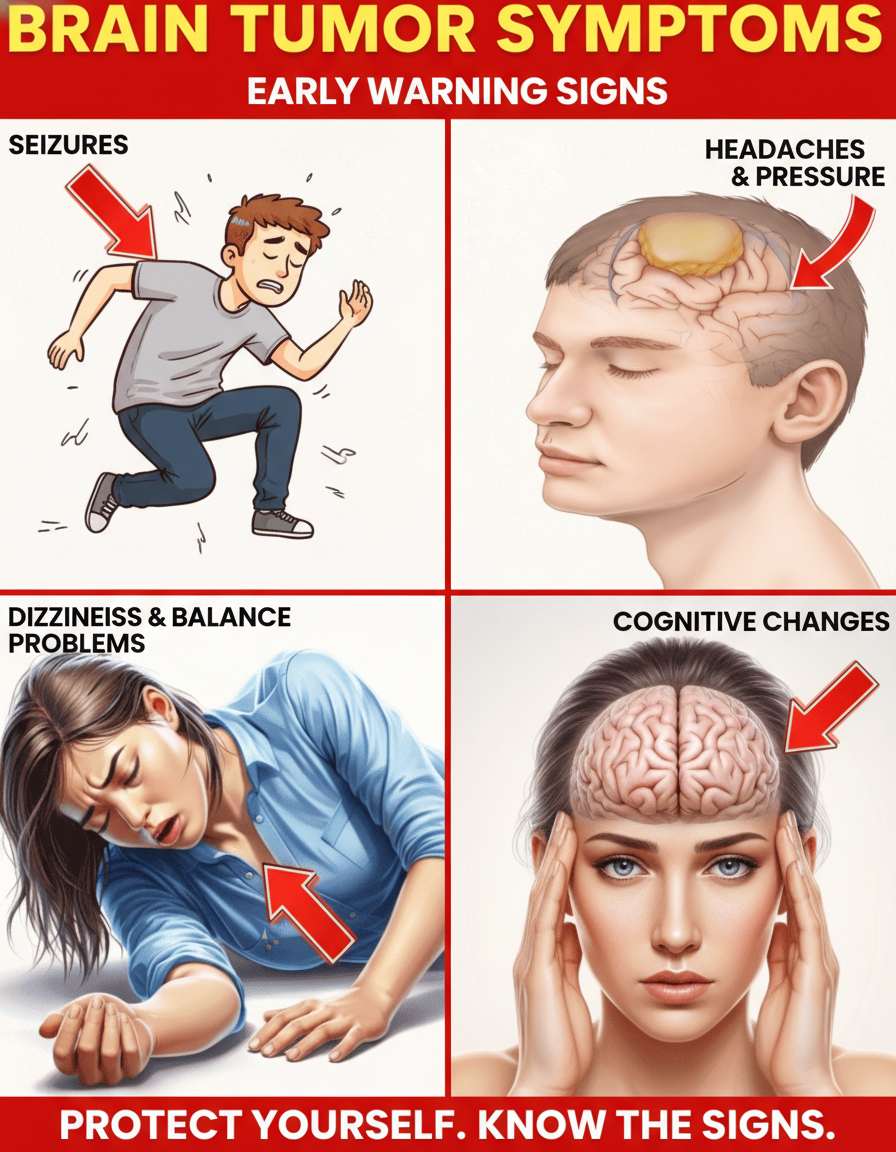
Finding yourself forgetting recent discussions, grappling to recall specific words, or experiencing a general mental fogginess even during routine activities can be both embarrassing and profoundly frustrating. The typical reaction is to ascribe these issues to an overloaded schedule or simply the aging process. Yet, these nuanced cognitive changes can indeed be early indicators of a brain tumor exerting pressure on brain regions vital for memory retention and focus. Research indicates that a substantial number of patients observe these difficulties for several weeks or even months before ultimately seeking medical consultation.
5. Marked Personality or Mood Alterations 😔
Developing uncharacteristic irritability, withdrawing socially, exhibiting apathy, or experiencing abrupt and pronounced mood swings can place considerable stress on personal relationships. Frequently, close family members or friends are the first to observe these transformations, while the individual themselves might attribute them to mere stress. Involvement of the brain’s frontal lobe can significantly impair emotional regulation, making these shifts critical early signs of a brain tumor. If your inherent personality feels consistently divergent from your usual self, the observations and feedback from your closest confidants become exceptionally important.
4. Subtle Visual Disturbances 👁️
Experiences such as blurred vision, double vision (diplopia), perceiving wavy lines, or a reduction in peripheral vision might initially lead one to schedule an immediate appointment with an eye care professional. Many people naturally conclude they simply require an updated eyeglass prescription. However, pressure exerted on the optic nerve or crucial visual pathways can indeed precipitate these disturbances, serving as early indicators of a brain tumor. When these visual anomalies occur in conjunction with other neurological symptoms, their combined presence signals a need for thorough medical investigation.
3. New Onset Seizures or Peculiar Sensations ⚡
A sudden, involuntary muscle jerk, a fleeting blank stare, experiencing an unusual taste or smell, or a full-blown seizure – particularly in individuals with no prior history of epilepsy – is profoundly alarming. Even minor episodes can induce significant fear and confusion. It’s noteworthy that up to half of all individuals diagnosed with brain tumors will experience seizures, and for a substantial number, this event serves as the very first unmistakable symptom. Any new occurrence of a seizure in adulthood necessitates immediate and comprehensive medical assessment.
2. Progressive Weakness, Numbness, or Balance Impairments 🚶
The development of weakness or numbness affecting one side of the body, clumsiness, or frequent instances of stumbling can be so insidious and gradual that individuals often unconsciously adapt to these changes without fully recognizing their significance. This unilateral (one-sided) arm or leg weakness, altered sensation, or a noticeable decline in coordination and balance are critical neurological red flags. They suggest a potential disruption in the brain’s ability to control motor functions or process sensory information effectively. Because these symptoms progress slowly, they are frequently dismissed as minor aches, muscle fatigue, or age-related changes, delaying crucial medical consultation. Pay close attention if you find yourself consistently struggling with tasks that were once effortless, or if you notice a persistent imbalance that wasn’t previously present.
Recognizing these early signs of a brain tumor is not about fostering anxiety, but rather about empowering yourself with knowledge. While many of these symptoms can indeed be attributed to less serious conditions, their persistence, worsening, or appearance in combination warrants prompt medical attention. Your body often provides subtle clues; listening to them and consulting a healthcare professional without delay can be pivotal. Early detection of a brain tumor significantly broadens treatment options and can profoundly impact outcomes. Don’t hesitate to seek expert advice if you experience any of these concerning changes.