 By admin
 7 Critical Nighttime Diabetes Signs You Shouldn’t Ignore
For individuals living with undiagnosed or inadequately managed diabetes, the nocturnal hours often bring forth the most concerning symptoms. During sleep, shifts in blood sugar levels, nerve irritation, and hormonal changes – such as the dawn phenomenon – can become particularly pronounced. These critical nighttime indicators are frequently dismissed as mere “poor sleep,” “aging,” or “stress,” yet they serve as vital warnings that your body is contending with elevated or erratic glucose levels.
Below are 7 of the most dangerous and commonly overlooked nighttime symptoms of diabetes, presented in an order reflecting their reported frequency to their potential severity. If you consistently experience several of these signs, do not delay—seek immediate medical advice to have your blood sugar thoroughly checked (including fasting glucose and HbA1c tests).
1. Frequent Nighttime Urination (Nocturia – Waking 2-5+ Times Per Night)
Why it’s a warning sign: When blood sugar levels are excessively high, your kidneys work overtime to filter out the surplus glucose. This process causes water to be drawn from your body and expelled through urine, leading to an increased need to urinate, even interrupting your sleep multiple times.
Key indicator: A sudden increase from rarely or once to three or more nightly trips to the bathroom, especially if accompanied by intense thirst.
Common misconception: Often mistakenly attributed to “prostate issues” in men or “menopausal changes” in women, delaying proper diagnosis of underlying blood sugar issues.
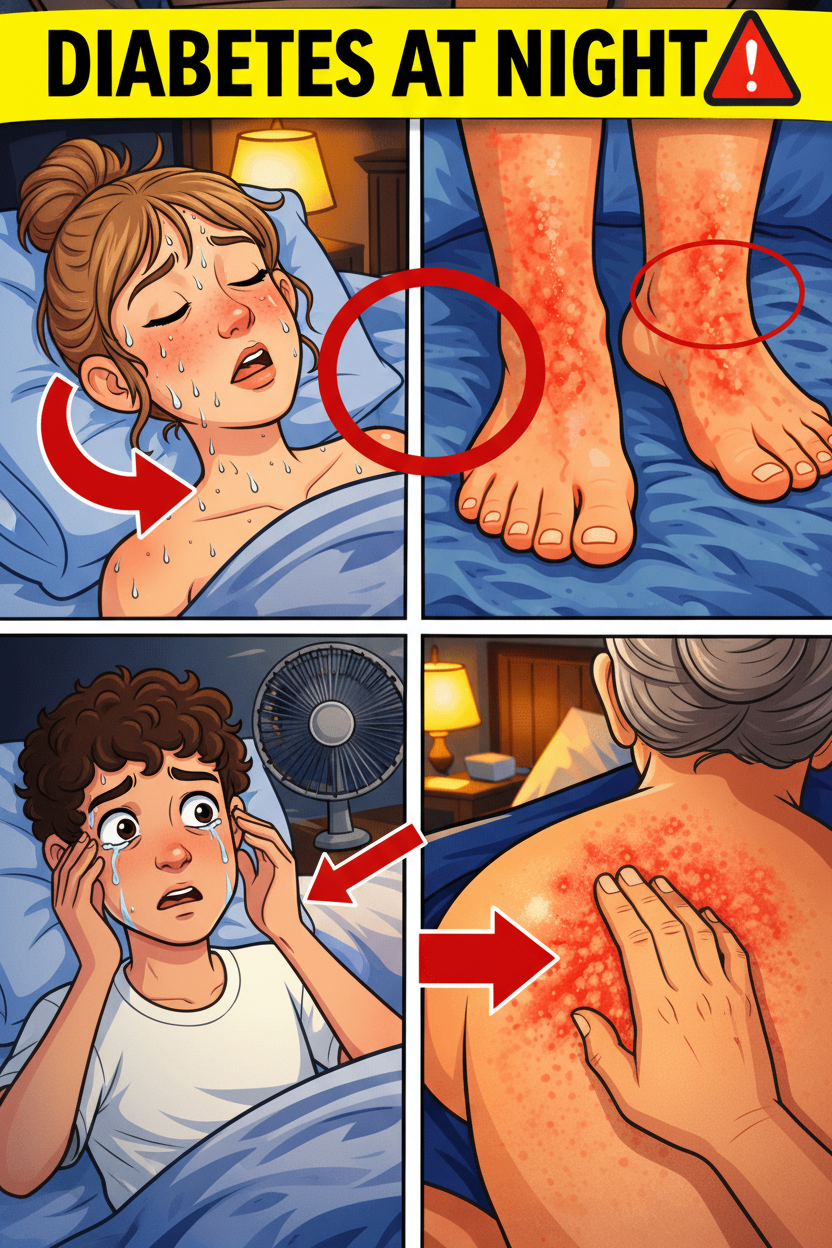
2. Night Sweats or Drenching Sweats (Even in Cool Environments)
Why it’s a warning sign: Unexplained sweating during the night can be a critical signal of nocturnal hypoglycemia (low blood sugar during sleep), particularly for those taking insulin or sulfonylureas. Conversely, it might also indicate the Somogyi effect, where a nighttime low is followed by a rebound high blood sugar.
Key indicator: Waking up drenched in sweat, accompanied by feelings of shakiness, anxiety, or intense hunger.
Common misconception: Frequently dismissed as “hot flashes,” “room temperature issues,” or “bad dreams.”
3. Burning, Tingling, or Painful Feet at Night (Worsens When Lying Down)
Why it’s a warning sign: This is a classic early manifestation of diabetic peripheral neuropathy, a condition where persistently high blood sugar damages the small nerves, particularly in the feet and legs. The discomfort often intensifies at night due to reduced distractions and changes in body position.
Key indicator: Experiencing “pins-and-needles” sensations, a burning feeling, or electric shock-like pains that disrupt your sleep.
Common misconception: Often mistaken for “restless legs syndrome” or “poor circulation.”
4. Waking Up with Headache, Blurred Vision, or Confusion
Why it’s a warning sign: These symptoms upon waking can point to significant overnight fluctuations, either severe hyperglycemia (very high blood sugar) or hypoglycemia (very low blood sugar). Both extremes can impair cognitive function, affect vision, and lead to morning headaches.
Key indicator: A persistent headache coupled with feeling disoriented, mentally foggy, or generally unwell immediately after waking.
Common misconception: Often attributed to “dehydration,” “sinus pressure,” or “sleep apnea.”
5. Restless Legs or Painful Muscle Cramps at Night
Why it’s a warning sign: These nocturnal disturbances are frequently linked to electrolyte imbalances, which can result from excessive urination (leading to a loss of essential minerals like magnesium and potassium) or early nerve damage caused by elevated glucose levels.
Key indicator: Legs twitching uncontrollably, cramping severely, or aching to the point where it repeatedly wakes you from sleep.
Common misconception: Often blamed on “strenuous exercise,” “dehydration,” or simply “aging.”
6. Waking Up Feeling Extremely Thirsty or with a Dry Mouth
Why it’s a warning sign: This is a quintessential symptom of uncontrolled high blood sugar overnight, leading to dehydration through a process called osmotic diuresis. Your body attempts to flush out excess glucose, taking vital fluids with it.
Key indicator: Needing to drink water multiple times throughout the night, alongside a persistently very dry mouth and tongue.
Common misconception: Often dismissed as “normal thirst” or a result of “mouth breathing.”
7. Nighttime Heart Palpitations or a Racing Heart
Why it’s a warning sign: A sudden pounding or racing heart during the night can signal hypoglycemia, as the body releases adrenaline in response to low blood sugar. It can also be an indicator of autonomic neuropathy, a complication of diabetes that affects the nerves regulating heart rate and other involuntary body functions.
Key indicator: Waking abruptly with a pounding heart, accompanied by feelings of intense anxiety or sweating.
Common misconception: Frequently attributed to “anxiety,” “bad dreams,” or “excessive caffeine intake.”
Quick Action Guide – When to Seek Medical Attention
- See a doctor this week if: You consistently experience two or more of these signs most nights. For example:
- Frequent nighttime urination + persistent thirst
- Burning/tingling feet + unexplained fatigue
- Night sweats + morning headache/confusion
- Restless legs/cramps + dry mouth
- Seek Emergency Care (ER same day) if: You experience severe symptoms such as:
- Extreme thirst + confusion + fruity breath + rapid breathing → potential diabetic ketoacidosis (DKA), a life-threatening complication.
- Severe nighttime hypoglycemia symptoms (intense shaking, profound confusion, seizures) → especially if you are on insulin or other diabetes medications.
The Bottom Line
These 7 nighttime signs are among the most consistent early-to-mid-stage warnings of uncontrolled or undiagnosed diabetes, particularly type 2 diabetes. They often manifest years before the more “classic” daytime symptoms become overtly obvious. If even a few of these occur regularly, do not wait for dramatic weight loss or vision impairment to set in. A straightforward finger-prick fasting glucose test or an HbA1c blood draw can detect problems early – a stage where timely lifestyle changes alone can often reverse or significantly delay disease progression. You are the best judge of your own body. Trust patterns that disrupt your sleep and comfort; early action is your best defense against long-term complications.
Action Step Tonight: Start Tracking Your Symptoms
Keep a small notebook and pen by your bedside. For tonight and the next seven nights, make a note of any of the following: how many times you wake to urinate, if your feet tingle or burn, if you experience heavy sweating, or if you feel shaky or unusually hungry. If you find yourself checking two to three boxes repeatedly, it’s a clear signal to schedule a doctor’s visit promptly.