 By admin
 Living with a thyroid disorder can quietly drain your energy, make weight management feel impossible, and leave you battling brain fog. These persistent symptoms can turn simple daily tasks into frustrating challenges. But what if meaningful support for your thyroid health could start with a few mindful dietary choices?
Understanding how certain everyday foods interact with your thyroid is a powerful step towards feeling more balanced and energetic. Here are 6 key foods to consider limiting or avoiding to better support your thyroid function.
1. Sugar
Excess sugar can disrupt your body’s delicate hormonal balance, especially when managing a thyroid condition. Research suggests that frequent spikes in blood sugar may promote insulin resistance, placing extra strain on your hormonal system. Even small, daily sugary indulgences can accumulate faster than you expect, impacting your energy and overall well-being.
Quick tips for a thyroid-friendly approach:
- Swap sugary sodas for sparkling water with a squeeze of lemon.
- Choose fresh berries or whole fruits over processed candies.
- Always read food labels – hidden sugars lurk in many seemingly “healthy” snacks.
2. Fried Foods
Foods high in trans fats, commonly found in fried items, can impair your body’s ability to utilize thyroid hormones effectively. Health experts note that these unhealthy fats may even diminish the efficacy of thyroid replacement medications many people rely on. While a plate of French fries might offer momentary pleasure, the long-term impact on your energy levels and thyroid function can be discouraging.
Better alternatives for thyroid support:
- Opt for oven-baked sweet potato wedges instead of deep-fried.
- Choose grilled chicken or fish over fried versions.
- Prepare a vibrant veggie stir-fry using a healthy oil like olive oil.
3. Soy
Soy consumption requires moderation when you have a thyroid disorder, particularly if you’re taking daily thyroid medication. Soy compounds can interfere with the absorption of synthetic thyroid hormone, according to several studies. To ensure your medication works effectively, it’s often recommended to wait at least four hours between taking your thyroid pill and consuming soy-rich foods. This step becomes even more crucial if you also have iodine concerns.
4. Gluten
Many individuals with a thyroid disorder – especially those with autoimmune forms like Hashimoto’s – find that gluten can fuel systemic inflammation. Research continues to explore the intricate link between gluten sensitivity and thyroid dysfunction. While a complete overhaul isn’t necessary overnight, paying closer attention to your gluten intake can often lead to noticeable improvements in how you feel.
Easy gluten-free swaps:
- Choose rice or quinoa pasta instead of wheat-based varieties.
- Use lettuce wraps for sandwiches instead of bread.
- Enjoy gluten-free oats for a hearty breakfast.
5. Dairy Products
Dairy can sometimes present a challenge for those with thyroid disorders. The calcium in milk products can bind to thyroid medication, hindering its absorption if consumed too closely. Furthermore, some individuals experience digestive discomfort, bloating, or increased fatigue after dairy intake. A short trial period without dairy can help clarify if it’s contributing to your symptoms, with many finding they feel lighter and more consistent without it.
Gentle dairy alternatives:
- Unsweetened almond or oat milk as a beverage or in recipes.
- Coconut yogurt for a probiotic boost.
- Increase intake of leafy greens for natural calcium.
6. Raw Cruciferous Vegetables
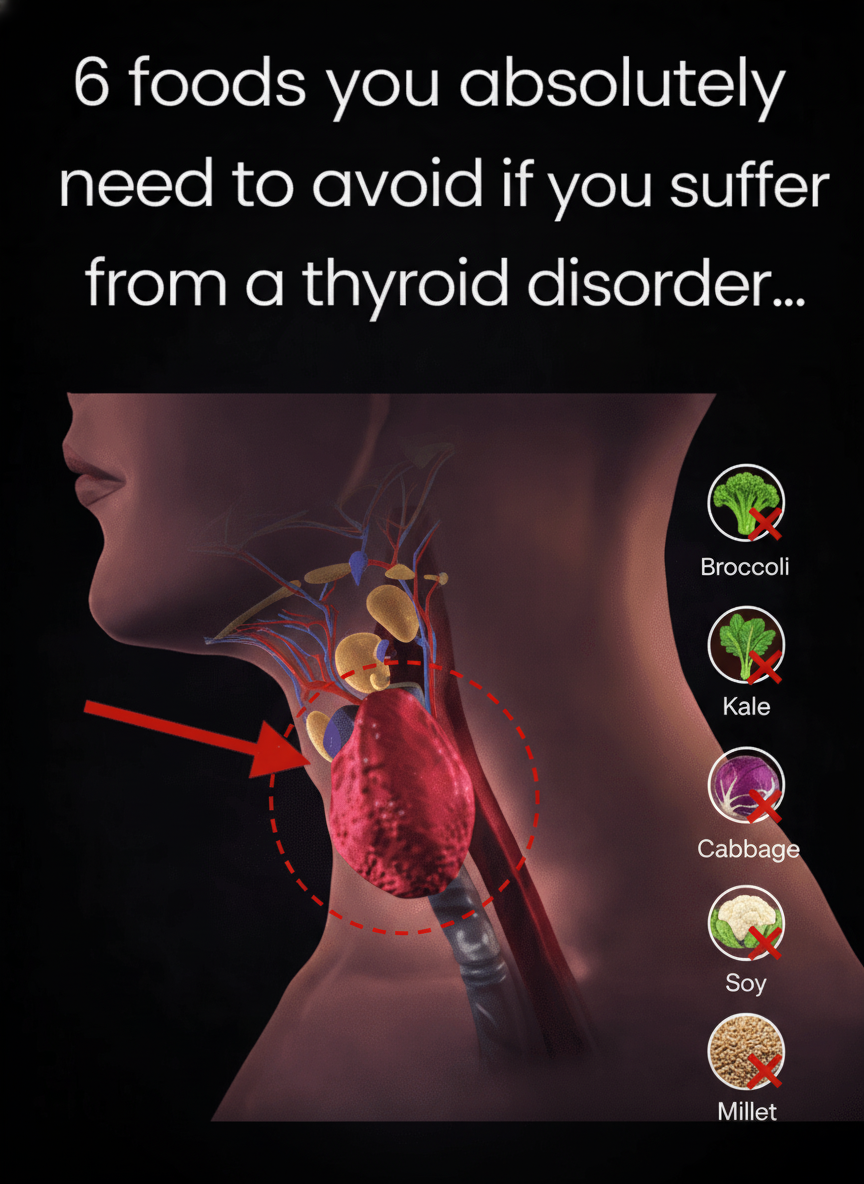
Raw cruciferous vegetables like broccoli, cabbage, and kale contain natural compounds called goitrogens. When consumed raw and in very large quantities, these goitrogens *may* potentially inhibit iodine uptake, which is vital for thyroid function. However, the good news is that cooking these vegetables significantly reduces this effect. You don’t need to banish them entirely; simply enjoy them steamed, roasted, or lightly sautéed most of the time to reap their nutritional benefits without impacting your thyroid.
Smart ways to enjoy cruciferous vegetables:
- Lightly steam them for salads or sides instead of eating raw.
- Roast with a drizzle of olive oil and your favorite herbs.
- Limit large quantities of raw juices or smoothies containing these vegetables.
Actionable Steps You Can Start Today
Supporting your thyroid doesn’t require perfection or drastic changes overnight. Begin by making just one dietary adjustment this week – perhaps opting for sparkling water instead of soda, or ensuring a four-hour gap between your thyroid medication and any soy-rich meals. Pay attention to how you feel after 14 days. Gradually swap fried foods for baked versions a couple of times a week, or choose cooked greens over raw. These small, consistent steps can accumulate into significant improvements for your thyroid health and overall well-being.